Patient Transfer & Safety
Sensory, Motor, and Cardiovascular Screening Techniques
General ROM/MMT
Upper Limb ROM/MMT
Lower Limb ROM/MMT
Orthopedic Special Tests
100
The name of the technique used to turn a patient onto their side while on spinal precautions, due to a spinal fracture for example.
What is log rolling?
100
An annual foot screening, patient education, daily self-inspection, footwear selection, and management of simple foot problems are the 5 steps to this program.
What is the LEAP Exam (or Lower Extremity Amputation Prevention)?
100
The axis of a goniometer is also referred to as this.
What is the fulcrum?
100
Normal range of elbow flexion.
What is 0 – 140/150 degrees?
100
Normal dorsiflexion range of motion.
What is 0-20 degrees?
100
This test assess for biceps tendonitis.
What is Speed’s Test?
200
This level of transfer involves the patient consistently performing all aspects of the transfer without assistance by clinicians.
What is an independent transfer?
200
This test consists of compressing the nail bed for 5 seconds and then counting the time until normal color returns.
What is the capillary fill (or refill) test?
200
This is the MMT test position that is performed against gravity.
What is primary position?
200
The primary position when performing a manual muscle test for elbow extension?
What is prone (w/shoulder abducted to 90 degrees)?
200
The distal arm of the goniometer is aligned with this anatomical structure when assessing ankle inversion AROM.
What is the midline of the calcaneus?
200
This tests for weakness of the hip abductor muscle group.
What is Trendelenburg’s Sign?
300
This type of transfer is often used when a patient is unable to bear weight on one or both legs or is too weak to stand.
What is a squat pivot transfer?
300
If a person is deemed to be at risk for developing an ulcer on their foot, this is the number of times they should be seen per year.
What is 4?
300
The type of ROM determined when a clinician moves the patient through the full, available range.
What is passive range of motion?
300
When assessing elbow flexion strength, this is the muscle that is mostly active when the patient is in a supinated position.
What is the biceps brachii?
300
Primary position for performing a manual muscle test for hip flexion.
What is seated (w/knee flexed, thighs supported by the table)?
300
The test being performed in the images below, which assess for a hip flexion contracture.
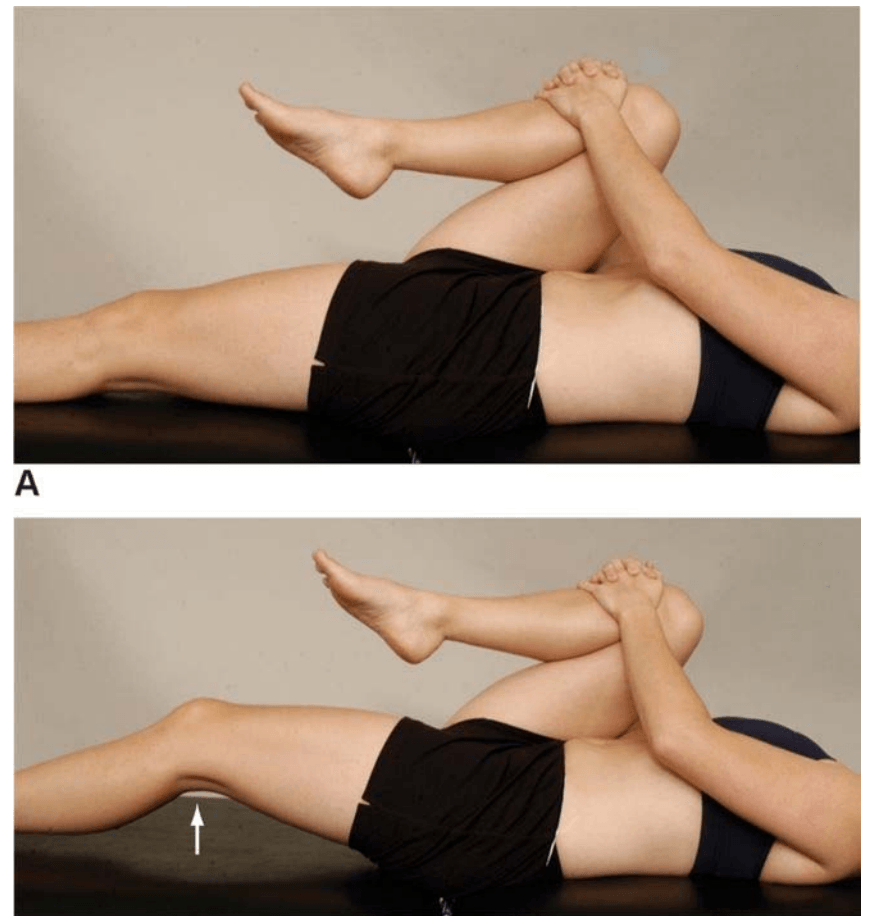
What is the Thomas Test?
400
This object is used to aid in a transfer when a patient is too weak to stand. It should be angled towards the surface to which you are transferring.
What is a sliding board?
400
The image below shows pressure being applied to a swollen area to assess for the severity of this condition.
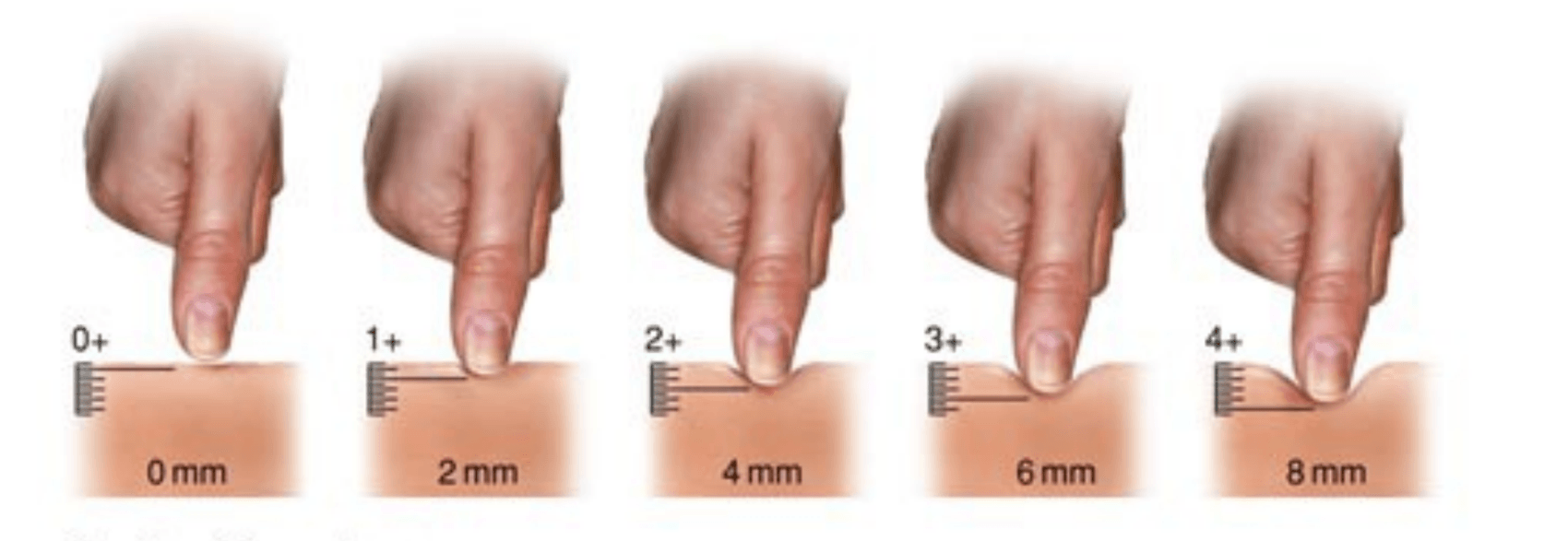
What is pitting edema?
400
An MMT value that is also described as “good”.
What is 4?
400
The fulcrum of the goniometer is aligned with this carpal bone when assessing radial deviation AROM.
What is the capitate?
400
The motion that is being assessed in the images below, starting on the left and finishing on the right.
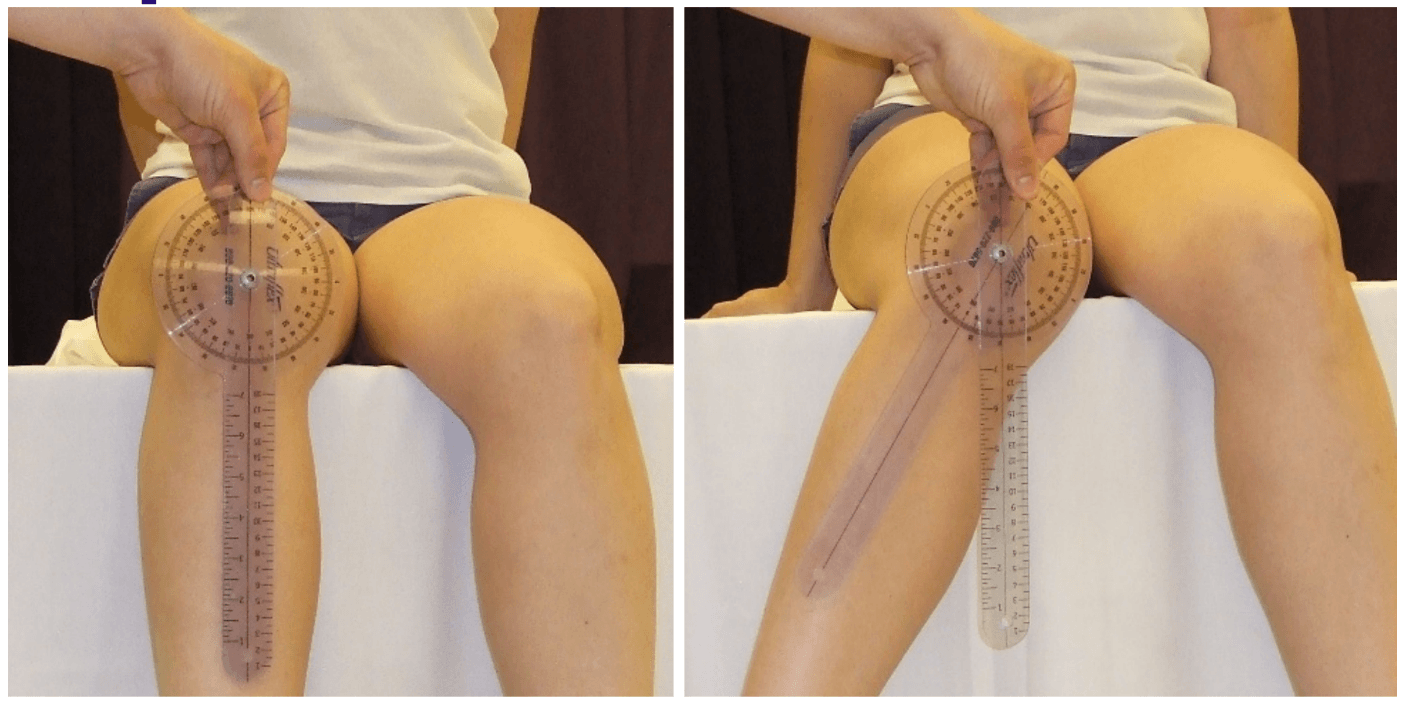
What is hip internal rotation?
400
Finkelstein’s Test assess for this.
What is DeQuervain’s Tenosynovitis (pain along the course of the abductor pollicis and extensor pollicis brevis)?
500
When a patient can usually perform an activity but has a significant likelihood of requiring physical assistance for support or balance, they need this level of assistance.
What is contact guarding?
500
When assessing for proprioception of the upper limbs, you should start with this body segment.
What is the MCP of one of the digits?
500
The MMT score when a contraction is observed, but there is no segmental movement.
What is a 1 (or trace)?
500
There is no consensus on goniometer placement when assessing this active range of motion.
What is shoulder horizontal adduction?
500
The number of unilateral calf raises to achieve a 5/5 MMT score.
What is 20?
500
Grade II of this test means the examiner feels the humeral head over riding the rim, but it spontaneously reduces.
What is the Load & Shift Test?