Moons/Dwarf Planets
Misc Celestial Bodies
Planets
Stars
Misc.
100
An object that orbits a planet or something else that is not a star. Besides planets, they can circle dwarf planets, large asteroids, and other bodies. Objects that orbit other objects are also called satellites, so these are sometimes called natural satellites.
What is a moon?/What are moons?
100
A solid body orbiting the Sun that consists of metal and rock. Most are only a few miles in diameter and are found between the orbits of Mars and Jupiter, too small and far away to be seen easily in a small telescope. A few venture closer to the Sun and cross Earth's orbit.
What is an asteroid?
100
This thing is round (has reached hydrostatic equilibrium), orbits the sun, and has cleared its orbit.
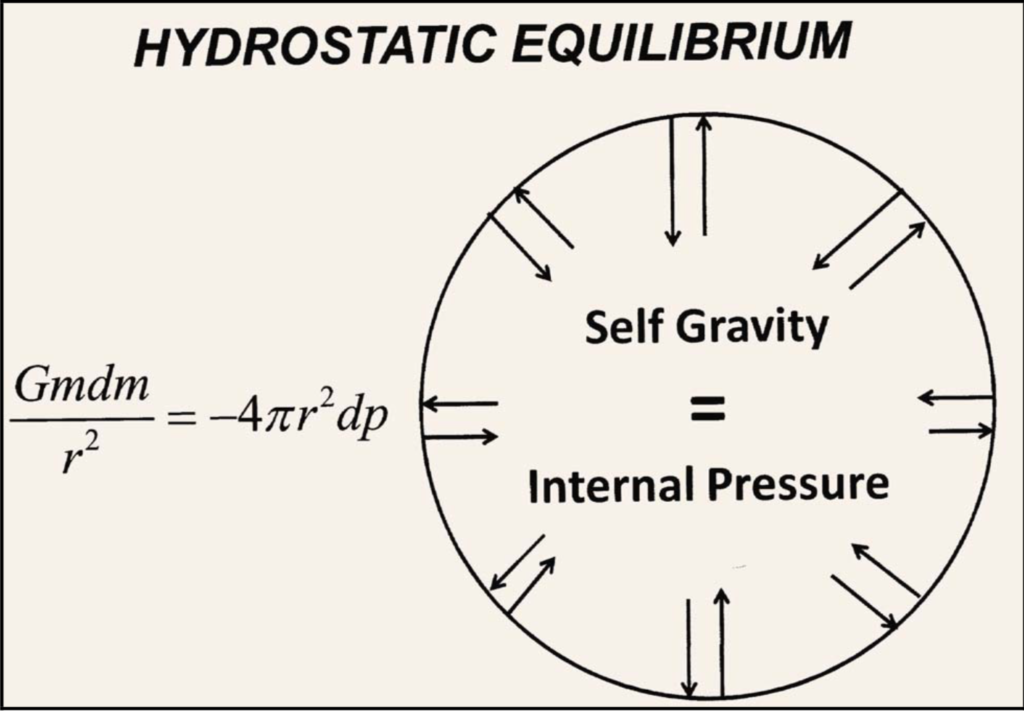
What is a planet?
100
A massive ball of gas that generates prodigious amounts of energy (including light) from nuclear fusion in its hot, dense core.
What is a star?
100
The average distance from Earth to the Sun, slightly less than 93 million miles (150 million kilometers).
What is an astronomical unit?
200
Orbits the sun, has enough mass to assume a nearly round shape, has not cleared the neighborhood around its orbit,not a moon, small size (smaller than a planet)
What is a dwarf planet?
200
Latin for "cloud." Bright ones are great clouds of glowing gas, lit up by stars inside or nearby. Dark nebulas are not lit up and are visible only because they block the light of stars behind them.
What is a nebula?
200
This is a category of planet composed primarily of hydrogen and helium.
What is a gas giant?
200
A distinctive pattern of stars used informally to organize a part of the sky. There are 88 official ones, which technically define sections of the sky rather than collections of specific stars.
What is a constellation?
200
When space object is closest to sun, when space object is farthest from sun.
What is perihelion, what is aphelion?
300
The planet with the most moons.
What is Saturn?
300
A "dirty snowball" of ice and rocky debris, typically a few miles across, that orbits the Sun in a long ellipse. When close to the Sun, the warmth evaporates the ice in the nucleus to form a coma (cloud of gas) and a tail.
What is a comet?
300
Uranus and Neptune are this category of planet.
What is an ice giant? (gas giant is acceptable)
300
Two stars that lie very close to, and are often orbiting, each other. Line-of-sight doubles are a consequence of perspective and aren't physically related. Many stars are multiples (doubles, triples, or more) gravitationally bound together.
What are binary stars?
300
It is a circumstellar disc in the outer Solar System, extending from the orbit of Neptune at 30 astronomical units to approximately 50 AU from the Sun. It is similar to the asteroid belt, but is far larger—20 times as wide and 20-200 times as massive.
What is the Kuiper Belt?
400
A planet with no moons.
What is Mercury?
What is Venus?
400
A brief streak of light caused by a small piece of solid matter entering Earth's atmosphere at tremendous speed (typically 20 to 40 miles per second). Also called a "shooting star."
What is a meteor?
400
The largest planet in our solar system as well as the smallest.
What is Jupiter? What is Mercury?
400
Created at the end of a star's life, a concentration of mass so dense that nothing — not even light — can escape its gravitational pull once swallowed up.
What is a black hole?
400
A temporary dark blemish on the surface of the Sun that is a planet-size region of gas cooler than its surroundings. They can be viewed safely using a solar filter.
What is a sunspot?
500
Name 2 dwarf planets.
What is:
Pluto/Haumea/Makemake/Ceres/Eris
500
If a meteor survives the trip through the atmosphere, it's called this after landing on Earth's surface.
What is a meteorite?
500
The asteroid belt comes in between these planets, separating terrestrial planets from gas/ice giants.
What are Mars & Jupiter?
500
Any prominent star pattern that isn't a whole constellation, such as the Northern Cross or the Big Dipper.
What is an asterism?
500
The point in the sky that's directly overhead.
What is the zenith?