Seasons
Vocabulary
The Moon & Earth (1)
The Moon & Earth (2)
Miscellaneous
100
If we are experiencing winter here in the northern hemisphere, what season is being experienced in the southern hemishere?
Summer
100
In your own words, what is an "axis"?
An imaginary line in the middle of a celestial body around which it spins
100
Identify the moon phase.
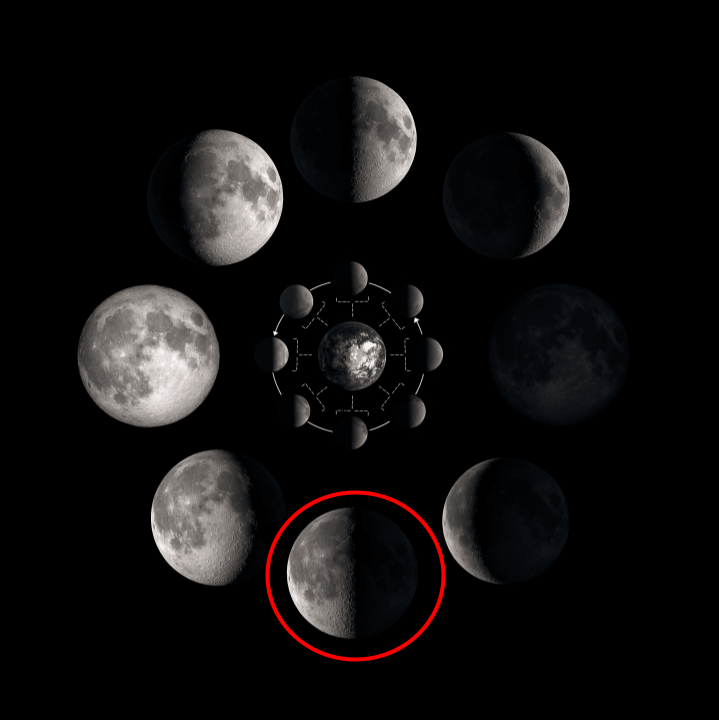
Last/Third Quarter.
100
Identify the moon phase.
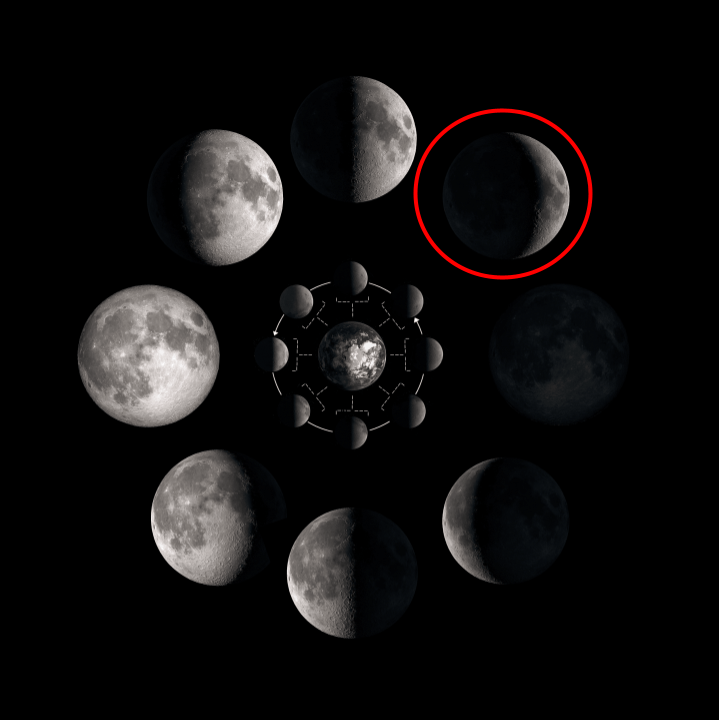
Waxing Crescent.
100
What are the tides?
Periodic rise and fall of water level in oceans caused by the Sun and Moon’s gravity
200
What causes the seasons?
Earth's tilt
200
What is the difference between an equinox and a solstice?
Equinox: night and day are equal (12 hours)
Solstice: night and day are as different in length as possible (summer is longest day, winter is longest night)
200
If we experience a lunar eclipse, which moon phase must be occuring?
Full moon
200
This occurs when the moon passes the Earth and the Sun.
A Solar Eclipse.
200
What is a celestial body?
Daily Double
A natural object which is located outside of Earth's atmosphere, such as the Moon, the Sun, an asteroid, planet, or star
300
How does latitude impact how we experience seasons?
It determines how much direct sunlight we are getting at a specific time and helps know which season we are experiencing.
300
What is the difference between a gibbous and a crescent moon?
Daily Double
Crescent < 50% lit
Gibbous > 50% lit
300
Identify the tide.
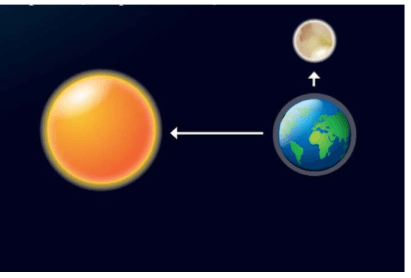
Neap Tide.
300
Identify the tide.
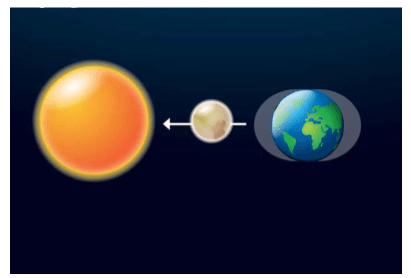
Spring Tide.
300
Each day, there are _ high tides and _ low tides.
2, 2
400
Explain how Earth's tilt causes us to experience seasons.
We are either tilted toward or away from the Sun.
400
What is the difference between an umbra and a penumbra?
Umbra: total eclipse
Penumbra: partial eclipse
400
If we experience a First Quarter Moon on July 15th, which moon phase will we experience on August 15th?
Waxing Gibbous
400
In your own words, explain why we see different phases of the moon.
We see different phases of the moon because we see the Moon from different angles as it revolves around the Earth. When it is in different positions, it changes how much of the lit up side of the moon that we see.
400
How long does one lunar cycle last?
29 1/2 days
500
Sketch a model to show how the Earth's tilt causes the seasons.

500
How are revolution, rotation, and orbit different?
Rotation: spin on axis
Revolution: to move around another object
Orbit: the path an object follows to revolve
500
In your own words, explain why we don't have a lunar eclipse every month.
Hint: Instead, we have a full moon. Why?
The moon's orbit is tilted 5 degrees.
500
In your own words, explain how the moon impacts the tides.
The moon's gravity pulls on the tides. The side of the Earth that is facing the moon (and the direct opposite side) will have a high tide.
500
In your own words, explain the following: What causes a solar eclipse to happen? If there is a solar eclipse, where would I have to be in order to see it?
A solar eclipse is caused by the Moon moving directly between the Earth and Sun. To see a total solar eclipse, you would have to be in the umbra, or the shadow cast by the Moon on the Earth.