Trends of the Periodic Table
Covalent vs Ionic Bonds
Metals/Non Metals/ Metalloids
Number of protons, neutrons, electrons in atoms and isotopes
The structure of the atom
100
Which way do periods go in the periodic table?
Left to right.
100
When do Covalent Bonds form?
When Electrons are shared
100
What are the three major groups on the Periodic table?
Non metals, Metals, and Metalloids.
100
 how many protons does oxygen have?
8 protons
100
Where are protons found in the atom?
Inside the nucleus
200
In the periodic table, which way do the families go?
Verticle. (Up and down)
200
When do Ionic bonds form?
When a positive (Metal) and a Negetive (Non metal) Come together.
200
What are some physical properties used to distinguish between the three groups?
Luster, Metallic, or non-metallic
200
How do you find the number of Neutrons?
mass number - atomic number = number of neutrons
200
Where are electrons found in the atom?
Outside the Nucleus
300
How do the amount of rings on the oribitals relate to the period/row?
They are the same number.
300
If an atom does not have 8 valence electrons, what might it try to do?
Get rid of or gain electrons to have 8.
300
True or False - Metals are found to the let of the zig-zag line on the periodic table.
True
300
How do you find the amount of Electrons?
If the atom is neutral, it will be the same as the atomic number. (Number in top left corner)
300
Where are neutrons found in the atom?
Inside the Nucleus
400
Where do the Noble Metals tend to be located on the Periodic table?
Towards the middle
400
After adding or subtracting negativley charged electrons, what is the atom now called?
The atom is now called an Ion
400
Non-metals are found to the ______ of the zig zag line on the periodic table.
The right.
400
What is it called when there are more protons than electrons?
A postive charge.
400
Which subatomic particles have mass in the atom?
Protons and Neutrons
500
Where is the mass number on the Periodic Table?
On the bottom (Usually under the name)
500
True or False, atoms can't share electrons.
False. Atoms can share electrons.
500
True or False - Metalloids have No set characteristics.
True
500
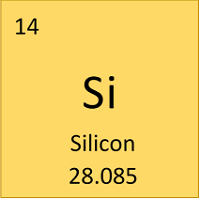 How many protons, neutrons, and electrons does silicon have? What's the mass number and atomic number?
14 protons, neutrons, and electrons. The mass number is 28, and the atomic number is 14
500
What Subatomic Particle has a neutral charge?
Neutrons