How Do We Know?
Inside the Atom
Reading the Table
Table Organization
Sorting Substances
Counting Atoms
Vocabulary I
Vocabulary II
100
This is what all matter is made of — particles far too small to see.
What are atoms?
100
This subatomic particle carries a negative charge.
What is an electron?
100
On a periodic table square, this number tells you how many protons an atom has.
What is the atomic number?
100
Rows on the periodic table go across and are called this.
What is a period?
100
A substance made of only ONE kind of atom is called this.
What is an element?
100
In H2O, this is the total number of atoms.
What is 3?
100
Anything that has mass and takes up space.
What is matter?
100
A vertical column on the periodic table, also called a family.
What is a group?
200
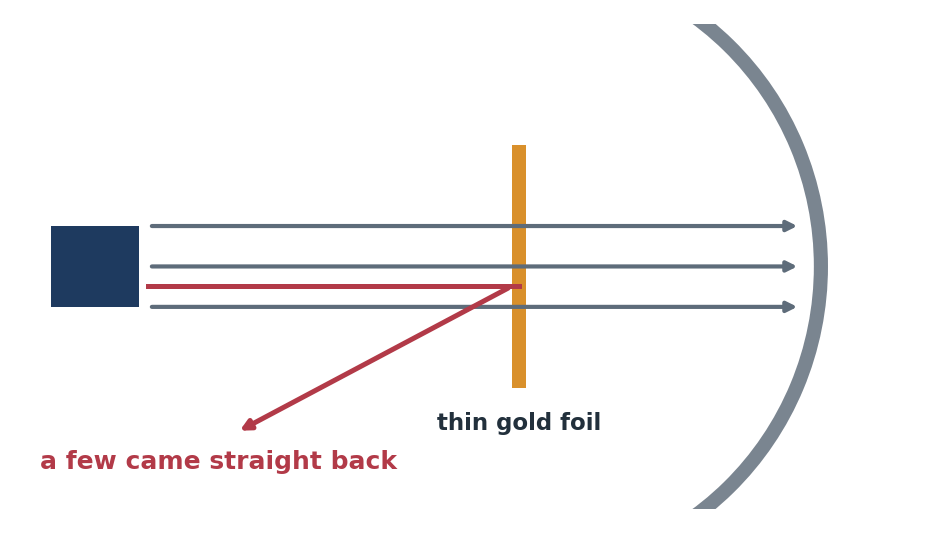 Rutherford aimed particles at thin gold foil. Most went straight through, but a few came straight back. This is what those few told him was at the center of the atom.
What is a small, dense, positively charged nucleus?
200
Protons and neutrons both live here.
What is the nucleus?
200
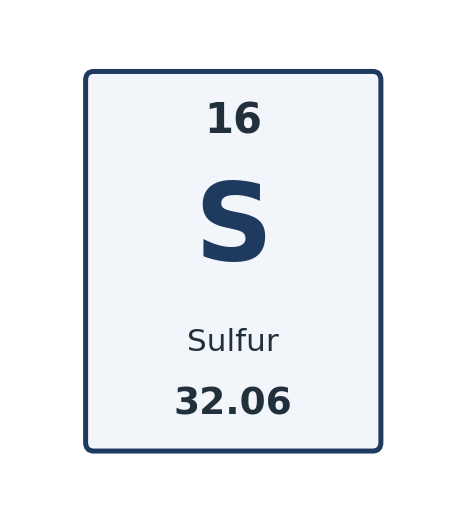 Look at this square. Give the number of protons in a neutral sulfur atom.
What is 16?
200
The pink column on this table is Group 18. Name this family.
What are the noble gases?
200
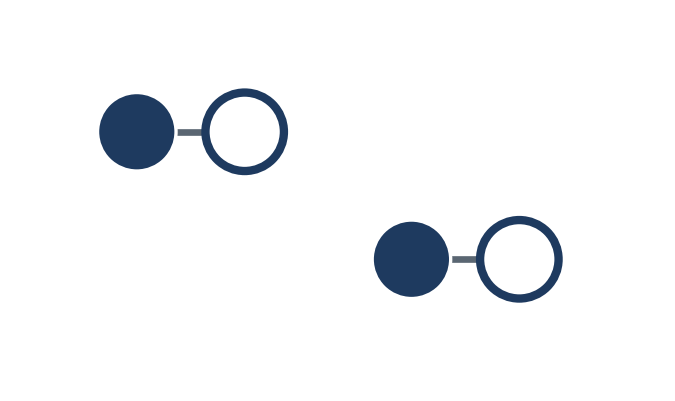 This diagram shows two different elements bonded together.
What is a compound?
200
In 3CO2, this is the number of atoms.
What is 9?
200
The positive particle in the nucleus — the one that decides which element an atom is.
What is a proton?
200
An element that is dull, brittle, and a poor conductor.
What is a nonmetal?
300
Scientists changed the atomic model many times over 2,000 years. This is the reason why — and it is NOT because early scientists were unintelligent.
What is new evidence?
300
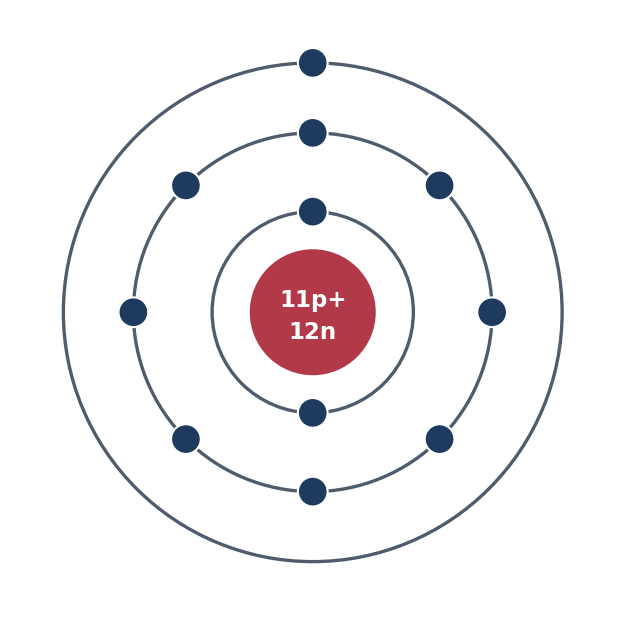 This diagram shows a neutral atom. Name the element. (Hint: You'll need to look at the periodic table most likely unless you remember).
What is sodium (Na)?
300
Using this same square, give the number of neutrons. Remember to round first.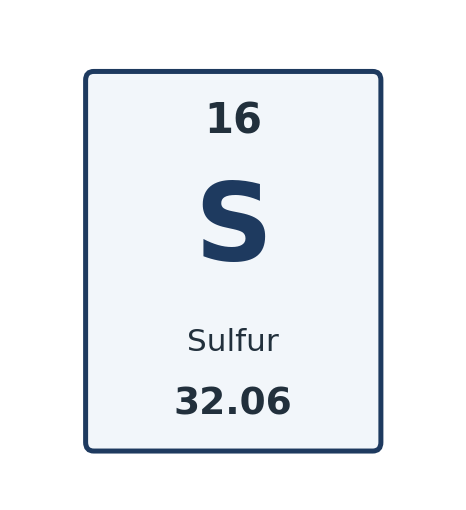
What is 16? (32 − 16)
300
Elements in the same group act alike. This is the reason why.
What is they have the same number of outer electrons?
300
 This diagram shows particles that are NOT bonded to each other
What is a mixture?
300
In Ca(OH)2, this is the total number of atoms.
What is 5?
300
The tiny particles that live in the electron cloud.
What are the electrons?
300
Two or more atoms bonded together — they can be the same element or different ones.
What is a molecule?
400
Nobody has ever seen a single atom the way you see a chair. This is the kind of evidence scientists used instead.
What is indirect evidence?
400
An atom has 12 protons, 12 neutrons, and 12 electrons. This is its overall charge — and neutrons are not the reason.
What is neutral (zero)?
400
The atomic mass on the table almost always has a decimal in it. This is why.
What is it is an average of atoms with different numbers of neutrons?
400
On this diagram, the gold squares, between the green and peach colors, are this kind of element.
What are metalloids?
400
O₂ is a molecule, but it is NOT one of these — and here is the reason.
What is a compound (both atoms are the same element)?
400
In 2Fe2O3, this is the total number of atoms.
What is 10?
400
The space outside the nucleus where electrons move.
What is the electron cloud?
400
The small number written AFTER a symbol that counts only that one atom.
What is a subscript?
500
Before Rutherford, scientists pictured the atom as solid all the way through. His experiment showed the atom is mostly this instead.
What is empty space?
500
Almost all of an atom's mass sits in the nucleus. This is why the electrons barely count.
What is because electrons have almost no mass?
500
An atom has 17 protons. Name the element — and the periodic table is your friend here.
What is chlorine?
500
Hydrogen sits above Group 1 with the alkali metals, but hydrogen is actually one of these.
What is a nonmetal?
500
This is the one question you ask to tell an element from a compound.
What is: is there more than one KIND of atom bonded together?
500
In 3Ca(NO3)2, this is the total number of atoms.
What is 27?
500
The average mass of an element's atoms, measured in amu.
What is atomic mass?
500
One single thing — either an element or a compound, with nothing mixed in.
What is a pure substance?