Parts of an Atom
Atoms, Elements, Compounds & Molecules
Periodic Table Organization
Families of Elements
100
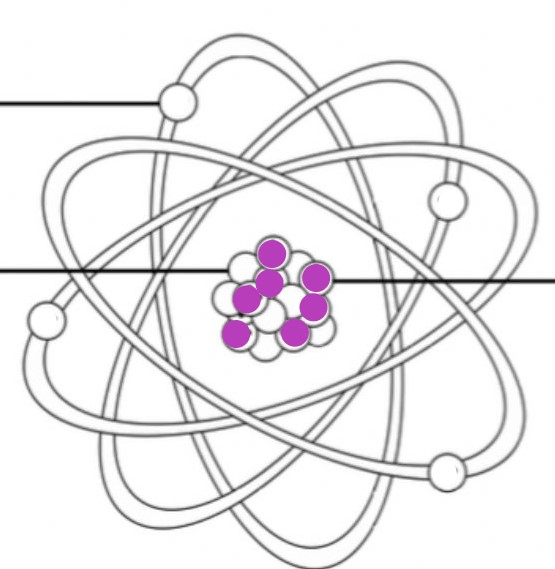
The purple circles are showing an atoms protons; protons have what type of charge?
positive
100
Hydrogen, Oxygen, and Carbon are all examples of
A. Molecules
B. Elements
C. Atoms
D. Compounds
B. Elements
100
Rows, or periods, on the Periodic Table are organized by ____________________________
A. Similarities between elements
B. Same number of electron shells
C. Same number of valence electrons
B. Same number of electron shells
100
True or False; families of elements share similarities with one another
True
200
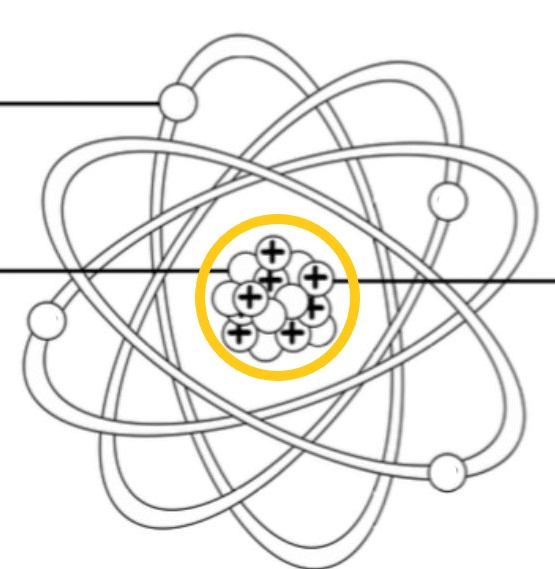
The yellow circle is indicating which part of the atom?
The Nucleus
200
An atom is defined as _______________________.
The smallest piece of matter.
200
Columns, or groups, on the Periodic Table are organized by
A. Similarities between elements
B. Same number of electron shells
C. Same number of valence electrons
C. Same number of valence electrons
200
The most elements on the Periodic Table belong to the group
A. Noble Gases
B. Rare Earth Metals
C. Transition Metals
D. Non-Metals
C. Transition Metals
300
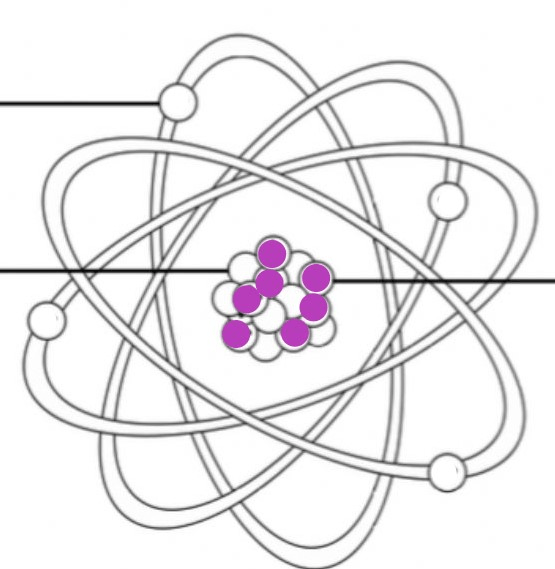
This atom is indicating which number element on the Periodic Table?
Element 7; Nitrogen
300
The combination of 2 oxygen atoms and 1 carbon atom makes carbon dioxide (CO2). Carbon dioxide is a ____________.
Compound
300
The scientist who organized the Periodic Table
Dimitri Mendeleev
300
This family of elements contains elements that are least likely to bond with other elements
A. Poor Metals
B. Alkali Metals
C. Halogens
D. Noble Gases
D. Noble Gases
400
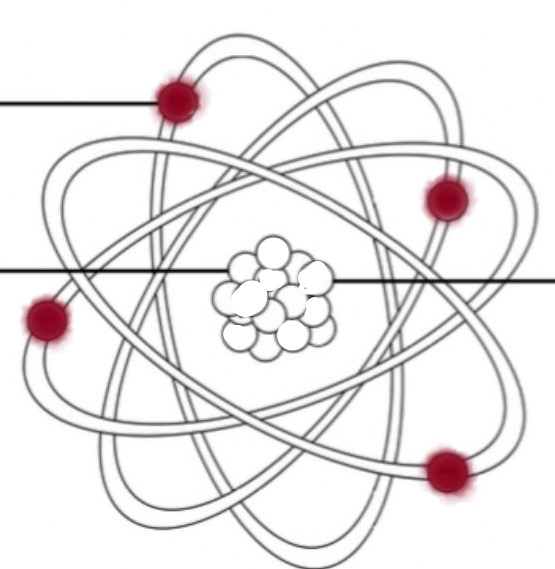
What part of the atom is shown by the red circles?
Electrons
400
There are __________ elements on the Periodic Table.
118
400
The number of protons in an atom's nucleus is equal to its __________________ on the Periodic Table
Atomic Number
400
The element sodium is abbreviated as Na, Na is the elements ____________.
Atomic Symbol
500
If the number of electrons does not match the number of protons in an atom; that atom is said to be a(n) _________.
Ion
500
O2 would be considered a
A. Element
B. Atom
C. Molecule
D. Compound
C. Molecule
500
How many TOTAL electrons can an element in the second row have (remember that could be a full 1st and 2nd cloud)
10
500
True or False; All elements on the Periodic Table can be found in nature, even if just a minuscule amount.
False; Super Heavy Elements and Actinide Metals are all man made.