Graphs
Behavior Acquisition
Behavior Reduction
Ethics
Behavior Assessments
100
When looking at a graph we need to understand the differences between the axes.
Determine which is the Y axis and which is the X axis

A: Going up is the Y axis, going across is the X axis
B: Going up is the X axis, going across is the Y axis
A: Going up is the Y axis, going across is the X axis
100
A child finishes their homework and their parent gives them a piece of tablet time. As a result, the child completes their homework more frequently in the future. What is this?
A. Positive punishment
B. Negative reinforcement
C. Positive reinforcement
D. Negative punishment
C. Positive reinforcement
Remember:
Reinforcement = behavior increases
Positive = something is added
Negative = something is removed
100
What are the 4 functions of behavior?
A. Tangibles, Denial, Sensory, Escape
B. Sensory, Automatic, Escape, Tangibles
C. Attention, Escape/Avoidance, Access to Tangibles, Sensory/Automatic
D. Avoidance, Tangibles, Automatic, Denied Access
C. Attention, Escape/Avoidance, Access to Tangibles, Sensory/Automatic
100
You are an RBT working with a 7-year-old client. The client’s parent asks you to babysit the child on weekends and offers to pay you separately. They also ask you to follow a different behavior plan at home than the one created by the BCBA.
A. Accept the babysitting job but continue following the BCBA’s plan during therapy hours.
B. Accept the job because it is outside your scheduled work hours.
C. Decline the babysitting arrangement and inform your supervisor/BCBA about the parent’s request.
D. Agree to the different behavior plan because the parent is the client’s legal guardian.
C. Decline the babysitting arrangement and inform your supervisor/BCBA about the parent’s request.
100
A behavior that helps someone get out of an unwanted situation is serving the ___ function.
A. Attention
B. Automatic
C. Escape
D. Tangible
C. Escape
The answer is Escape because the purpose of the behavior is to avoid or get out of an unwanted demand, activity, or situation
200
Why do we graph data?
A: To communicate information about the results of your interventions
B: To show the relationship between the independent variables and the dependent variables
C: To support data-based instructional decision making
D: All of the above
D: All of the above
200
When implementing prompts, what is the correct order using least-to-most prompting?
a) Verbal, model, gesture, partial physical, full physical
b) Verbal, gesture, model, partial physical, full physical
c) Gesture, verbal, model, partial physical, full physical
d) Model, gesture, verbal, full physical, partial physical
b) Verbal, gesture, model, partial physical, full physical
Remember:
you are offering the least amount of help to the most amount of help
200
Which option includes various antecedent intervention strategies?
A. Environmental modifications
B. Visual aids/supports
C. Choice Making Strategies
D. All of the Above
D. All of the above.
Antecedent Interventions/Strategies used in ABA therapy that will proactively change the environment or events before a behavior, with the goal of reducing interfering behaviors, and setting the learner up for success.
200
During a session, an RBT realizes they made a mistake while recording data. What should the RBT do?
A. Erase the original data and write down what they think the correct data was.
B. Ignore the mistake and continue the session.
C. Be honest about the mistake and follow the proper procedure for correcting the data.
D. Ask another RBT to change the data for them.
C. Be honest about the mistake and follow the proper procedure for correcting the data.
200
A client sees a preferred toy and engages in a behavior until they are given the toy. Which function best explains what the client is trying to gain?
A. Escape
B. Automatic
C. Attention
D. Tangible
D. Tangible
The function is tangible because the behavior results in the client gaining access to a preferred item. Tangible-maintained behavior occurs when a behavior helps the client get something they want, such as toys, food, devices, or preferred activities.
300
What does the following graph depict?
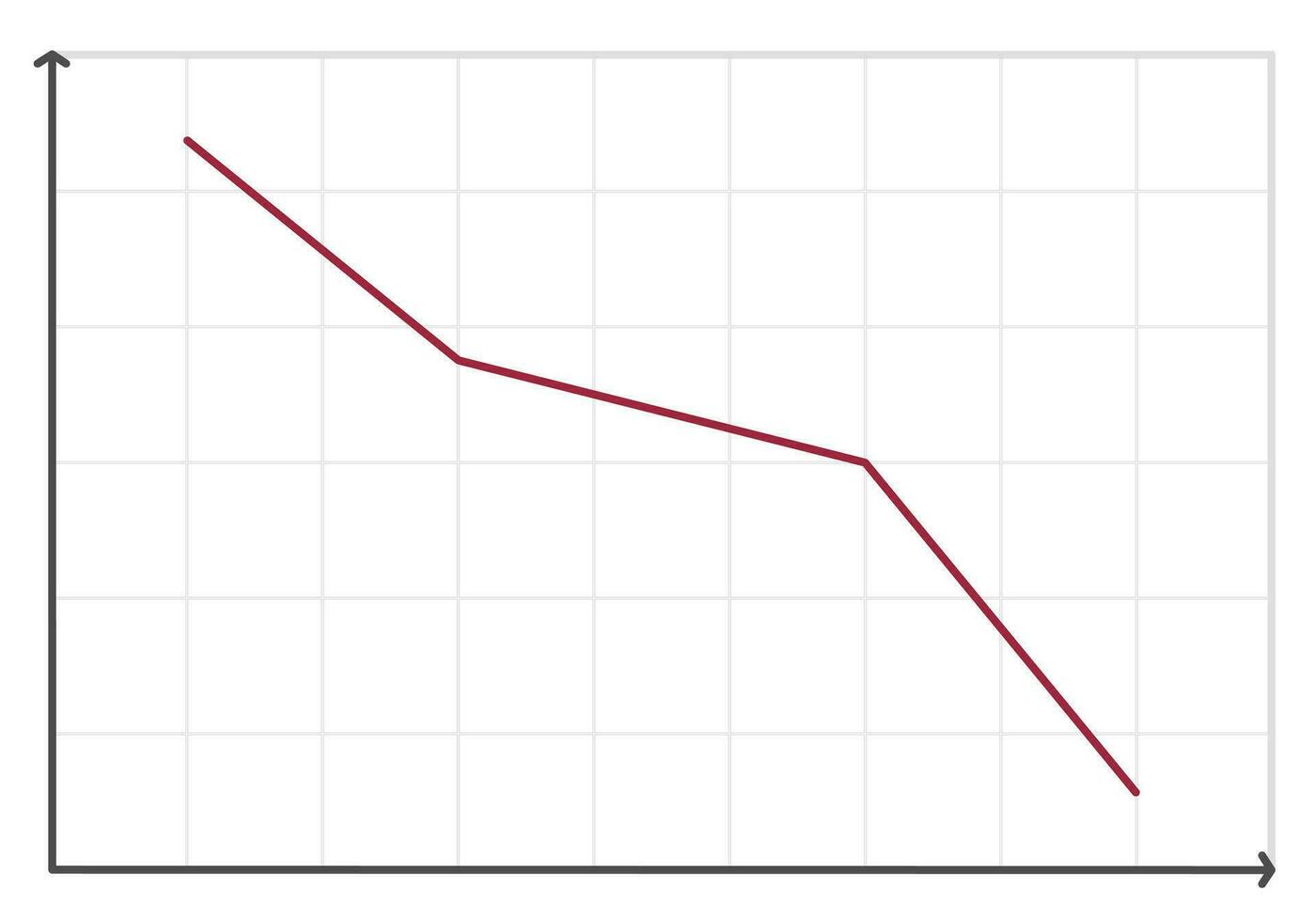
A: No trend
B: Increasing trend
C: Increasing trend, variable responses
D: Decreasing trend
D: Decreasing trend
300
An RBT is teaching their client to say “elephant.” The client can only say “el.“ The RBT accepts and praises this response.
Then, the RBT reinforces the client for saying “ele.” Later, the RBT only reinforces “elepha” and eventually requires the learner to say the complete word “elephant” before receiving their reinforcement.
What procedure is the RBT using?
a) prompting
b) prompt fading
c) shaping
d) extinction
c) Shaping
Remember: In shaping, we reinforce successive approximations, or close behaviors, of a wanted behavior. We reinforce small versions of the wanted behavior until it becomes the target behavior.
300
What do you always use with Differential Reinforcement procedures?
A. Extinction procedures
B. Denied Access
C. Reinforcers/Praise
D. Placing a SD/Demands
A. Extinction Procedures
We use extinction procedures by removing whatever was reinforcing the maladaptive behavior. Extinction procedures are always used with differential reinforcement. If you are going to reduce a maladaptive behavior, you must increase an adaptive/appropriate replacement behavior.
300
You are an RBT working with a client whose challenging behavior has recently increased. During a session, the client’s parent tells you: “I know the BCBA doesn’t want us using punishment, but I’ve been taking away all of his favorite toys whenever he hits, and it seems to work. Please don’t tell the BCBA because they’ll make me stop.” Later that day, you notice the parent using the same procedure with the client. The parent asks you to continue using it during your sessions because “it works faster.” What should you do?
A. Use the procedure only when the parent is present so you can support the family.
B. Follow the BCBA-approved behavior plan and report the parent’s request and concern to your supervisor/BCBA.
C. Continue using the procedure because the parent has the right to choose how their child is treated.
D. Ignore the situation because the parent is responsible for what happens outside your sessions.
B. Follow the BCBA-approved behavior plan and report the parent’s request and concern to your supervisor/BCBA.
300
Which question would BEST help you determine whether a behavior may have an escape function?
A. Does the client receive an item afterwards?
B. Does the behavior occur to avoid or get away from something?
C. Does the behavior produce its own stimulation?
D. Does the client receive interaction afterwards?
B. Does the behavior occur to avoid or get away from something?
Escape means the behavior is used to avoid, delay, or get away from a demand or situation. Asking whether the behavior occurs to get away from something helps determine if escape may be the function.
400
What does the following graph depict?
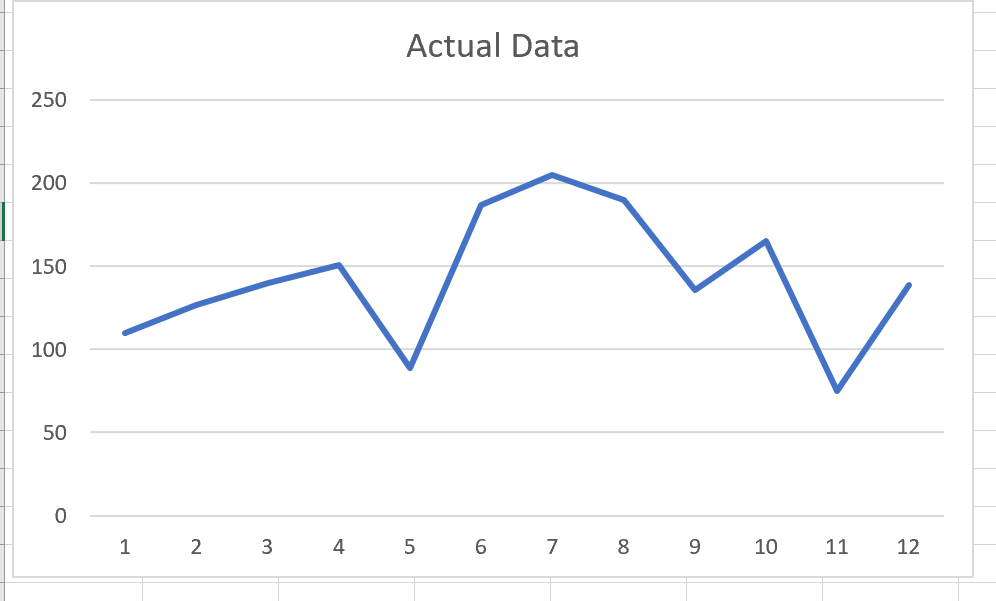
A: No trend
B: Increasing trend
C: Increasing trend, variable responses
D: Decreasing trend
A: No trend
400
An RBT is teaching their client to make brush their teeth using a 6-step task analysis. The RBT completes the first five steps for the client but has them complete the final step. When the learner masters the final step, the RBT begins teaching the fifth step while still having the client complete the final step independently.
Which type of chaining is being used?
A. Forward chaining
B. Backward chaining
C. Total-task chaining
D. Multiple-step chaining
B. Backward chaining
Remember: the client is initially taught the last step of the sequence in backwards chaining. When the final step is mastered, the client works on the steps prior to it in order.
400
If your client is engaging in mouthing behaviors through a sensory seeking function, what would be the proper Differential Reinforcement type to use?
A. DRL- Differential reinforcement of lower frequency behaviors
B. DRO- Differential reinforcement of Other behaviors
C. DRI- Differential reinforcement of incompatible behaviors
D. DRA- Differential reinforcement of alternative behaviors
C. DRI (Differential Reinforcement of Incompatible Behaviors)
DRI is when we reinforce a behavior that cannot physically occur at the same time as the maladaptive behavior.
400
An RBT is working with a client when the client’s parent asks, “How is my child doing compared to the other kids you work with?” The RBT knows information about other clients but is unsure what they are allowed to share. What should they do?
A. Ask another RBT what they think and then give the parent an answer.
B. Give the parent a general comparison without using the other clients’ names.
C. Tell the parent everything because they are the client’s legal guardian.
D. Explain that they cannot share information about other clients, but they can discuss their own child’s progress.
D. Explain that you cannot share information about other clients, but you can discuss their own child’s progress.
400
Which TWO functions typically involve gaining access to something?
A. Attention and Tangible
B. Escape and Automatic
C. Escape and Attention
D. Automatic and Tangible
A. Attention and Tangible
Attention and Tangible both involve gaining access to something. Attention involves gaining social interaction from another person, while tangible involves gaining access to a preferred item or activity.
500
What does the following graph depict?
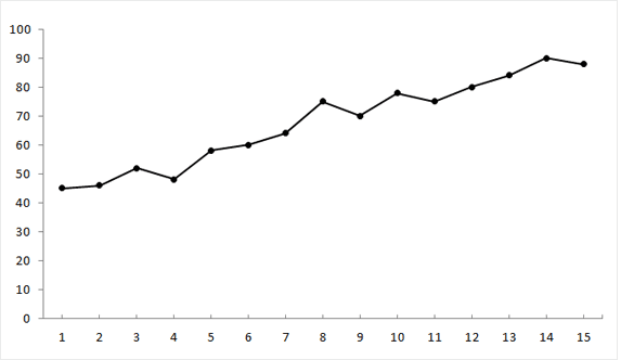
A: No trend, stable responses
B: Increasing trend, stable responses
C: Increasing trend, variable responses
D: Decreasing trend, variable responses
C: Increasing trend, variable responses
500
An RBT is teaching their client to identify pictures of different animals. The program is presented in a structured system; the RBT presents one picture at a time and asks “What animal do you see?” The RBT waits for the client’s response and delivers a reinforcer immediately after the correct response. The RBT then records the data and deliberately switches the picture sequences in the following trials. This helps ensure the client is consistently challenged by the program and prevents biases.
Which acquisition approach is being used?
A. Naturalistic teaching
B. Generalization
C. Discrete Trial Training (DTT)
D. Maintenance
C. Discrete Trial Training (DTT)
Remember: DTT involves structured, repeated learning trials with clear antecedent strategies, instructions, client response, and consequence that is collected with data after each trial.
500
You are in a home session with your client, and the family is sitting down to eat dinner at the table. The client is expected to sit and eat with the family for 15-minutes before leaving. The mom sets a timer and if the client stays seated for the 15 minutes, they will earn more TV time before bed. Which Differential Reinforcement type is this situation describing?
A. DRI
B. DRL
C. DRA
D. DRO
D. DRO
Reinforcement is delivered when the target behavior does not occur during a specified time interval. This reinforcement type can be flexible and can be used when you do not have a specific replacement behavior to use but want the maladaptive behavior to decrease over time.
500
You are an RBT working with a 9-year-old client whose family practices a religion that is different from your own. During a session, the client’s parent tells you: “Our religion teaches that certain behaviors are morally wrong. I want you to tell my child that their behavior is sinful and that God will punish them if they continue.” The parent also asks you to begin incorporating religious teachings into the behavior intervention because they believe it will make the treatment more effective. The BCBA’s treatment plan does not include religious instruction. You personally disagree with the family’s beliefs, but you also want to respect their right to practice their religion. The parent becomes frustrated and says: “If you refuse, you’re disrespecting our religion and our family.”
What is the MOST ethical response?
A. Avoid imposing your own religious beliefs or independently adding religious instruction, remain respectful and culturally responsive, and discuss the parent’s request with the BCBA to determine whether any requested changes are appropriate and consistent with the treatment plan and professional boundaries.
B. Refuse because religion should never be discussed during ABA services, regardless of the family’s wishes.
C. Agree to incorporate the family’s religious teachings because respecting the family’s beliefs should come before the RBT’s personal opinions.
D. Tell the parent that their religious beliefs are inappropriate for the child and recommend that they keep religion completely separate from treatment.
A. Avoid imposing your own religious beliefs or independently adding religious instruction, remain respectful and culturally responsive, and discuss the parent’s request with the BCBA to determine whether any requested changes are appropriate and consistent with the treatment plan and professional boundaries.
500
A client engages in repetitive behavior for sensory stimulation. Which option BEST matches the identified function?
A. Providing an appropriate sensory alternative
B. Giving frequent attention
C. Removing all demands
D. Giving access to a preferred toy
A. Providing an appropriate sensory alternative
Because the behavior is maintained by sensory stimulation, its function is automatic. Providing an appropriate sensory alternative gives the client another way to access similar sensory input.