Cervical Vertebrae
Thoracic and Lumbar Vertebrae
Other questions
Thoracic cage
Identify
100
Another name for C1
Atlas
100
The number of thoracic vertebrae.
12
100
The five sections of the spine.
Cervical, Thoracic, Lumbar, Sacral, Coccygeal
100
How many pairs of ribs do you have?
12
100
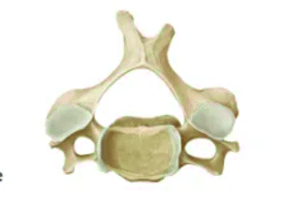
What type of vertebrae is this? How do you know?
Cervical
Bifid spinous process
transverse foramen
200
The number of cervical vertebrae.
7
200
The characteristics of thoracic spinous process.
They are longer and more vertically inclined (point downward).
200
Distinction of the lumbar vertebrae
Largest body, more short and stout spinous process
200
Which ribs are floating ribs? Why?
11 and 12 because they have no cartilage that attaches them to the sternum.
200
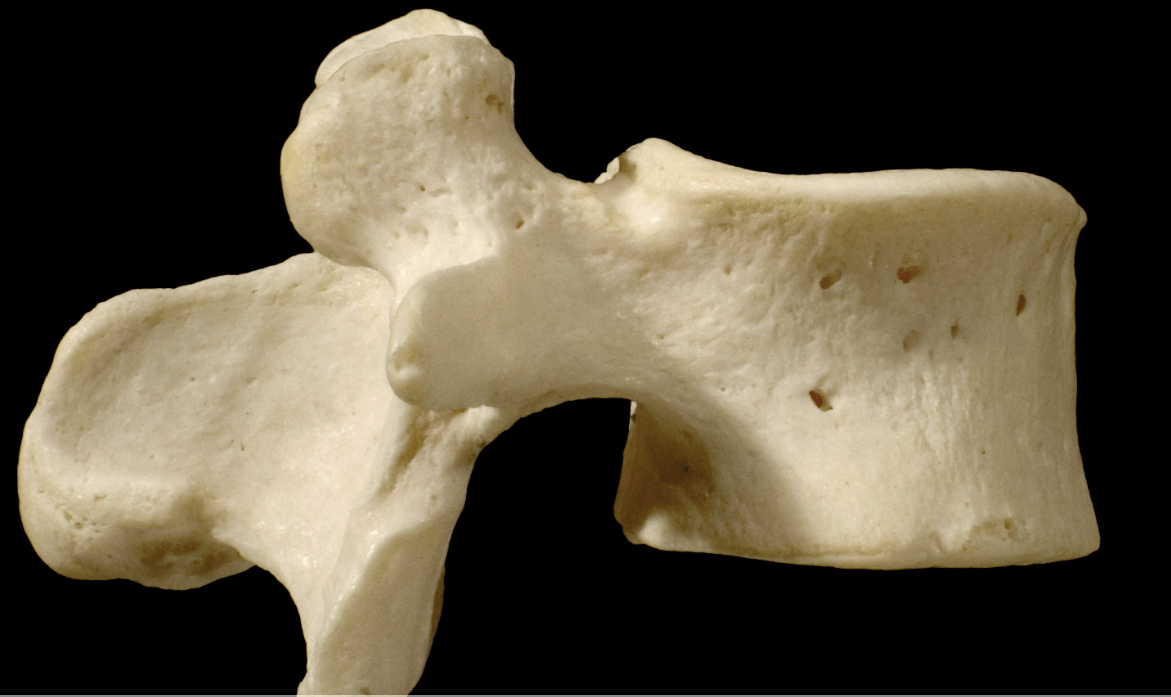
What kind of vertebrae is this? How do you know?
Lumbar
Thick body
shorter, stout spinous process
300
What do all cervical vertebrae have (except C1)?
A bifid spinous process
A transverse foramen
300
The number of lumbar vertebrae.
5
300
The number of vertebrae that make up the spine. (non-fused portion)
24
33 with fused sacrum and coccyx
300
True ribs are ribs # _ through__. Why are they called true ribs?
1-7 because they connect through cartilage to the sternum.
300
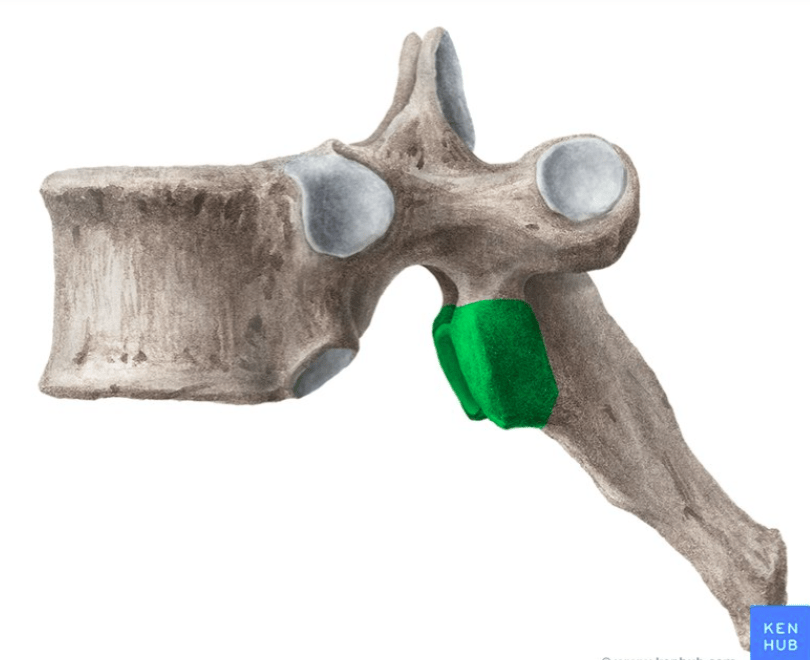
What kind of vertebrae is this? How do you know?
Thoracic
Downward pointing spinous process
Costal facets
400
What is special about C1?
It does not have a body or spinous process.
400
Thoracic vertebrae all articulate with what other bones?
ribs
400
These two sections of the spine are fused bones.
Sacrum and coccyx
400
What are the 3 parts of the sternum?
Manubrium, body, xiphoid process
400
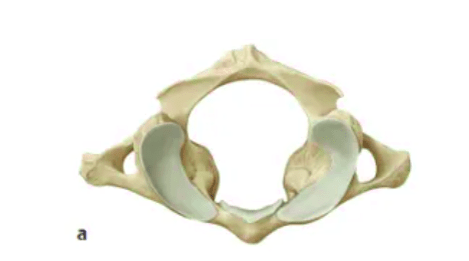
Which specific vertebrae is shown? How do you know?
C1-Atlas
No body
No spinous process
transverse foramen
500
The large bony process between the 2 articular surfaces of the axis.
Dens
500
Thoracic vertebrae have these but cervical and lumbar do not.
Costal Facets
500
What is the name of the structure C1 has that is in place of a spinous process?
Posterior Arch
500
What is the name of the cartilage that connects the ribs to the sternum?
Costal cartilage
500
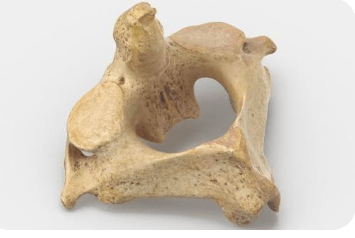
What specific vertebrae is this? How do you know?
C2- Axis
Bifid spinous process
Dens