Surface PreP Failures
Safety& Environmental Regs
Application Errors
Exterior Failure
Solutions and Remedies
100
Failing to remove grease, oil, or wax from a substrate prior to painting primary results in this defect.
What is poor adhesion (or peeling/flaking)?
100
The detailed document provided by chemical manufacturers that outlines hazards, handling procedures, and emergency measures for paints and solvents
What is a Safety Data Sheet (SDS / MSDS)?
100
Unintentional downward flow or curtaining of wet paint caused by applying too thick of a coat or over-thinning.
What is sagging (or runs)? 
100
Formation of a fine, loose powder on the surface of an exterior paint film caused by atmospheric degradation of the binder.
What is chalking?
100
The primary remedy for severe chalking, flaking, or peeling paint before recoating.
Scrape and sand: Use a paint scraper, wire brush, or power sander to remove all loose, flaking, or peeling paint down to a sound, stable base.
Wash and clean: Wash away chalky residue and dirt using a pressure washer or a scrub brush with a trisodium phosphate (TSP) solution, then rinse thoroughly and let it dry completely.
Prime the surface: Apply a high-quality, peeling-binding primer (for peeling/flaking areas) or a masonry/chalk-binding primer (for leftover chalky surfaces) to lock down the substrate before painting.
200
A white, powdery deposit that forms on masonry, brick, or concrete surfaces due to water-soluble salts leaching to the surface.
What is efflorescence?
200
The maximum allowable concentration of chemical vapors a worker can be exposed to over an 8-hour work shift without adverse effects.
What is the Permissible Exposure Limit (PEL / TLV)?
TLVs or Threshold Limit Value are guidelines/recommendations based on health and medical research, rather than legally enforceable law. (In contrast, OSHA's PEL or Permissible Exposure Limit is the legally enforceable federal standard).
200
Tiny, pinhole-sized voids in the dried film often caused by trapped air bubbles escaping from a wet film applied over porous substrates.
What is pinholing (or cratering)?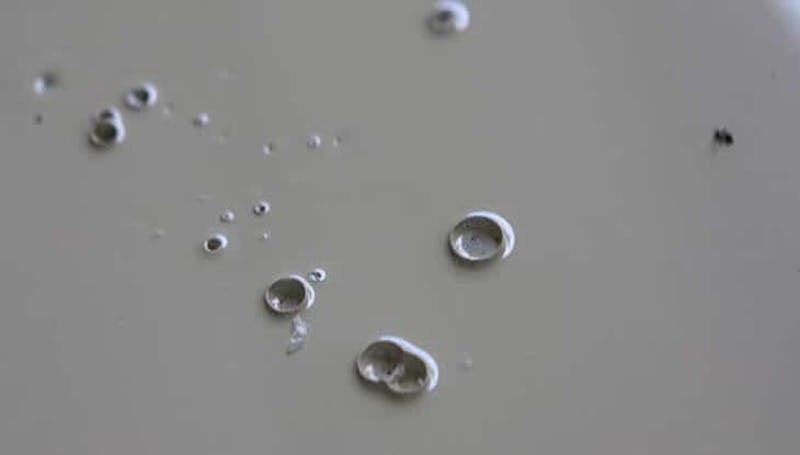
200
Dome-shaped blisters formed under paint when water or vapor gets trapped behind an impermeable paint layer.
What is blistering? 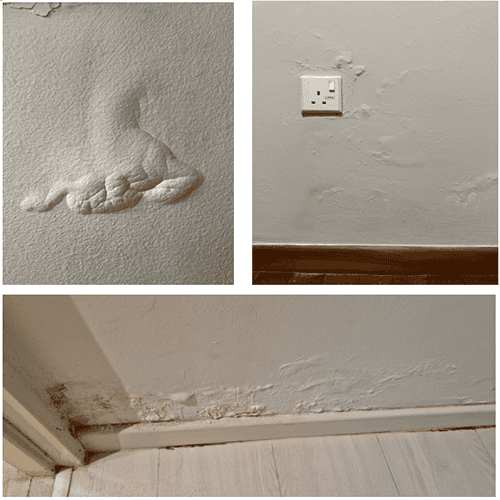
200
Corrective measure for efflorescence on concrete or masonry before re-painting.
Method A: Dry Brushing (Best for light deposits): Use a stiff nylon or wire brush to vigorously scrub away the white crystalline crust. Vacuum or sweep away the dust.
Method B: Vinegar Solution (Best for moderate deposits): Mix a 1:1 solution of white vinegar and water. Apply it to the wall, let it sit for 10 minutes, scrub with a stiff brush, and rinse thoroughly.
Method C: Chemical Etching (Best for severe deposits): Use a commercial concrete etching solution, or mix 1 part muriatic or phosphoric acid into 7 to 10 parts water (Note: Always pour acid into water, never water into acid). Dampen the wall with water first so the acid doesn't discolor the masonry, apply the solution, scrub, and rinse thoroughly. Neutralize the acid afterward by spraying it with a mixture of baking soda and water, then rinse again
300
Paint failure caused by painting over a glossy surface without sanding or applying a deglosser first.
What is intercoat adhesion failure (or flashing/peeling)?
300
Regulated organic chemicals found in solvents and paints that evaporate into the air and contribute to ground-level ozone pollution.
What are Volatile Organic Compounds (VOCs)?
300
A stippled, bumpy surface pattern resembling a citrus skin, caused by improper atomization, wrong solvent selection, or poor flow/leveling.
Spraying with the incorrect pressure and distance causes this texture
 What is orange peel?
300
Dark brown or black organic growth on paint surfaces located in shady, humid exterior areas.
Dark brown or black organic growth on paint surfaces located in shady, humid exterior areas. 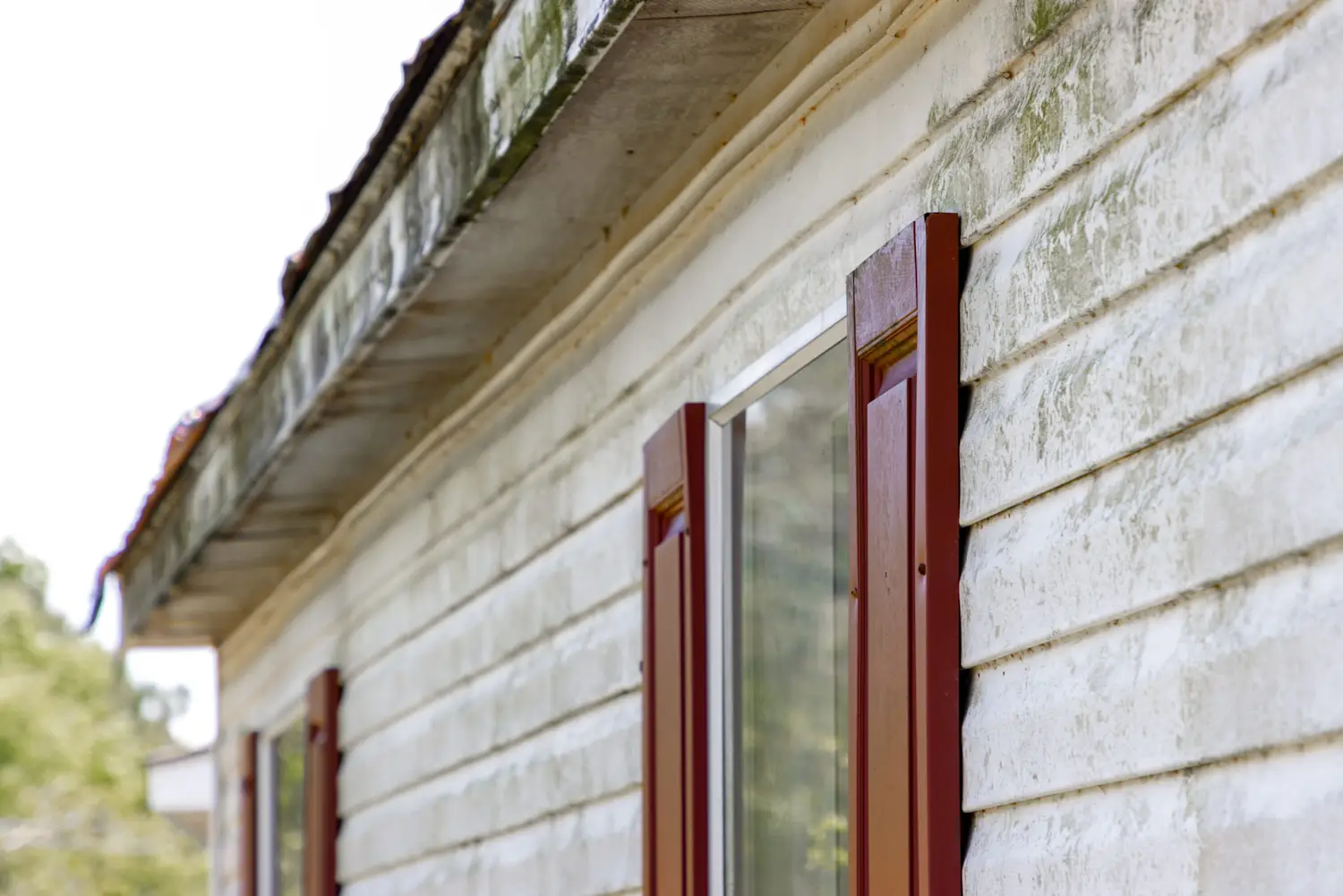
300
The proper fix for a surface affected by severe orange peel or dry spray after it cures.
What is sanding the surface smooth and applying a correctly atomized finish coat?
400
Fine, net-like cracks in a paint film caused by applying topcoats over an un-cured primer or painting over a chalking/dirty surface.
What is crazing (or checking)?
400
The federal OSHA standard requiring employers to inform workers about chemical hazards in the workplace and train them on safe handling.
What is the Hazard Communication Standard (HazCom / Right-to-Know)?
400
A severe condition where the surface layer of a wet paint film dries too quickly and traps wet paint underneath, creating large, deep folds or ridges across the surface.
What is wrinkling
400
The severe breaking of a paint film down to the bare substrate, leaving sharp, cracked edges that flake off.
What is alligatoring (or deep cracking)?

400
The required remediation procedure after a finish coat cures with severe orange peel texture.
What is sanding the surface smooth and applying a correctly atomized finish coat?
500
Highly localized, deeply pitted corrosion under a coating caused by failing to remove mill scale or soluble salts from structural steel.
What is under-film corrosion (or pitting corrosion)?
500
The hazardous heavy metal commonly found in pre-1978 paint films requiring special containment, wet-sanding, or HEPA vacuuming during surface prep.
What is lead?
500
Unintentional light and dark bands or visible overlap lines on a wall, caused by failing to maintain a wet edge during application.
What is lap marks (or shadowing)?
500
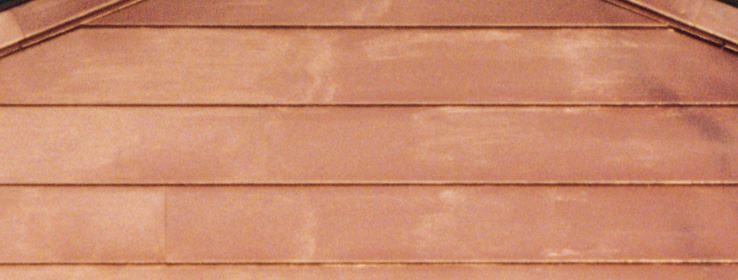
This Failure shows a fine shallow cracks running in mostly in one direction across the paint film like on wood siding or trim
 What is Checking
500
The proper remediation steps for a surface infected with mildew or fungal growth before applying paint.
What is washing the surface with a bleach/detergent solution (or mildewcide) and rinsing thoroughly?