Plants unencumbered by seeds
Organismal diversity
Public lands & stuff
Roll the dice
Beets me
Pollination party
100
This is the only major group of nonvascular plants that is not present in Minnesota.
What are hornworts?
(we miss you, Anthocerotophyta!)
100
Many animals, birds, rodents, bears, mountain lions, will procure food and not immediately consume it, rather, they will store the food for later consumption. This term describes locations of stored food.
What are caches?
100
Forty-miles northwest of Grand Marais, Eagle Mountain is Minnesota’s highest natural point. This is the elevation of Eagle Mountain’s peak, in feet.
What is 2,301ft?
Points will be given for an answer within 300 feet of the actual elevation.
100
Globally, the W.H.O. recognizes this wild animal as being linked to the most human fatalities.
What are mosquitoes?
100
These plants are Minnesota's two highest value crops.
What are corn and soybeans?
corn leads in total production value ($5.85 billion in 2024)
100
There are thousands of species of insect pollinators in MN, including over 400 species of these.
What are bees?
200
Mosses are able to engineer habitats/ecosystems by doing this.
What is lowering the pH/acidifying their environment?
200
This native northern Minnesota game bird is known for males of the species perching on fallen trees and drumming its wings against its breast, resulting in a deep, repetitive thumping noise heard for miles.
What is the ruffed grouse?
200
According to the National Parks Service, this US president protected the greatest amount of terrestrial land.
Who is Teddy Roosevelt?
From 1901 to 1909, Teddy Roosevelt protected 230 million acres of land including 150 national forests, the Grand Canyon National Monument, and Mount Olympus National Monument, to name a few. As for conservationist presidents, Barack Obama is right up there with 550 million acres protected, but much of this was in marine sanctuaries.
200
One of the most popular lures of all time, this classic red and white spoon has caught many anglers’ largest northern pike.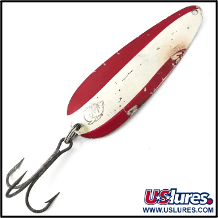
What is the Dare Devil?
200
Minnesota ranks number 2 in the nation for production of this grass.
What is wild rice?

200
After pollination of a flower, this happens... twice!
What is fertilization?
300
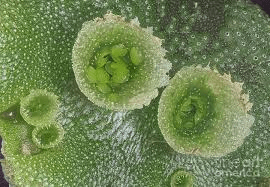
Leafy liverworts most commonly reproduce asexually using these adorable structures.
What are gemmae cups?
300
The Minnesota DNR gives a nine-degree (F) range for when the state fish, Walleye, reaches their peak spring spawning activity. What temperature range describes this peak?
What is 42-50 F?
300
A concern of climate scientists is the contribution of carbon dioxide and methane from the thawing and decomposition of this frozen organic material in arctic regions.
What is permafrost?
300
Very common and present statewide this cryptic snake is Minnesota’s smallest.
What is the red-bellied snake?
According to the MN DNR, the Red-Bellied Snake is 4 inches long at birth and 8-10 inches at adulthood. They make a living consuming slugs, worms, beetle larvae and snails.
300
Minnesota loves this crop so much, we rank number 7 in the country in growing it. Of course, it does make the best hotdish.
What are potatoes?
:max_bytes(150000):strip_icc():format(webp)/Simply-Recipes-TaterTotHotdish-LEAD-01-88469e574b5a4739a7b57ab2078f9ebc.jpg)
300
These are two abiotic factors that can lead to pollination.
What are wind and water?
400
Bill Shakespeare wrote: "We have the receipt of fern seed, we walk invisible" (1 Henry IV., act iv. 4). This structure is probably what Bill was referring to.
What are spores?
(The seed of certain species of fern is so small as to be invisible to the naked eye, and hence the plant was believed to confer invisibility on those who carried it about their person. It was at one time believed that plants have the power of imparting their own speciality to their wearer.)
400
Minnesota plays host to the “super generation” of this invertebrate species which migrates 2,500 miles on its way to overwintering habitat in the Transvolcanic mountain range in central Mexico.
What is The monarch butterfly?
Monarchs will mate, lay eggs, and die in the spring. The following three generations will incrementally travel northward in search of suitable milkweed as the season progresses. The fourth generation is the migratory “super generation”.
400
In North America, areas immediately east of large mountain ranges tend to be very dry. This is because moisture-rich prevailing westerly airmasses rise into the mountains where water condenses, leaving much drier air to continue eastward. This is the general name for the relatively low-precipitation areas found eastward of these mountains.
What are rain shadows?
400
This is the one Minnesota native venomous snake.
What is the Timber Rattlesnake (Crotalus horridus)?
Most commonly found in the wooded Mississippi river bluff region in southeastern MN.
400
More than 500,000 acres of these grow in the Red River Valley and make up 57% of total acres planted of this in the US.
What are sugar beets?
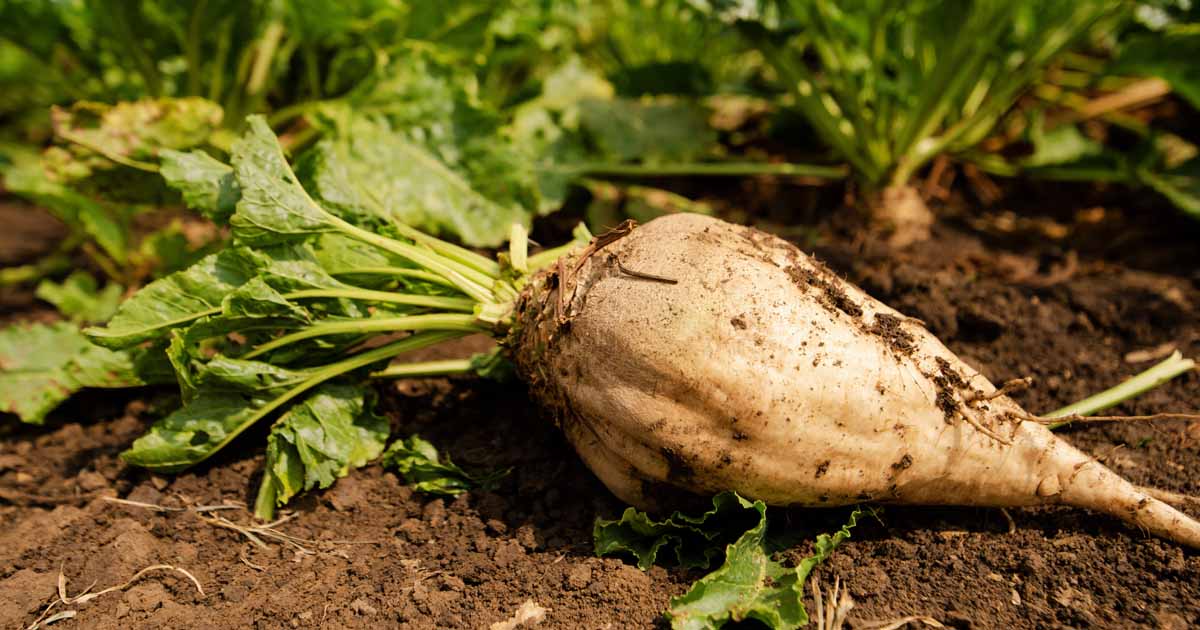
Halstad, Minnesota is home to the World's Largest Sugar Beet!
400
Plants with very long and red petals that are fused into a tube are most likely to be pollinated by these in MN.
What are hummingbirds?
500
These plants were the first with true leaves.
What are lycophytes? (lycopods, lycopodium, etc.)
500
This family of plants is important in community nutrient dynamics because of an intriguing mutualistic relationship with nitrogen-fixing microbes which are often housed in root structures called nodules.
What is Fabaceae?
500
Camping in the Boundary Waters Canoe Area requires overnight stay at a designated campsite. Each site has these two physical amenities.
What is a fire grate and a pit/vault toilet?
500
-Environmental scientists will monitor ecosystem health by examining the community of living organisms and determining members that are tolerant and intolerant of environmental stressors. These scientists are “IBI” specialists, which means this.
What is index of biotic integrity?
500
This is the only plant native to and domesticated in North America... and you better believe MN is number 5 in production of it.
What are sunflowers?
500
These three groups of flying insects are the most common pollinators in MN.
What are bees, butterflies, and moths?