Companies
Investing
Diversification
Accounting
Valuation
Selling
Industry
Economics
100
What is a goal of all companies?

To make money (profit) and ensure growth and sustainability.
100
How do you become an owner in a company?



Buy shares.
100
Holding one stock means you are diversified?
True or False

FALSE
100
Can profits be negative? Why or why not?

Yes! If Expenses are greater than Revenue, profits will be negative.
100
Which is a better value? Why?
1 taco: $1.79
2 tacos: $3.05


2 tacos (1.52 each)
100
Name 2 reasons to sell a stock.
Competition, industry out of favor, company is not performing, economic trends/unfavorable current events.
100
What is the stock market?
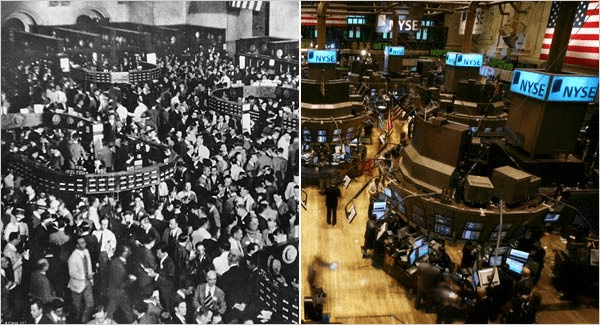
A place to buy and sell stocks (example NYSE, NASDAQ, LSE)
100
Name an industry that has experienced a bubble

Examples: Energy (oil), automobiles, social media, the 17th-century Dutch Tulip Mania, the 2000s U.S. housing bubble, the 2000 dot-com bubble, and the early 1990s Japanese asset price bubble.
200
Name 2 ways a company could grow.

Increase sales, buy another company, expand into a different sector, produce new products and services, etc.
200
Is it better to:
Spend money today
Save for later
For an extra 200: Why?

Save! (to make more money in the long run)
200
Is it important to diversify your stock portfolio?
For an extra 200: Why?

Yes it is important to diversify.
Not putting all eggs in one basket reduces overall risk!
200
What is revenue?

The total amount of money a business generates through sales.
200
What does the abbreviation P/E stand for?
Price to Earnings ratio.
200
Name 2 reason NOT to sell a stock.

Good performance, great industry, company is the best competitor, expected future growth.
200
Name 2 classes that would help prepare for an investment career.

Math, ELA, economics, business, and many more.
200
What happens when a bubble bursts?

Stock prices go down dramatically.
300
What does a company give to investors?

A company typically gives investors ownership shares (equity), a share of future profits (dividends), and sometimes voting rights.
300
Where is the best place to invest your money over the long term?
A: Bonds
B: Stocks/Equities
C: Cash
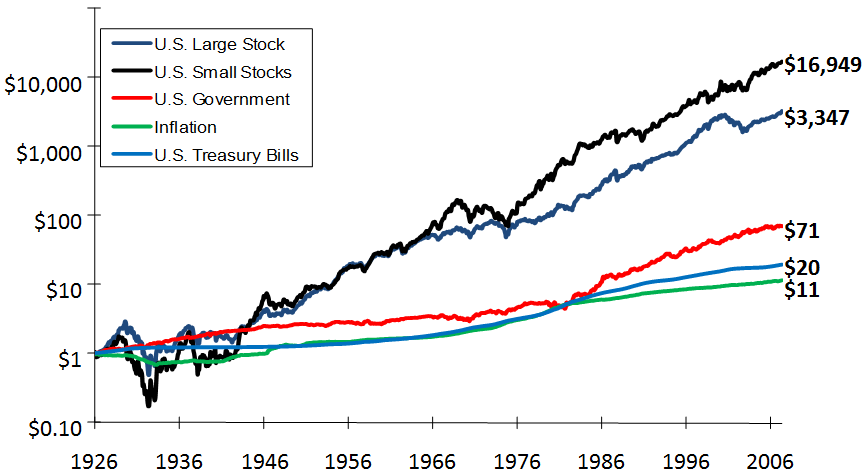
B: Stocks/Equities
300
Is investing in a stock where you like the product always a good idea?
Why?

Not always, but sometimes.
Others must also like and need the product and it must be profitable.
300
Name 2 costs (expenses) a business might incur.

Examples: Salary/wages, raw materials, taxes, rent, fines.
300
Name at least one reason a company might have a high P/E Ratio.

Growing revenues, growing earnings, great industry.
300
Should you sell a stock just because the price went down? Explain.

No, if it's a proven, good company, it should come back in the long run. Dips here and there are expected and inevitable.
300
Name two jobs at an investment firm.

Research analyst, M&A banker, Stock Broker.
300
Fill in the blank:
Innovations inspire optimism, pushing stock prices ______.

UP
400
Name 2 things a company could do with money raised from investors.

Invest in their company (PPE), make an acquisition, buy shares, pay dividends.
400
Name 1 thing that makes the stock price move up

Increased sales/profits
400
Name all six stocks in our portfolio.

Netflix, Costco, Microsoft, Take-two, Apple, Amazon
400
How are profits returned to shareholders?

Dividends or share buybacks.
400
A high P/E ratio generally shows the market expects a company to grow, which is good for investors. When can a high P/E ratio be misleading for investors?

When a company is overvalued often due to unrealistic market expectations or market manipulation.
400
What is a sell discipline?

Only selling a stock if it is above/below a predetermined price range.
400
How are most stocks traded today?

Electronically
400
Name something that happens if you borrow too much money.

Bankruptcy, inability to grow, inability to invest, bad credit.
500
Name a unique resource or capability that a company might have that is difficult to reproduce.
Patents, technology, reputation.
500
Name a risk that could effect a company.

Competition, new technology, general economy, current events.
500
Name 2 attributes to consider when looking for stocks to invest in.

Competitive position, great industry, past performance, general economy, P/E ratio, share price trends, current events/trends.
500
Fill in the blanks:
_____ - _____ = _____
Profits
Revenue
Expenses
Revenue - Expenses = Profits
500
Calculate the P/E Ratio:
Earnings Per Share: $5
Stock Price: $100
100/5
= 50
500
Come up with two questions an investor might ask
if a stock price drops from $100 to $80 overnight.

What is going on at the company?
What is going on in the industry?
What is going on in the general economy?
500
Which is not a responsibility of the Federal Reserve?
A: Growing the economy
B: Keeping banks safe
C: Investing money for clients
D: Making payments secure
C: Investing money for clients
500
If supply goes down but demand stays the same, what happens to the price?

Prices go UP