Split Happens
Beast Mode
Leaf It to Me
It's Getting Crowded In Here
Community College
100
The human arm, whale flipper, and bat wing all have the same underlying bone arrangement because of this — inheritance from a shared ancestor.
What are homologous traits?
100
The type of symmetry this animal exhibits.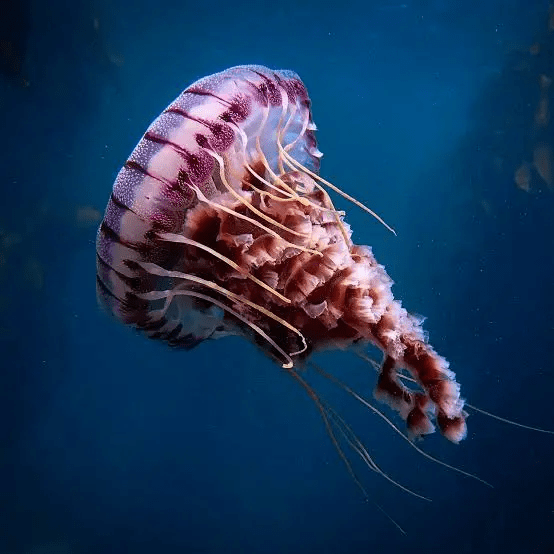
What is radial symmetry
100
This reproductive structure varies in color and scent likely due to widespread coevolution with animals.
What is a flower?
100
Births increase a population from within, but this factor increases it from outside.
What is immigration?
100
From caterpillars eating leaves to elephants stripping bark, animals consuming plants are engaging in this broad interaction.
What is herbivory?
200
Bat wings and dragonfly wings perform the same function but evolved independently — making them this type of trait rather than evidence of common ancestry.
What are analogous structures/traits?
200
Though a handful of species in this group lay eggs, every member produces milk to nourish their young.
What are mammals?
200
Pine trees, spruce, and firs all belong to this group whose name means "naked seed" — because their seeds sit exposed on cone scales rather than tucked inside a fruit.
What are gymnosperms?
200
This type of survivorship curve — often illustrated with birds — shows equal probability of death at any age.
What is a Type II survivorship curve?
200
When two species need the same limited resource, this interaction results, educing survival or reproduction for both.
What is competition?
300
A new frog call that appeals to some potential mates but not others could eventually split a population through this type of reproductive isolation.
What is pre-zygotic reproductive/behavioral isolation?
300
With over 30,000 species, this is the largest vertebrate group — divided between those with cartilaginous skeletons and those with bony skeletons.
What are jawed fish/fish?
300
Without this waxy coating on their leaves, land plants would dry out. It was one of the key adaptations that made life on land possible.
What is cuticle?
300
Organisms with a Type III survivorship curve, producing many offspring and investing little in each, are said to follow this life history strategy.
What is opportunistic?
300
Flowers offer nectar to attract pollinators — an arrangement that benefits both parties and represents this type of species interaction.
What is a mutualism?
400
Radiocarbon dating works because carbon-14, an unstable form of carbon that differs only in neutron number, is this.
What is an isotope?
400
Sponges are the only animals that never evolved this — the organized layers of cells that define every other animal group.
What are true tissues?
400
The oak tree, the pine, and the rosebush are all examples of this generation — the dominant diploid phase in vascular plant life cycles.
What is sporophyte?
400
In nature this model rarely holds for long, but in the lab or early in colonization, populations follow this unlimited growth pattern before resources run out.
What is the exponential growth model?
400
Unlike a predator that kills quickly, this type of interaction keeps the host alive, at least long enough to keep feeding off it.
What is parasitism?
500
Modern biologists avoid this type of grouping because it leaves some descendants out — like calling reptiles a valid group while excluding birds.
What is a paraphyletic group?
500
Members of this largest animal phylum are united by jointed appendages, an exoskeleton, and periodic molting — and they vastly outnumber every other animal group combined.
What are arthropods?
What is arthropoda?
500
Corn, wheat, and rice are mostly made of this tissue — the nutrient-rich product of the second fertilization event unique to flowering plants.
What is endosperm?
500
Disease spreads more easily in crowded populations, which is why it is considered this type of limiting factor, one whose impact increases with population size.
What is density-dependent?
500
A tropical rainforest scores much higher on this measure than a cornfield. It simply counts how many different species are present in a community.
What is species richness?