Integumentary system
Epidermis
Skin
Skin 2
Skin 3
Skin 4
Skin 5
Skin 6
100
What is it?
SKIN! No other system is as accessible or exposed
100
Stratum Corneum (top)
15-30 layers deep of keratinized cells
- Generally takes about 7-10 days to go from stratum basale to corneum
100
Skin cells in overdrive
• Psoriasis is a chronic, common skin disorder
- Life cycle sped up = 1.5 days from basale to corneum
- Psoriatic arthritis
100
UV
Melanin acts as barrier from UV radiation
Sun Tans are result of increased melanin production
100
EGF
Epidermal growth factor is important to
stimulate basal cells for injury repair
100
Hypodermis
Subcutaneous injection with a hypodermic needle
100
Hair
Vellus hairs (“peach fuzz”) vs. terminal hairs
- Curly hair or straight hair? From follicle structure
• Male pattern baldness
- Due to changes in testosterone
100
Fingernails
• Functions: Protect dorsal surface from damage, Limit distortion of fingertips and toes from stress
• Nail body covers an area of finger called nail bed
• Features: Hyponychium, cuticle (eponychium), lunula, and pink color
200
Functions?
• Protection for underlying tissues = impact, fluid loss, etc.
• Excretion = salts, water, organic wastes
• Maintenance = important role in homeostasis
• Production of keratin = outer protection, water repellant
• Synthesis of vitamin D3 = essential for digestion
- What is a “vitamin?”
• Fat storage = skin layers store energy
• Detection = touch, temperature, pain receptors in skin
• Coordination of immune system = response to injury
200
Stratum Lucidum
light, clear layer
- Only found in thick skin
- Layer of dead cells dehydrated
- No organelles
• Cells still pushed up (amusement park line of death)
200
pigmentations
1) carotene (yellow-orange)
2) melanin (brownish)
200
Wrinkles and Cancers
Fibroblasts in connective tissue get damaged – premature wrinkling
• Basal cells that have DNA damage = basal-cell carcinoma (common skin cancer)
• Pigment cells that have DNA damage = malignant melanoma
200
layers of the dermis
1) papillary layer = areolar tissue, blood vessels,
nerves, lymphatic
2) reticular layer = interwoven connective tissue
200
liposuction
Too much fat in diet = central adiposity
- Liposuction, a cosmetic surgery, can be a “quick fix”
• Risk of blood loss = highly vascularized
200
Accessory structures
Exocrine secretions = glandular epithelium
• Sebaceous gland = oil discharge into hair follicle
200
repairment and phases
• Calluses = physical stress and stratum basale
• Skin injuries can be easily repaired – stem cells in epithelial and connective tissue layers
- Inflammatory Phase
- Migratory Phase
- Proliferation Phase
- Scarring Phase
300
Epidermis
"outside layer"
avascular = nutrients and waste diffuse
300
Stratum Granulosum
grainy layer
- Cells stop dividing and flatten
- Organelles disintegrate, cell dying
300
Melanocytes
melanin = modified amino acid
300
Diseases
• Addison’s disease = pituitary gland produces too much hormone, melanocytes respond
• Vitiligo = loss of melanocytes, for various reasons
300
turgor
- Aging, hormones, and UV radiation break
down turgor (“bounce back”) over time
- Massive distortions of the dermis can exceed
elastic limits – stretch marks
• Tretinoin, derivative of vitamin A, retinol
- Encouraged blood flow to skin, dermal repair
300
Accessory structures
Hair, sweat glands, and nails
- Originate from epidermal cells during embryonic
growth, but move deeper = found in the dermis
- Hairs project from skin surface
- Produced in dermis follicles = hair follicles
300
Sweat Glands
Apocrine sweat glands = secrete products into hair follicles, but oil substances are food for bacteria
- Myoepithelial cells
300
scar tissue
• Can sometimes go beyond what is required – keloid
- fibrous connective tissue
• Thin, glossy epithelium cover them
• Can develop anywhere on body, largely harmless
400
Keratinocytes
most abundant epithelia cell, begin at bottom and die as they move up
400
Stratum Spinosum
• Spiny layer
• Keratinocytes shrink cytoplasm but the
cytoskeleton remains in place
- Stuffing with keratin
• A major location for immune response
400
melanin
- breaks down over time
• In light skinned people, melanin projections only
occur in the basale or spinosum layers
• In darker skinned people, projections go
further, into the granulosum
• Skin color differences are due to differences in
melanin transfer and persistence in skin, not
really melanocyte numbers
400
Sunlight Exposure
• UV radiation is important for vitamin D3
production (cholecalciferol)
• Travels to liver, kidney to make calcitriol
• Important in uptake of calcium and phosphorus in intestine
400
cleavage lines
Collagen and elastic bundles
around your entire body
- allows body to move around without damage or tearing
400
hair follicles
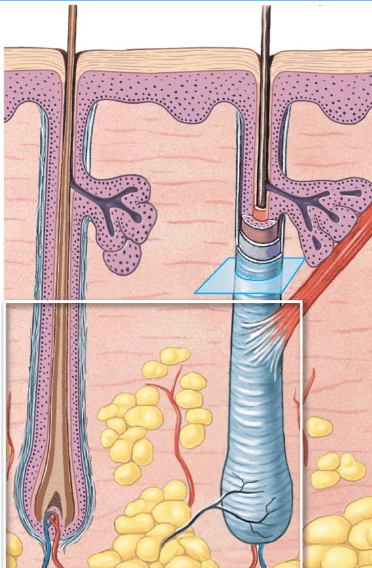 root hair plexus
arrector pillihair
root vs. hair shaft
400
Sweat Glands 2
Merocrine (eccrine) sweat glands are more numerous over body
- palms and feet
• Sweat = 99% water, electrolytes (ions), and protein dermicidin
400
Tattoos
Tattoos are inert and imbedded deep in the dermis
below stratum basale
- Allergic reactions, skin and blood infections can result from contaminated equipment – bypassing first lines of defense
500
Why have layers?
Living cells safe below barriers of dead, durable, and expendable matter
- Stratum corneum is dry and uninhabitable for microorganisms
500
Stratum Basale (bottom)
stem cells = basal cells
- When dividing, one cell is pushed up and differentiates into keratinocyte
- Desmosomes attach this layer to
the basement membrane
Interlock together in ridges – epidermal ridges
- Fingerprints determined by both DNA
and pre-birth environment (stem cells divide)
500
Melanocytes in extremes
• Albinism = deficiency or absence of melanin (genetic)
• Freckles are irregular spots of increased melanin
- Due to greater sun exposure and UV radiation
500
Cholecalciferol
• Inadequate supply leads to impaired bone
growth and maintenance
• No sunlight, no D3 in diet = rickets,
abnormal bone growth in children
500
Hypodermis
• Hypodermis = subcutaneous layer
- A bruise, or contusion, occurs when these
vessels are ruptured and leak blood
500
hair structure
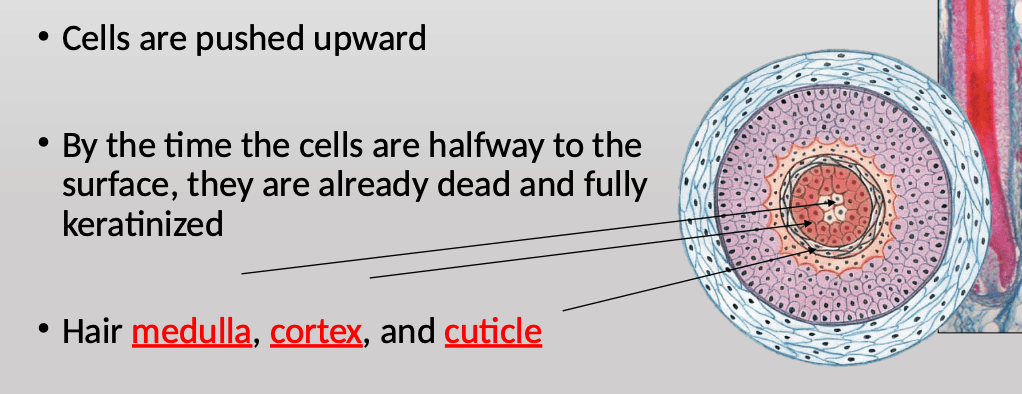
500
Glands & Structures
• Mammary glands in mammals = modified apocrine sweat glands
• Ceruminous glands = in external ear, produce earwax
• Nails = more keratinized epidermal cells
500
Aging
Basal cell activity declines – epidermis thins
• Glandular activity drops – dry and scaly skin
- Sebum production drops
- Eccrine sweat glands are less active