Chapter 1: Themes of Bio
Chapter 2: Chemistry of life
Chapter 3: Water
Chapter 4: Carbon
Chapter 5: Macromolecules
100
The basic unit of life
Cells
100
What are the four main elements that make up most of your body?
Carbon, Hydrogen, Oxygen, Nitrogen
100
What kind of molecule is water?
Polar
100
What does it mean that carbon is tetravalent?
Carbon has four valence electrons, so it can form bonds with four different elements to create large, complex, and diverse molecules
100
What are the four macromolecules?
Carbohydrates
Proteins
Nucleic Acids
Lipids
200
Which variables go on the x and y axis?
independent- x axis
dependent- y axis
200
What is the difference between a cation and an anion?
Cation is positively charged while an anion is negatively charged
200
What is an acidic pH value? What is a basic pH value?
Acidic <7
more protons
Basic>7
more hydroxide ions
200
What are the three types of isomers?
Structural Isomers
Geometric (Cis-Trans) Isomers
Enantiomers
200
What type of chemical bond joins monomers together?
covalent bonds
300
What are the 3 domains of life?
Bacteria, Archea, and Eukarya
300
What are the four chemical bonds? State if they are strong or weak
Ionic- strong
Covalent-strong
Hydrogen- weak
Van der Waals- weak
300
Water breaks into 2 ions, what are they?
H+
Hydrogen ion (proton)
and
OH-
hydroxide ion
300
What are organic molecules consisting of only carbon and hydrogen called?
hydrocarbons
300
Which macromolecule is not a true polymer?
Lipids- made of glycerol and fatty acids instead of monomers
400
What are the five unifying themes of biology?
Organization
Information
Energy and Matter
Interactions
Evolution
400
Name 4 elements that make up a small part of your body. Name one trace element.
Phosphorus
Calcium
Sulfur
Potassium
Iodine, iron, chromium, cobalt, copper, fluorine, boron, manganese, molybdenum, selenium, silicon, tin, vanadium
400
What are the four emergent properties of water?
Cohesion & Adhesion
Ability to moderate temperature (High Specific Heat)
Expansion upon freezing (Insulation)
Versatility as a Solvent
400
When ATP reacts with water, what does it break into?
ADP + inorganic phosphate + energy
400
What does a dehydration reaction do?
synthesize polymers
500
Draw and Describe negative and positive feedback regulation
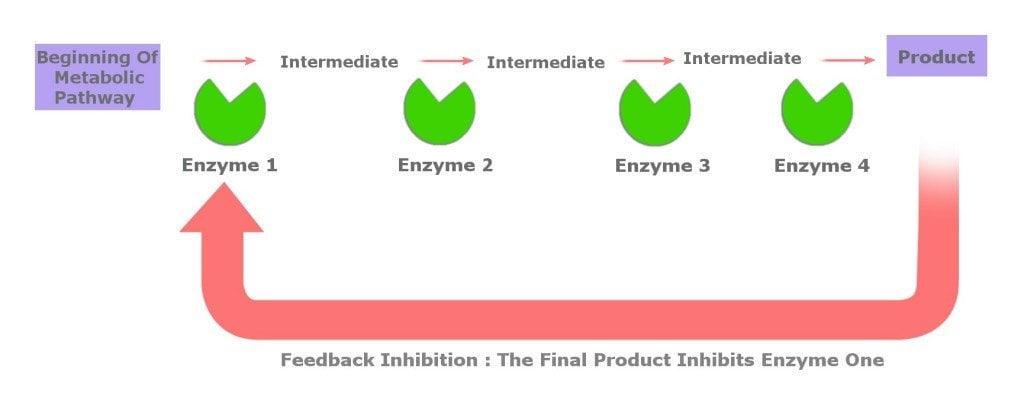
500
Isotopes have a different number of ______
What is an Isotope of Carbon 12?
neutrons.
Carbon 14
500
When a cell is too basic or acidic, what helps neutralize the cell?
The Carbonic Acid-Bicarbonte buffer system
when basic, breaks carbonic acid into bicarbonate ion & proton
When acidic bonds Bicarbonate ion & proton into carbonic acid
500
What are the 7 functional groups?
Here Comes A Car So Please Move
Hydroxyl- make molecules hydrophilic
Carbonyl- same
Amino- gives a positive charge
Carboxyl- gives a negative charge
Sulfhydryl- cross-link proteins (think of hair)
Phosphate- release energy (think ATP)
Methyl- hydrophobic
500
What does a hydrolysis reaction do?
breaks down polymers (lyse- break)