Unit 1
Unit 2
Unit 3
Unit 3.2
Unit 4
100
What type of succession is occurring?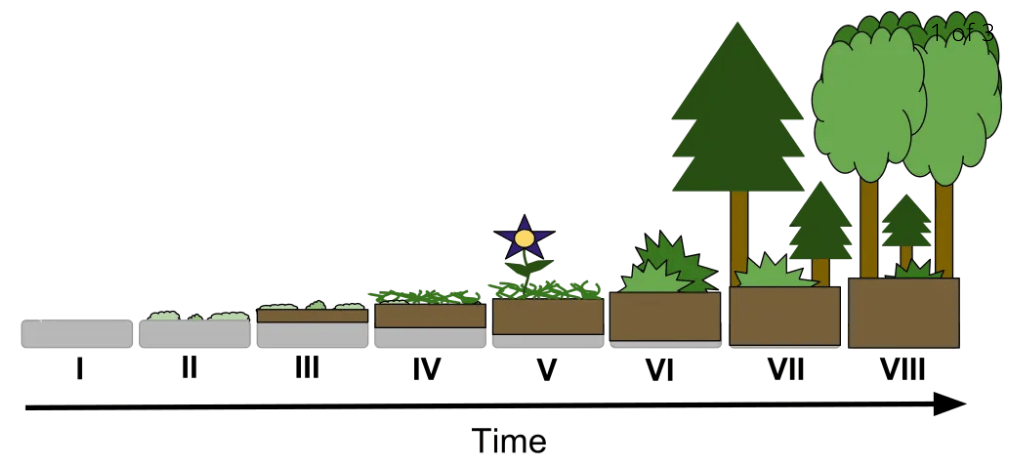
primary succession
100
What 3 things do plant cells have that animals cells do not?
chloroplast, cell wall, large vacuole
100
Photosynthesis occurs in the _____, while cellular respiration occurs in the _____.
chloroplast, mitochondria
100
The cell spends the most time in which phase of the cell cycle?
Interphase
100
Black fur is dominant to white fur in guinea pigs. Create a Punnett square for two heterozygous guinea pigs.
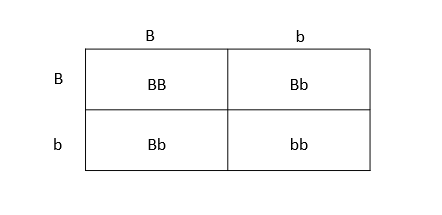
200
Which organism would be most affected by the decline in grains? Why?

mice, because it is their only source of food
200
How are prokaryotes different from eukaryotes?
They do not have a nucleus.
200
Adding light to a plant _____ the rate of photosynthesis.
increases
200
What occurs during the S phase?
synthesis/replication of DNA
200
What is the replicated DNA sequence for TTA ATC CCA?
AAT TAG GGT
300
What are invasive species and how do they affect ecosystems?
nonnative species with no predators that disrupt the ecosystem
300
List the components of the cell theory.
The cell is the basic unit of life.
Living things are made up of one or more cells.
All cells come from preexisting cells.
300
What product of photosynthesis is used as a reactant in cellular respiration?
glucose
300
Cancer is defined as _____.
uncontrolled cell division/mitosis
300
What is the mRNA sequence transcribed from the DNA segment ACT CGG ATC?
UGA GCC UAG
400
How do dead organisms affect the carbon cycle?
Dead organisms release CO2 back into the atmosphere.
400
Name the type of macromolecule.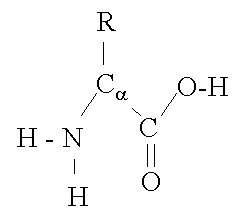
Protein
400
Which tubes has organisms that undergo cellular respiration?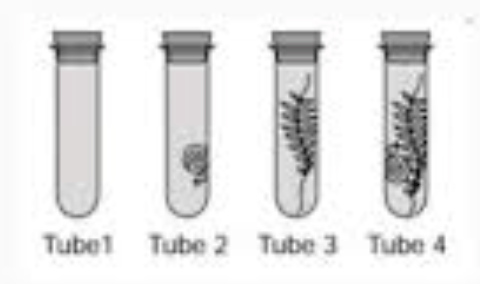
2, 3, 4
400
Name the steps of Mitosis and what occurs.
P - prophase, condensing of DNA
M - metaphase, move towards the middle
A - anaphase, chromosomes separate
T - telophase, DNA decondenses, cell begins to separate
400
Blood types are an example of what type of inheritance?
Codominance/Multiple Alleles
500
Define and give an example of each:
Producers
Consumers
Decomposers
producers - autotrophic organisms, plants
consumers - heterotrophic organisms, animals
decomposers - organisms that break down dead organisms, bacteria
500
Define, give an example, and list the monomer for each:
Carbohydrates
Nucleic Acids
Lipids
Proteins
C - main energy source, sugar, monosaccharides
L - energy storage, fats, fatty acids
N - genetic material, DNA, nucleotides
P - structure and function, enzymes, amino acids
500
During exercise, this type of cellular respiration occurs and results in _____.
lactic acid fermentation, lactic acid
500
When does crossing over occur and what does it result in?
Meiosis I - Prophase I, increased genetic diversity
500
What are stem cells and how are they harvested?
Totipotent cells that can differentiate into any type of cell. They are taken from embryos.
600
Which level has the most energy? What happens as energy is transferred to the next level?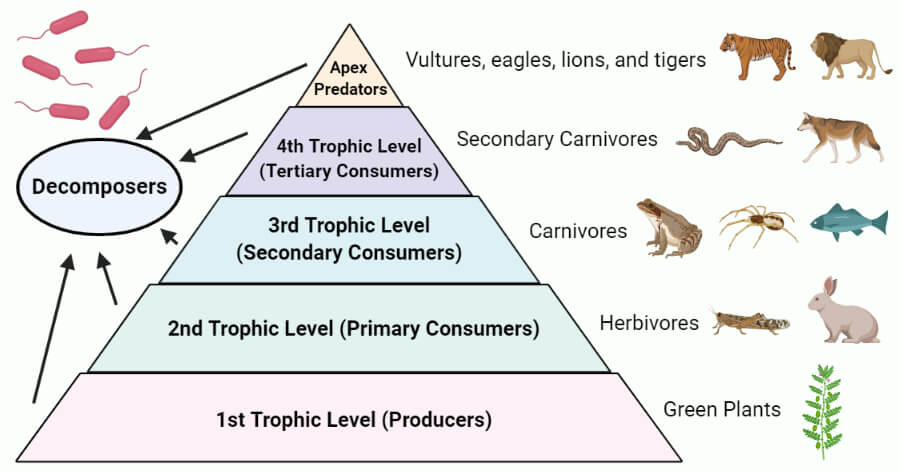
1st trophic level (producers), only 10% is passed on
600
Name the structure, what is is made of, and identify the purple structure.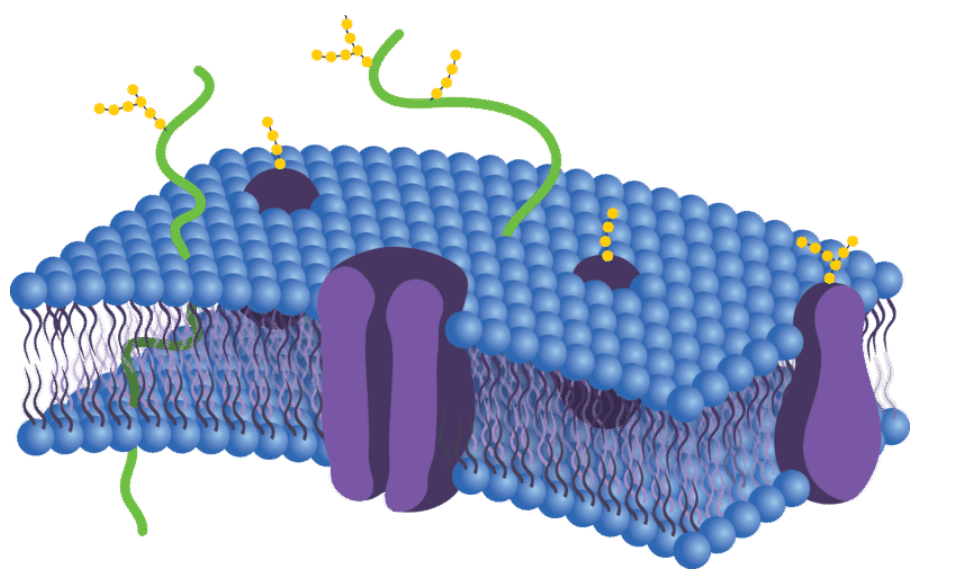
cell membrane, phospholipids, protein
600
Explain how ATP releases energy.
By breaking the last phosphate bond.
600
Define diploid and haploid.
2n = full set, somatic cells
n = half set, gametes
600
How does DNA code for proteins?
DNA is transcribed into an mRNA that codes for amino acids through translation.
700
If producers start with 4000J, how much energy would be in the third trophic level?
40J
700
Explain the Miller-Urey experiment.
An experiment that mimicked early Earth by heating up water, adding a mixture of gases, and running a current through them, resulting in traces of amino acids.
700
Name the process, reactants, and products.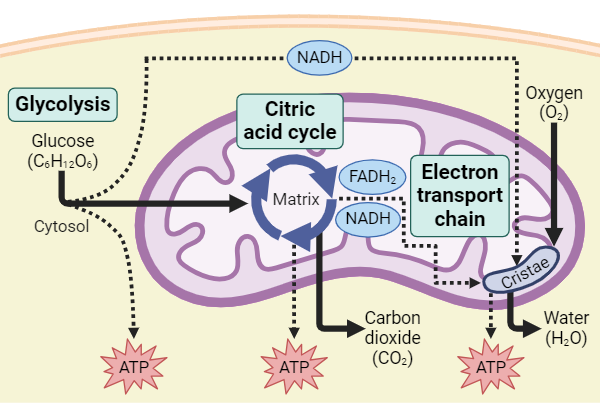
cellular respiration
glucose, O2
CO2, H2O, ATP
700
This is a result of which process?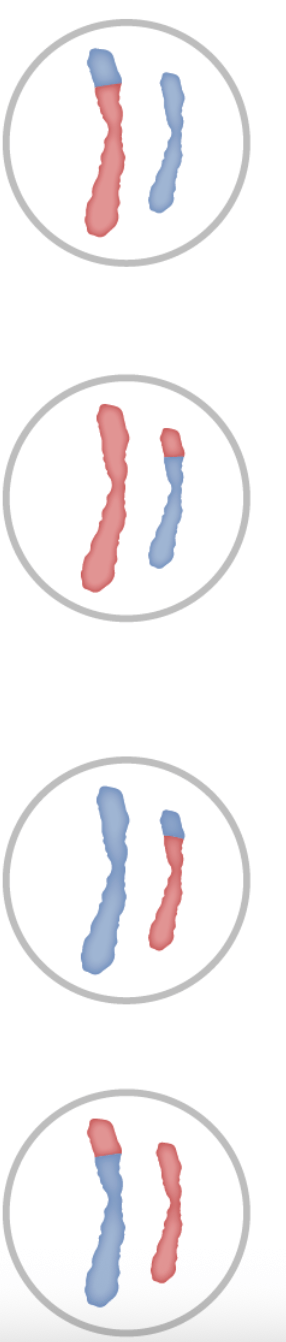
Meiosis
700
How do transgenes help with diabetic patients?
Insulin gene is inserted into bacteria and then harvested to prescribe to patients.