Glycolysis
CAC
ETC
Order
Enzymes
Random
Structures
True/False
100
This is where glycolysis occurs.
Where is the cytosol?
100
This is where the CAC occurs.
What is the Mitochondrial Matrix?
100
Protons are pumped from this area of the mitochondria
What is the mitochondrial matrix?
100
Which comes first, Isocitrate or Citrate?
What is Citrate?
100
Fumarase produces this product.
What is Malate?
100
How does the pH of the intermembrane space compare to the pH of the Mitochondrial Matrix?
What is a lower pH (a.k.a more acidic)?
100
Identify this monosaccharide: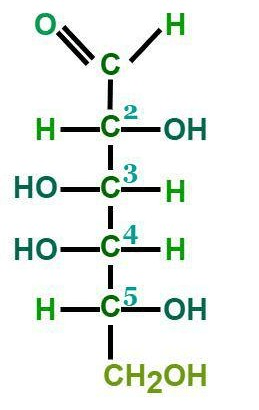
What is Galactose?
100
True or False: Sucrose is a reducing sugar.
False, it has no free aldehyde group or ketone.
200
Irreversible steps of glycolysis.
What are steps 1, 3 and 10.
200
First Reaction in the CAC
What is the synthesis of Citrate
200
This complex does not pump protons into the intermembrane space
What is complex 2?
200
Which comes first, Fumarate or Malate?
What is Fumarate?
200
This enzyme is seen in both the CAC and the ETC.
What is Succinate Dehydrogenase?
200
FINAL electron acceptor of ETC.
What is Oxygen?
200
Identify the anomeric carbon, penultimate carbon and achiral carbons: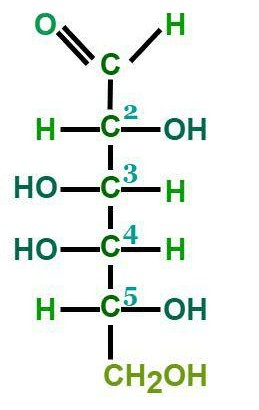
C1 is the anomeric carbon (Indicated by the double bond)
C5 is the penultimate carbon (Indicated as the second to last carbon)
C1 and C6 is the achiral carbon (Indicated by having two of the same bond)
200
True or False: These are the same molecule.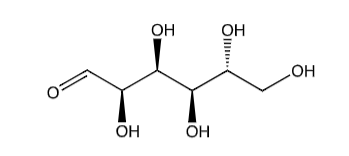
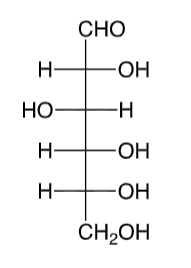
True, both are D-Glucose
300
The rate limiting step of glycolysis.
What is step 3?
300
Product of the 3rd step of CAC
What is 𝞪-ketoglutarate?
300
Of the 4 complexes, this one reduces Oxygen into water.
What is Complex 4?
300
Which accepts electrons first, Cytochrome c or Ubiquinone?
What is Ubiquinone?
300
This enzyme catalyzes the rate determining step of the CAC.
What is 𝞪-ketoglutarate dehydrogenase?
300
This shuttle uses membrane-bound GAPDH to get electron equivalents into the mitochondria.
What is the Glycerophosphate shuttle? (Occurs in skeletal muscle cells with cytosolic NADH becoming FADH2 once in the mitochondria)
300
Identify this molecule, include whether it is 𝞪 or β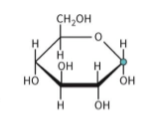
What is 𝞪-D-glucose?
300
True or False : These two pentoses are Anomers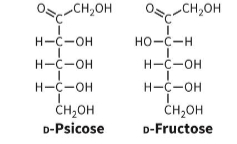
False, they are Epimers
400
This step of glycolysis generates NADH.
What is step 6?
400
This determines whether ATP or GTP is formed during the 5th step of the CAC
What is the isoform of Succinyl-CoA?
400
This complex has Rieske Centers.
What is Complex 3?
400
Which comes first, 3-PG or 2-PG
What is 3-PG?
400
This enzyme replaces an amine group with a carbonyl to replenish oxaloacetate.
What is Aspartate Transaminase? (Seen in the Malate-Aspartate Shuttle which occurs in cardiac and liver cells)
400
Compared to NADH, is FADH2 more efficient at generating ATP?
No, NADH makes 2.5 ATP per molecule while FADH2 makes 1.5 per molecule.
400
Identify this disaccharide.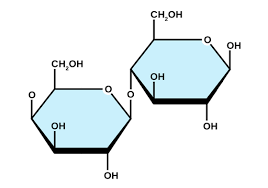
What is Lactose?
400
True or False: 2,4-DNP generates heat instead of ATP by breaking down the proton gradient.
True
500
This enzyme is directly inhibited by its product.
What is hexokinase?
500
These steps produce NADH
What are steps 3,4 and 8?
500
The only complex that has cytochrome b as a subunit
What is complex 3?
500
Which comes first, Succinate or Succinyl-CoA?
What is Succinyl-CoA?
500
The dehydrogenase enzyme in the CAC that is not inhibited by NADH
What is Succinate Dehydrogenase?
500
This amino acid generates 𝞪-ketoglutarate when transaminated.
What is glutamate?
500
Identify this molecule.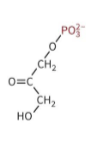
What is DHAP?
500
True or False: The loose conformation of F0/F1 ATPase releases ATP.
What is false, the conformation that releases ATP is the Open conformation, while the Loose conformation binds ADP and Pi.
600
PFK-2 exhibits phosphatase activity when this pathway is activated.
What is the PKA pathway?
600
These two substrates have secondary alcohol groups.
What are Isocitrate and Malate?
600
List the flow of electrons for Complex 1.
What is NADH -> FMN -> Fe-S clusters -> Ubiquinone?
600
Which accepts electrons first, CuB or CuA?
What is CuA?
600
These two enzymes of the CAC decarboxylate their substrate, producing CO2.
What are Isocitrate Dehydrogenase and 𝞪-ketoglutarate Dehydrogenase?
600
F-1,6-bP activates this enzyme of glycolysis.
What is Pyruvate Kinase?
600
Identify this molecule.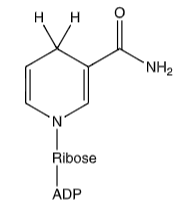
What is NADH?
600
True or False: The synthesis of ATP occurs at only the β subunit of the ATPase complex.
True.
700
Step 1 and Step 2 of gluconeogenesis bypass this step of glycolysis.
What is Step 10 of Glycolysis?
700
Calcium ions activate these enzymes involved in the CAC. (Hint : one of the enzymes is not directly in the cycle but closely related)
What are Pyruvate Dehydrogenase, Isocitrate Dehydrogenase and 𝞪-ketoglutarate Dehydrogenase?
700
List the order of electron flow for Complex 4.
1st Cytochrome c -> CuA -> Heme a -> Heme a3 -> CuB
2nd Cytochrome c -> CuA -> Heme a -> Heme a3
700
Which comes first, cytochrome c oxidase or cytochrome c reductase?
What is cytochrome c reductase?
700
Link the following cofactors of the pyruvate dehydrogenase complex to their respective enzymes:
Lipoamide/Lipoic Acid
NAD
TPP
FAD
CoA
E1/Pyruvate Dehydrogenase - TPP
E2/Dihydrolipoyl Transacetylase - Lipoamide and CoA
E3/Dihydrolipoyl Dehydrogenase - NAD and FAD
700
This enzyme catalyzes a carboxylation to produce oxaloacetate.
What is Pyruvate Carboxylase?
700
Identify this structure.
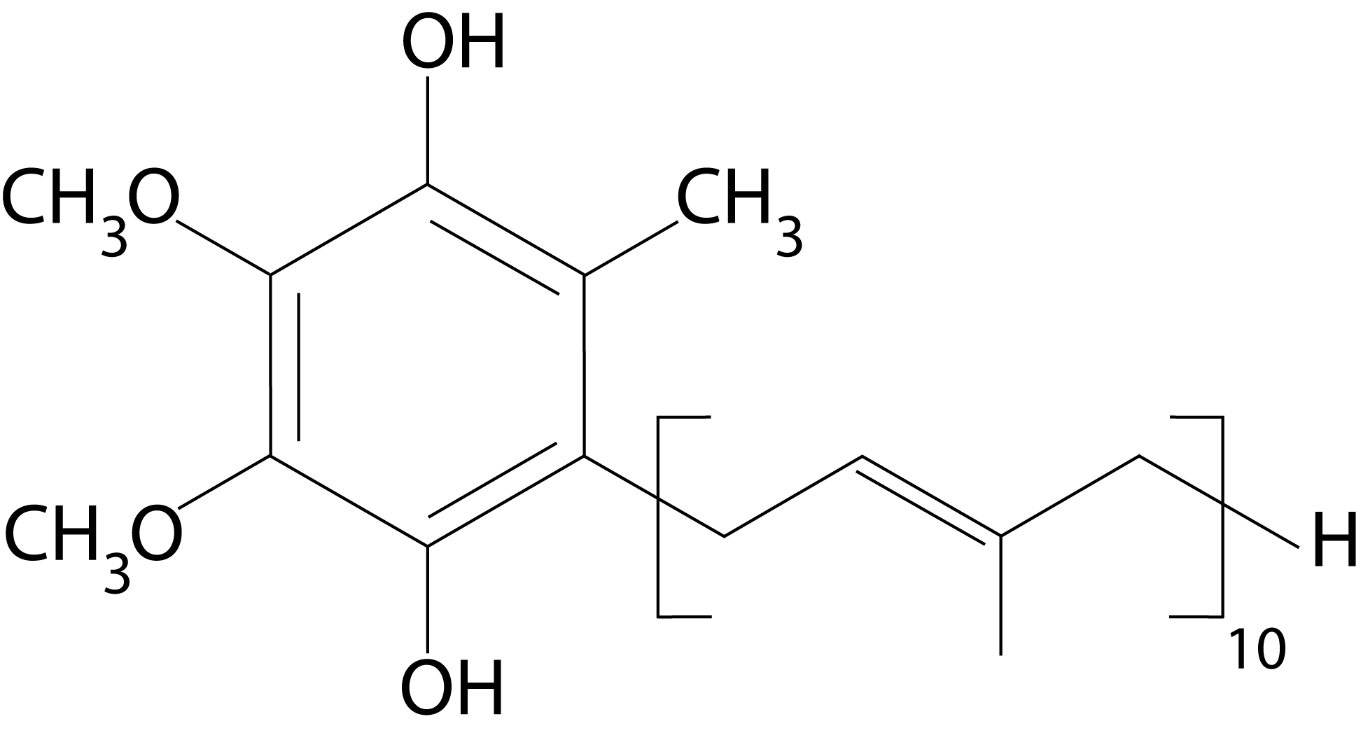
What is Ubiquinol?
700
True or False: If 48 protons were used to create ATP, the 𝞪/β hexamer would rotate fully 4 times, creating 12 ATP in total.
True.