Chapter 8: Metabolism, Redox, & ATP
Chapter 9: Cellular Respiration
Chapter 10: Photosynthesis
Miscellaneous
Previous Chapters
100
What is Metabolism?
What is All chemical reactions occurring in an organism?
100
How many molecules of ATP are made per glucose molecules that enters cellular respiration?
What is ~30-32?
100
Where does the Calvin Cycle occur?
What is the Stroma?
100
What is Biology?
What is The Scientific Study of Life?
100
What are the 4 types of macromolecules?
What is Carbohydrates, Lipids, Proteins, and Nucleic Acids?
200
A substrate binds to where on an enzyme?
What is an Active Site?
200
What goes into glycolysis?
What is Glucose?
200
Fill in the blank: Chloroplasts are typically found in _____ cells, the inner tissue of leaves.
What is a Mesophyll cell?
200
Give two differences between prokaryotes and eukaryotes.
What is...
Prokaryotes: Circular chromosome, No organelles
Eukaryotes: Multiple chromosomes in a nucleus, organelles
200
What are the subatomic particles and their changes?
What is Protons (+), Neutrons (neutral), and Electrons (-)?
300
What is the first law of thermodynamics?
What is Energy cannot be created nor destroyed, only converted from one form to another?
300
Where does pyruvate oxidation take place?
What is the Mitochondrial Matrix?
300
What is similar about photosynthesis and cellular respiration?
What is the Electron Transport Chain?
300
Give two emergent properties of water.
What is...
Cohesion/Adhesion, Temperature Moderation, Less dense in solid form, Versatile Solvent?
300
What are the monomers and polymers of carbohydrates and Polypeptides?
What is...
Carbohydrates: Monosaccharide, Polysaccharide
Polypeptides: Amino Acids, Protein
400
When the change in free energy (G) > 0, what type of reaction is it?
What is an Endergonic Reaction?
400
What is Chemiosmosis?
What is The process of H+ molecules flowing down their gradient through ATP Synthase?
400
What two things are produced in the light reactions that can be used in the Calvin Cycle?
What is NADPH and ATP?
400
Why are membranes thought of as a fluid mosaic model?
What is...
Phospholipids form a bilayer and move like the surface of a “lake”
Proteins and other structures “float” within it
Amphipathic
400
Describe Hypotonic, Hypertonic, and Isotonic.
What is...
Hypotonic: Water in, lysed
Hypertonic: Water out, shriveled
Isotonic: Equilibrium, normal
500
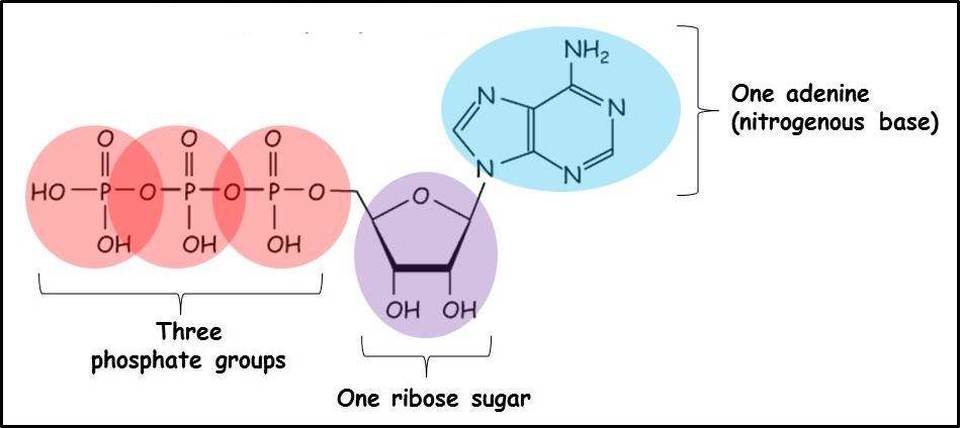
What is ATP?
500
What are the products of the citric acid cycle? How many molecules of each product?
What is 1 ATP, 2 CO2, 3 NADH, and 1 FADH2?
500
The Calvin Cycle can also be called _____ _____ because it converts inorganic CO2 into organic sugar.
What is Carbon Fixation?
500
Give three organelles and their function.
What is...
Chloroplast: photosynthesis; Mitochondria: cell. respiration; ER: synthesizes lipids/proteins; Golgi: process/shipping via vesicles; Lysosomes: breakdown molecules via enzymes; Vacuoles: expel water/digest food/storage; etc.
500
What are the 4 fundamental properties of living systems?
What is...
Require energy/matter, Span multiple levels of complexity, Transmission/expression of genes, Are the result of Evolution