Scientific Method
BIO 101
Macromolecules
Easy (?) Mode
Easy (?) Mode
Macromolecules
Hard (?) Mode
Hard (?) Mode
Cell Structure
Membrane Structure and Function
100
Scientists use this to answer questions
What is the scientific method?
100
The study of life
What is BIOLOGY
100
The small subunits (generic) that join together to form large macromolecules
What are monomers?
100
The molecular process by which monomers join together to form polymers
What is dehydration synthesis?
100

The green spikes depicted in green
What are fimbriae?
100
This molecule is the largest component of the cell membrane
What is a phospholipid?
200
The group that is exposed to an experimental variable in a scientific experiment
What is the experimental group? (or test group)
200
This characteristic of life is described as living things require materials and energy to grow and develop.
What is "life requires materials and energy"?
200
 A monomer of this "sweet" macromolecule
What is a carbohydrate?
200
This level of protein organization is caused by interactions between the R groups
What is the tertiary structure?
200
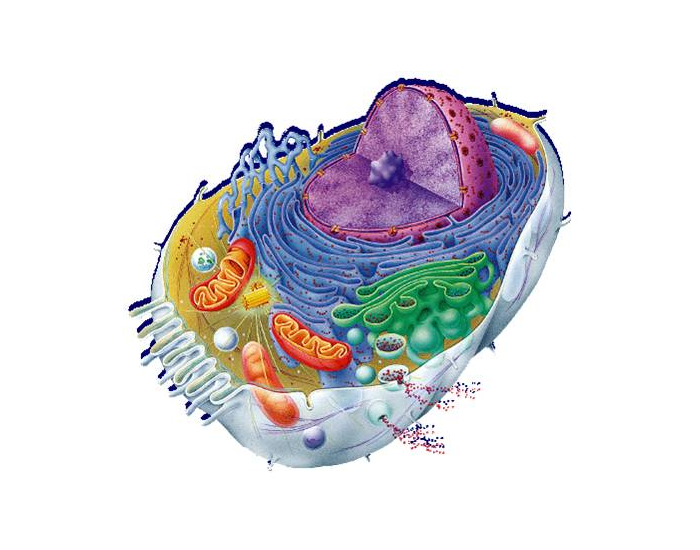
The structure depicted in green
What is the golgi apparatus?
200
The property of the plasma membrane that allows some substances to pass, but not others
What is selective permeability?
300
The thing that is measured in a scientific experiment
What is the dependent variable?
300
Biologists can study life on a variety of levels, from the cell to the ecosystem. This demonstrates the following quality of life:
What is "life is organized"?
300
The monomer of our most hard-working molecules
What is an amino acid?
300
A storage polysaccharide in plants
What is starch?
300
The structure depicted in blue
What is the endoplasmic reticulum?
300
A form of molecular movement in which energy is not required, but a membrane protein is
What is facilitated diffusion?
400
A concept that joins together well supported and related hypothesis
What is a scientific theory?
400
Taxonomists are concerned with grouping, naming, and describing and identifying organisms. This is the most inclusive category by which organisms are classified.
What is "domain"?
400

The monomer of our information storage molecules
What is a nucleotide?
400
A fatty acid with double bonds found in its hydrocarbon chain
What is an unsaturated fatty acid?
400
This structure of the eukaryotic cell is responsible for storing genetic material
What is the nucleus?
400
A membrane protein that helps cells recognize pathogens and foreign cells
What is a cell recognition protein?
500
Consider this experiment: You are measuring the impact of number of hours of sleep on test scores. You have three groups of students: one group sleeps for 4 hours the night before an exam, one group sleeps for 8 hours the night before an exam, and the third group sleeps for 12 hours the night before an exam. What is the independent variable in this study?
What is the amount of sleep?
500
This domain of life contains single-celled organisms that live in extreme environments
What is "archaea"?
500

These macromolecules have no true monomer, but the structure above is present in many types
What is a lipid?
500
The three major types of lipids in living organisms
What are triglycerides, phospholipids, and steroids?
500
This structure is unique to plant cells when compared to animal cells
What is the chloroplast?
(central vacuole)(cell wall)
500
A connection between two cells that allows ions and other small molecules to pass from one cell to another
What is a gap junction?