Chemical Bonds
Water
Monomers & Polymers
Biomolecule Functions & Examples
Vocabulary
Random!
Final Jeopardy
200
This type of bond forms when atoms share electrons
Covalent Bond
200
The attraction between water molecules caused by their polarity gives water this property, where water molecules stick to each other
Cohesion
200
The Monomer of a Lipid is this
None!
200
Bread, pasta, fruit, and potatoes contain lots of this biomolecule, which is commonly used for quick energy
Carbohydrates
200
The substance that is dissolved in a mixture is called this
Solute
200
The charge of a proton is this
Positive
200
???
???
400
DAILY DOUBLE
In this type of bond, electrons are shared unequally between atoms
(Answer FJ 400)
400
Water is considered this type of molecule because it has a slightly positive Hydrogen and a slightly negative Oxygen
Polar
400
Monomers of the Biomolecules are connected by these bonds
Nonpolar Covalent Bonds
400
DNA and RNA belong to this group of biomolecules, which store and transmit genetic information
Nucleic Acid
400
A water-fearing molecule is nonpolar, also known as this
Hydrophobic
400
A Biomolecule with the elements Oxygen, Nitrogen, Carbon and Hydrogen should be classified as this
Protein
400
In this type of bond, electrons are shared unequally between atoms
Polar Covalent Bond
600
An atom is the basic unit of this
Matter
600
In water, This relatively weak bond occurs between a slightly positive hydrogen and a slightly negative oxygen in another molecule
Hydrogen Bond
600
The Polymer of a Carbohydrate is this
Polysaccharide
600
DAILY DOUBLE
Enzymes and Antibodies are functions of this Biomolecule
(Answer FJ 600)
600
The attraction between molecules of different substances, such as water sticking to the sides of a glass is known as this
Adhesion
600
Sugar, starch, and cellulose all belong to this biomolecule group.
Carbohydrates
600
Enzymes and Antibodies are functions of this Biomolecule
Protein
800
This subatomic particle has the most mass out of any of the 3
Neutron
800
Water can dissolve many polar substances because its a universal ______.
Solvent
800
Proteins have this as their monomer
Amino Acid
800
(2 answers)
Phospholipid heads are this, while the tails are this
Polar, Nonpolar
OR
Hydrophilic, Hydrophobic
800
A function of a biomolecule: This substance that speeds up a chemical reaction
Enzymes
800
This biomolecule helps produce antibodies to help fight infection
Proteins
800
Polarity & Biomolecules
A student is given three unknown substances:
Substance A dissolves easily in water and is made of many repeating sugar units.
Substance B does not dissolve well in water and is made mostly of carbon and hydrogen.
Substance C is made of polar amino acids and functions as an enzyme.
Identify the biomolecule group of each substance AND explain why their interactions with water are different.
1000
Oxygen has this many Valence Electrons
6
1000
The charge of the center substance would be this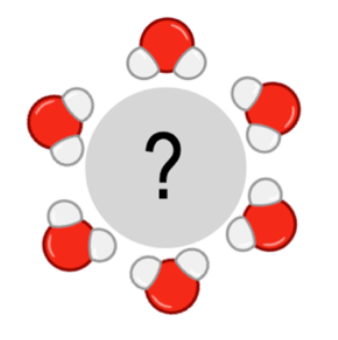
Negative
1000
Nucleic Acid has this as its Polymer
Polynucleotide
1000
This Biomolecule helps to create hormones
Lipids
1000
A protein's function depends heavily on its specific three-dimensional shape. If its shape is changed by heat or pH, the protein may undergo this process
Denaturation
1000
The process of water fighting against gravity to travel up a tree is known as this
Capillary Action
1000
Final Jeopardy Answers
A: Carb - Sugars act as solutes
B: Lipid - Nonpolar, do not dissolve in water
C: Protein - Polar amino acids makes them able to dissolve