Clean & Careful
Streak Smart
Colony Shapes
Variables in Play
Science in Action
Plate Basics
200
These practices keep unwanted microorganisms out of cultures and limit their spread during lab work.
What is aseptic technique?
Accept: What is sterile technique?
200
The main goal of a streak plate is to produce these separate patches of microbial growth.
What are isolated colonies?
Accept: What are well-separated colonies?
200
A colony forms a round, disk-like patch. This is its overall shape.

What is circular?
Accept: What is a circular colony?
200
This variable is deliberately changed by the researcher in a controlled experiment.
What is the independent variable?
Accept: What is the manipulated variable?
200
Recording that one plate has 18 colonies is an example of this step in scientific investigation.
What is making an observation?
Accept: What is observing or collecting data?
200
These three letters stand for Colony-Forming Unit.
What is CFU?
400
This sterile, cotton-tipped tool collects a sample when rolled across a doorknob.
What is a sterile swab?
Accept: What is a sampling swab?
400
A reusable metal inoculating loop reaches the visible endpoint of flame sterilization when it glows this color.
What is red?
Accept: What is red-hot?
400
A colony has an uneven outline with no consistent geometric form. This is its overall shape.

What is irregular?
Accept: What is an irregular colony?
400
Instead of describing a plate as having 'a lot of growth,' a student makes the observation numerical by recording this tally.
What is the number of colonies?
Accept: What is the colony count or CFU count?
400
This testable proposed explanation guides a scientific investigation.
What is a hypothesis?
400
This term describes a culture containing only one microbial species or strain.
What is a pure culture?
600
The sample label belongs on this part of a Petri dish so it stays with the agar if the lid is moved.
What is the bottom of the plate?
Accept: What is the agar-containing base?
600
After flaming, a loop needs this step before touching the sample so it does not kill the cells being transferred.
What is cooling?
Accept: What is allowing the loop to cool?
600
A colony has many fine, hairlike threads extending from it. This is the shape term that fits those threads.
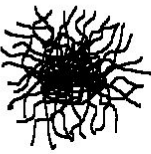
What is filamentous?
Accept: What is a filamentous colony?
600
When soap types are compared, the agar type and incubation temperature are kept the same. Such factors have this experimental role.
What are controlled variables?
Accept: What are constants?
600
A student plans treated and untreated groups, changing only sanitizer use while keeping other conditions equal. This type of experiment is being designed.
What is a controlled experiment?
600
Colonies merge into a continuous layer rather than remaining separate. This is the term for that merged growth.
What is confluent growth?
Accept: What is a bacterial lawn?
800
Lifting a plate lid only slightly during inoculation reduces exposure to microbes carried by this surrounding material.
What is air?
Accept: What is airborne dust?
800
In a correctly performed four-quadrant streak, this quadrant receives the original sample and usually has the densest growth.
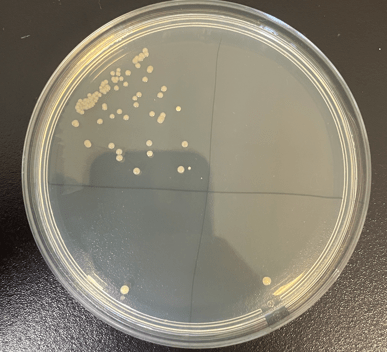
What is quadrant I?
Accept: What is the first quadrant?
800
A colony spreads in branching extensions that resemble plant roots. This is its shape.

What is rhizoid?
Accept: What is a rhizoid colony?
800
A class compares growth from a desk, sink, and keyboard. These three locations are different levels of this independent variable.
What is the surface sampled?
Accept: What is surface type or sampling location?
800
A student calculates average colony counts and compares the groups. This stage turns the measurements into patterns.
What is analyzing the results?
Accept: What is data analysis?
800
The school environmental-sampling activity calls for incubation near room temperature, within this range in degrees Celsius.
What is 22-25 degrees Celsius?
Accept: What is approximately 22 to 25 degrees Celsius?
1000
A sterile swab touches a sleeve before sampling a doorknob. Microbes transferred from the sleeve represent this experimental problem.
What is contamination?
Accept: What is accidental introduction of unwanted microbes?
1000
Progressively transferring fewer cells into fresh areas of agar separates the cells without adding liquid. This is the principle behind streak isolation.
What is dilution across the agar surface?
Accept: What is mechanical dilution or progressively reducing cell density?
1000
A student says the bacterial cells must be round because their colony is circular. Colony shape alone cannot establish this microscopic trait.
What is the shape of individual bacterial cells?
Accept: What is bacterial cell shape?
1000
To test whether adding soap reduces bacterial growth, the comparison group follows the same washing routine but leaves out this treatment ingredient.
What is soap?
Accept: What is the soap treatment?
1000
In a well-controlled, repeated comparison, soap-treated samples consistently yield fewer colonies than untreated samples. This conclusion about recoverable bacterial growth is supported.
What is soap reduced recoverable bacterial growth under the tested conditions?
Accept: What is the soap-treated samples produced less growth?
1000
A student wants to keep condensation from dripping off the lid onto the agar. The plate should be placed in this orientation.
What is inverted, with the agar-containing base above the lid?
Accept: What is upside down or lid-side down?