Biochemistry
Cells
Processes
Processes
Genetics and
Natural Selection
Natural Selection
100
Match each of the following structures to their biomolecule.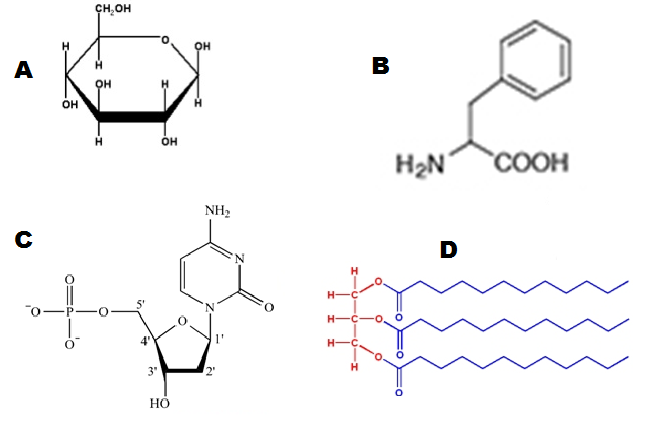
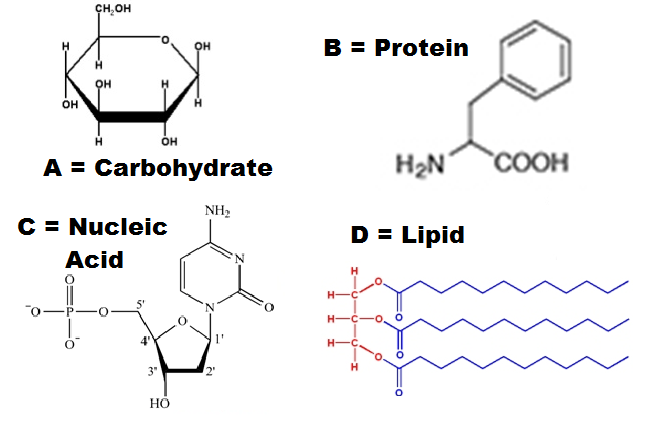
100
Name two differences between a eukaryote and a prokaryote.
Prokaryote: small, simple, no nucleus, bacteria
Eukaryote: big, complex, has a nucleus, plants and animals
100
Human cells contain approximately 99% water. What would happen to a human cell if it were placed in pure water (100% water)?
It would expand and burst.
100
When DNA is replicated, each new double strand of DNA contains one old strand and one new strand. Because of this the process is called what?
Semi-conservative
100
What is the protein production pathway?
ER => Golgi Body => Secretory vesicles
200
Name the 6 elements of life.
Carbon, Hydrogen, Oxygen, Nitrogen, Phosphorous, and Sulfur.
200
Name two differences between a plant and animal cell.
Plant: cell wall, 1 large vacuole (central vacuole), chloroplasts, square-ish
Animal: multiple, small vacuoles, lysosomes, round
200
Put the 3 steps of cellular respiration in order:
Kreb's Cycle
ETC
Glycolysis
1. Glycolysis
2. Kreb's Cycle
3. ETC
200
Some mutations are caused by changing one DNA base in a gene. Why?
Because this changes the amino acid sequence.
200
A brown moth (Bb) is crossed with a green moth (bb). What is the probability of having green offspring?
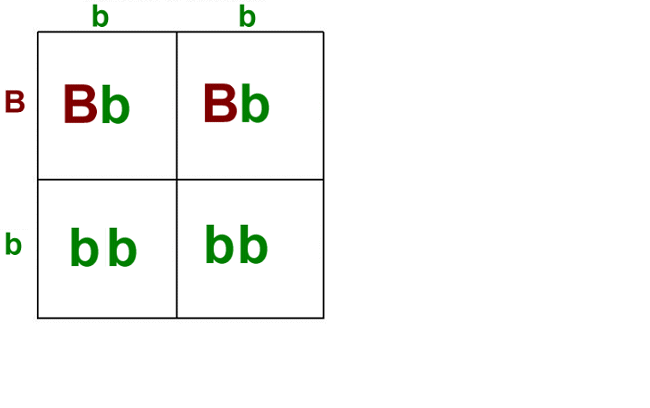 50% are green (bb)
300
What process occurs when a polypeptide and water is formed from amino acids?
Dehydration Synthesis
300
What is the purpose of a cell membrane?
Regulate/Transport/Control what goes in and out of the cell.
300
What are the reactants and products of photosynthesis?
Reactants: water, carbon dioxide, and light (energy)
Products: sugar and water
300
What phase of mitosis is pictured?

Telophase
300
Gold and brown fish live in the sea. Sharks prefer gold fish. What will happen to the number of gold fish over time?
It will decrease because the sharks are eating them.
400
Name the 4 biomolecules and their functions.
Carbohydrates: energy
Lipids: stores energy
Proteins: speeds up chemical reactions
Nucleic Acids: stores and transmits genetic information
400
What is the name of the part 6 in the diagram and what does it do?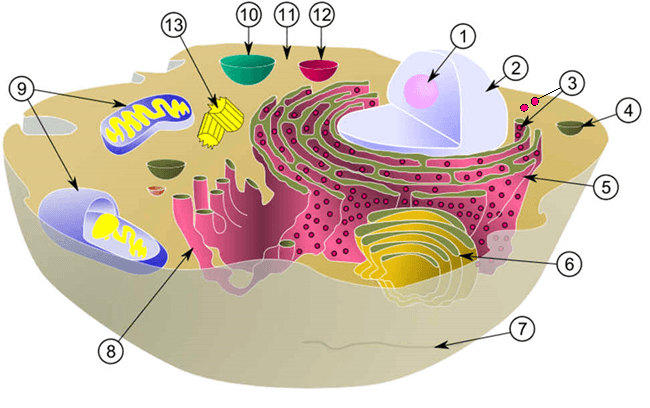
Golgi body - packages materials for transport.
400
What are the reactants and products of cellular respiration?
Reactants: sugar and oxygen
Products: water, carbon dioxide, energy (ATP)
400
Some cancer drugs affect the process of mitosis. Would these drugs affect quickly dividing cells or non-dividing cells?
Quickly dividing cells because mitosis is the process of dividing a cell.
400
What is the complementary strand of DNA for the following strand of DNA?
A T G G G A C T C
T A C C C T G A G
500
What is unique to an enzyme?
Active site
500
What is the purpose of a ribosome?
Make/produce/create proteins.
500
Where does cellular respiration occur?
In the mitochondria
500
Fill in the blanks:
Meiosis starts with (46) chromosomes and ends with (23) chromosomes.
500
What is this structure called?
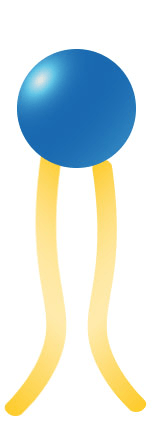
Phospholipid