Energy and energy flow
Populations and behavior
Biochemistry basics
Cells and cell processes
Energy and evolution
100
How much energy is used from one trophic level to the next?
Only about 10%
100
Migration of butterflies is an example of what type of behavior?
Group behavior
100
Which macromolecule stores quick energy?
Carbohydrates
100
What organelle contains DNA?
Nucleus
100
Name two reactants of photosynthesis.
Carbon dioxide + water
200
 Name one of the primary producers in the ocean.
Seaweed or plankton
200
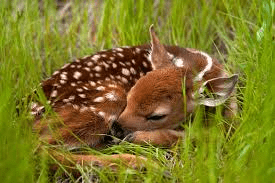
A fawn lying still to avoid predators is what type of behavior?
Individual behavior
200
Which macromolecule makes up cell membranes?
Lipids
200
What organelle produces ATP?
Mitochondria
200
Name two products of photosynthesis.
Glucose + oxygen
300
What is the main role of decomposers
They recycle nutrients
300
Give one example of living in groups.
Protection from predation
300
Which macromolecule functions as enzymes?
Proteins
300
Where does photosynthesis occur?
Chloroplast
300
What process releases energy from glucose?
Cellular respiration
400
If arctic cod decrease, what happens to zooplankton? 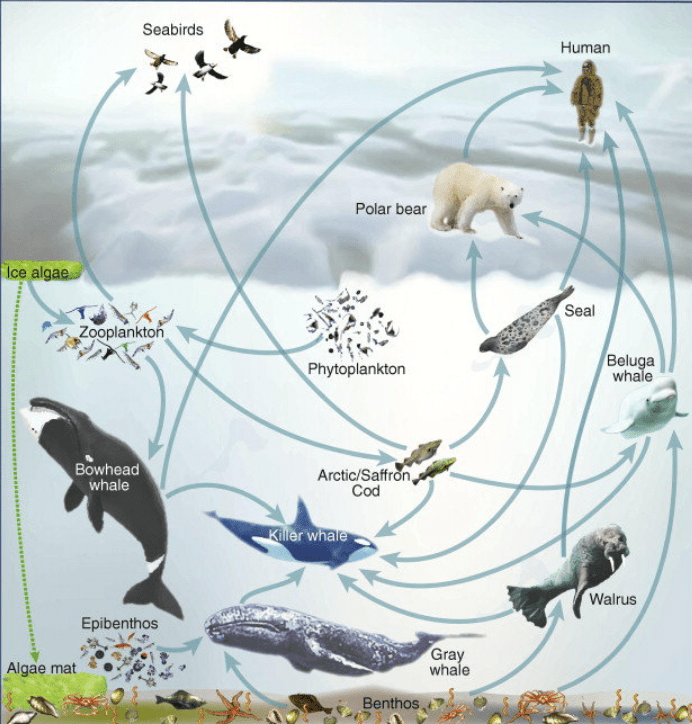
Their population increases
400
What increases population size by individuals entering?
Immigration
400
Which macromolecule stores genetic information?
Nucleic acids
400
What controls what enters and leaves the cell
Cell membrane
400
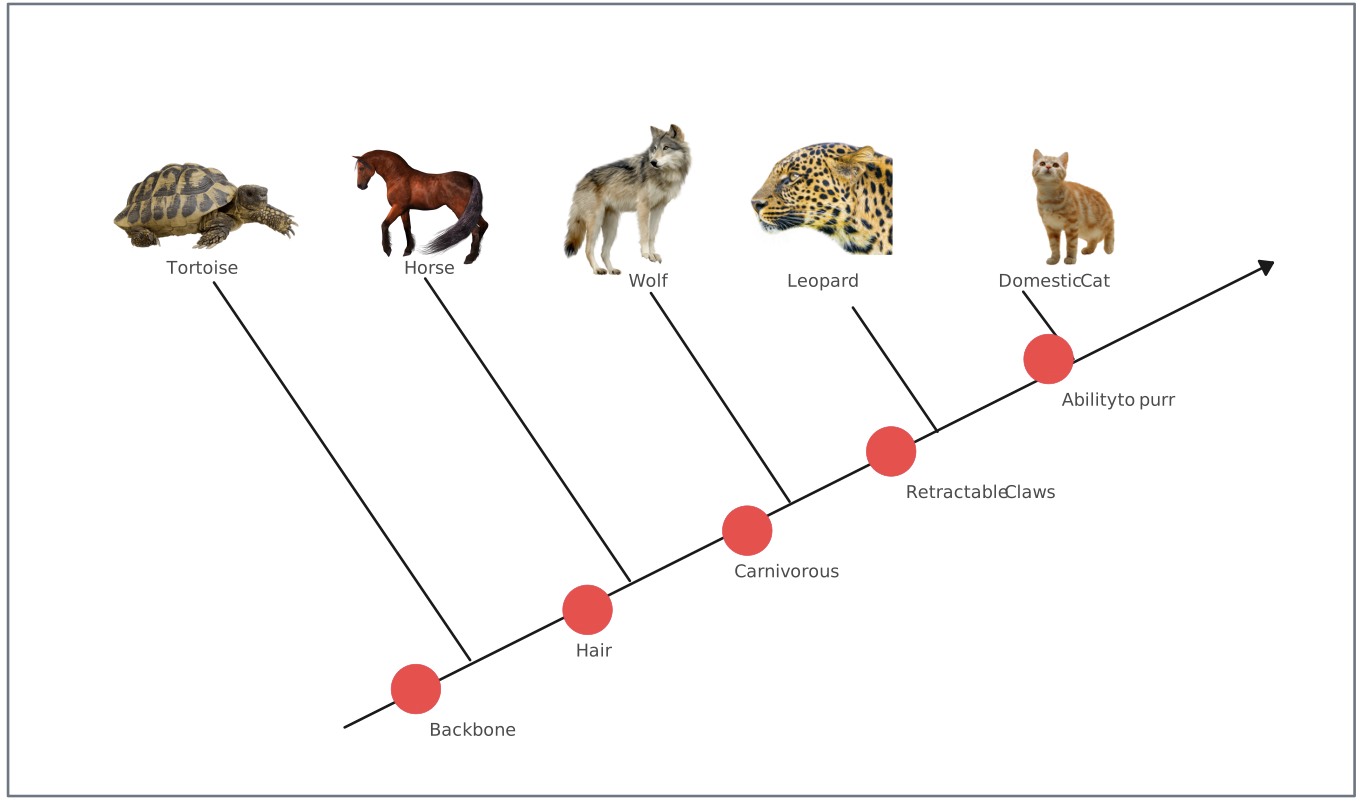
What trait do the leopard and the cat have in common?
500
What is it called when a population levels off?
Carrying capacity
500
What decreases population size by individuals leaving?
Emigration
500
What are the six elements found in all living things?
C, H, O, N, P, S
500
What is the result of mitosis?
Two identical daughter cells
500

from this chart, what two organisms is the zebra most closely related to?
Horse