Macromolecules& Enzymes
Organelle Interactions
Cell Transport
Cellular Processes
Cellular Reproduction
100
This macromolecule is the body's main source of quick energy and includes sugars and starches.
What are carbohydrates?
100
Ribosomes receive instructions from this organelle to make proteins.
What is the nucleus?
100
Oxygen moves across a cell membrane from an area of high concentration to an area of low concentration without using cellular energy. This type of transport is occurring.
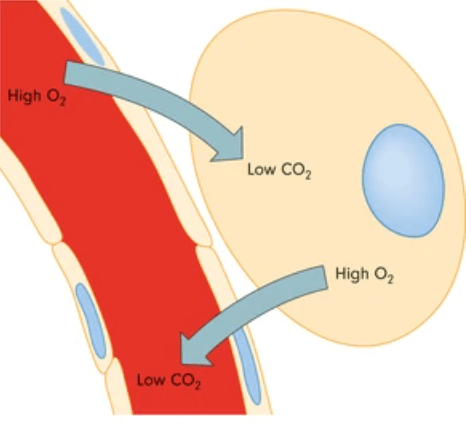
What is diffusion/passive transport?
100
This cellular process does not need light energy, takes place in the stroma, uses CO2, ATP and NADPH as reactants.
What is the Calvin Cycle?
-Light independent reactions
100
This type of cell division produces two genetically identical daughter cells and is used for growth and repair.
What is mitosis?
200
Amino acids are the monomers, or building blocks, of this macromolecule.
What are proteins?
200
A cell needs to produce and export a protein. Name the three organelles, in order, that primarily work together to make, process, and package the protein.
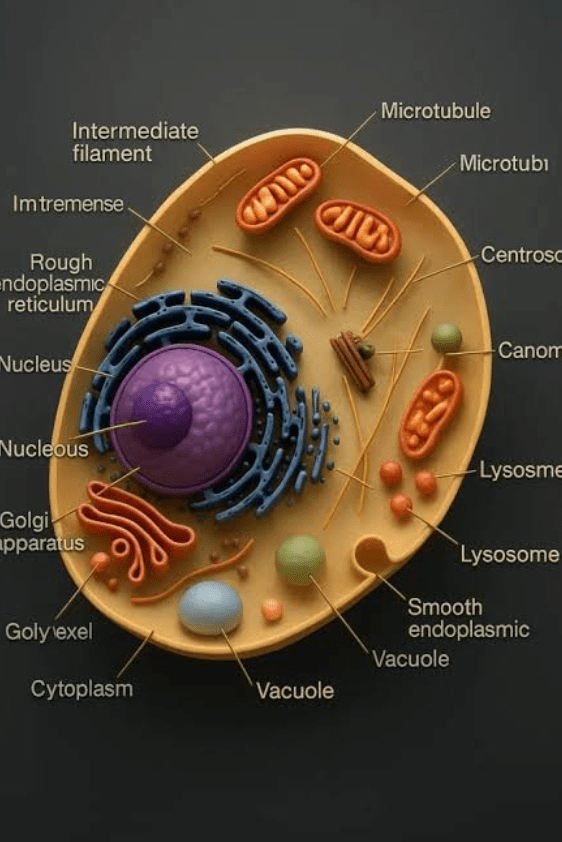
What are the ribosome → rough ER → Golgi apparatus?
200
A cell is placed in a solution with a higher solute concentration outside the cell than inside. Predict the direction water will move and what will happen to the cell.
What is water moves out of the cell by osmosis, causing the cell to shrink.
200
List the inputs & ouputs this organelle uses to carry out aerobic respiration?
Inputs: Oxygen,C6H12O6 (Glucose)
Outputs: Water, Carbon Dioxide, and large amount of ATP
200
After photosynthesis, this is what will happen to energy provided by the sunlight.
It will be stored in glucose molecules
300
During a reaction, a molecule attaches to an enzyme at this specific location, where the chemical reaction occurs is called.
What is an active site?
300
A cell's Golgi apparatus stops functioning. Ribosomes can still make proteins. Explain why the cell may still have difficulty using or exporting those proteins.
What is the proteins would not be properly modified, sorted, and packaged for transport.
300
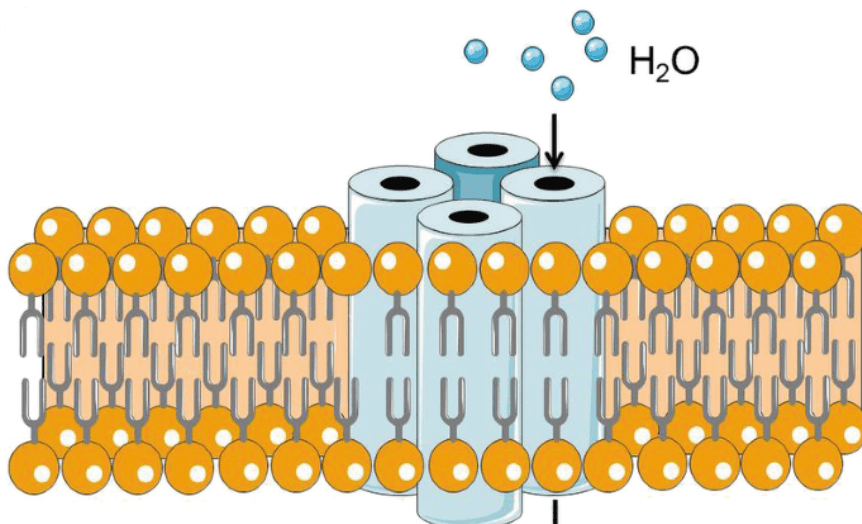
water moves from an area of high concentration to low concentration, but it cannot pass directly through the lipid bilayer. Identify the transport process and the membrane structure that assists it.
What is facilitated diffusion using a transport/channel protein?
-Aquaporins
300
Luis and Carrington place a plant in darkness for an extended period. Which cellular process can continue, and which process will be greatly reduced?
What is cellular respiration can continue; photosynthesis will be greatly reduced/stopped.
300
A bacterial cell copies its DNA and then divides into two genetically identical cells. Name this process and explain why it is different from mitosis.
What is binary fission? Bacteria/prokaryotes reproduce by binary fission and do not undergo mitosis.
400
Radiance & Brandon test an unknown food and discovers that it contains this molecular composition. This macromolecule is most likely present.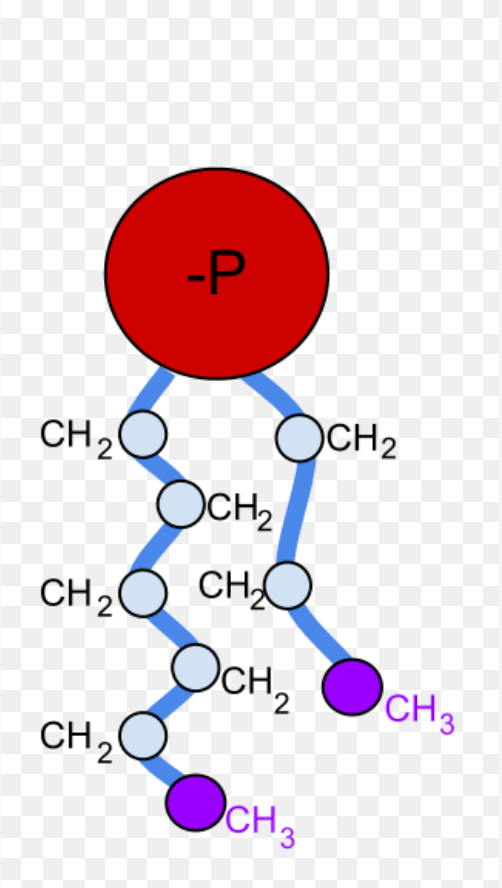
What is a lipid?
400
cell produces many proteins but suddenly cannot make enough ATP. Which organelle is most likely malfunctioning, and how could this eventually interfere with the cell's other organelles?
What is the mitochondria; reduced ATP means less energy is available for energy-requiring cellular processes.
400
A cell has a lower concentration of sodium ions outside than inside, but it continues moving sodium ions from low concentration to high concentration. Identify the type of transport and explain what the cell must use to accomplish it.
Active transport; the cell must use energy/ATP and membrane transport proteins.
400
Nehemiah administers a drug that disrupts the Electron Transport Chain. This will most likely happen as a result.
What is
-disrupt aerobic respiration
-cause massive reduction in ATP output.
400
A skin cell has 46 chromosomes before undergoing mitosis. If division occurs normally, how many chromosomes should each daughter cell have, and why?
What is 46 chromosomes. Mitosis maintains genetic continuity by producing daughter cells with the same chromosome number as the parent cell.
500
A student measures the rate of an enzyme-controlled reaction at different temperatures.
Based on the data, explain why the reaction rate increases from 10°C to 37°C but then decreases dramatically above 37°C.
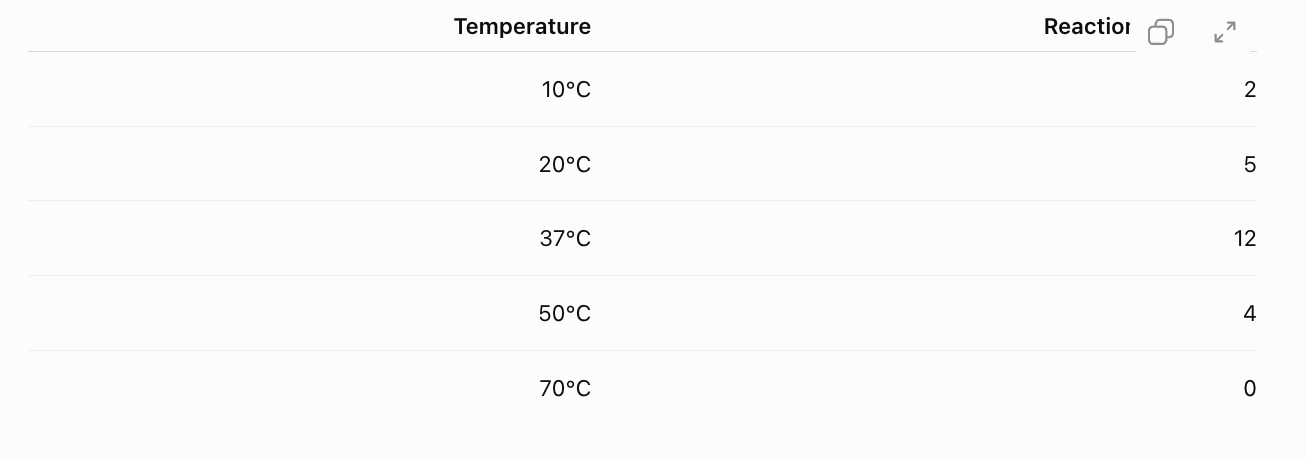
What is increasing temperature initially increases molecular movement and enzyme-substrate collisions. Around 37°C is the enzyme's optimal temperature. Higher temperatures can change the enzyme's shape, particularly its active site, causing denaturation and decreasing its ability to bind the substrate.
500
A mutation prevents a cell from producing functional lysosomal proteins. Predict one effect this could have on the cell and explain how the disruption could threaten homeostasis.
What is cellular waste/damaged materials would accumulate and recycling would decrease, disrupting normal cellular conditions and potentially damaging the cell.
500
A freshwater organism is suddenly placed into very salty water. Predict what happens to its cells and explain your answer using tonicity, concentration gradient, and osmosis.
The salty environment is hypertonic to the cells. Water moves out of the cells by osmosis toward the area of greater solute concentration, causing the cells to lose water/shrink and disrupting homeostasis.
500
Dillon and Elliana conduct a yeast fermentation experiment, shown in the diagrams. This cellular process explains why the balloon expanded
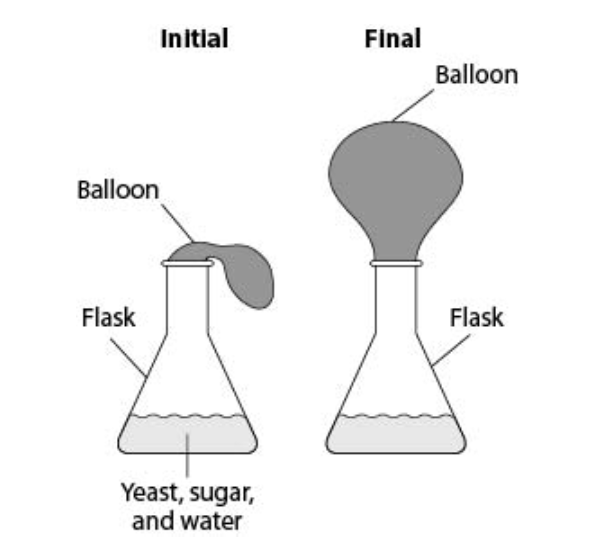
What is anaerobic respiration. The yeast produced Carbon dioxide as a product and filled balloon.
500
During cell division, the sister chromatids of one chromosome fail to separate properly.
Predict how this error could affect the daughter cells and explain why it could disrupt genetic homeostasis.
The daughter cells could receive an incorrect number of chromosomes, causing them to have unequal/incorrect genetic information and potentially disrupting normal cell function.