Systems
Diagrams
Organs
Fun facts
Diseases & Keeping Healthy
100
This system is responsible for creating urine.
What is the urinary or the excretory system?
100
No 8 is pointing to the...
What is the trachea?
100
You have two of these. They remove waste, filter your blood, and balance fluids and electrolytes.
What are the kidneys?
100
The longest bone in your body.
What is the femur.
100
A strain is an injury to a muscle or tendon (tissue that connects muscle to bone), and a sprain is an injury to this.
What is a ligament? (Tissue that connects bone to bone at a joint)
200
This system involves the trapezius, the triceps, and the abdominals.
What is the muscular system?
200
This little organ (G) stores bile that is created in the liver.

What is the gallbladder?
200
This organ is the body's command centre.
What is the brain?
200
Over 50% of the dust in your home comes from this.
What are dead skin cells?
200
To keep our lungs healthy, it is important to not inhale these 3 things.
What is smoke, environmental/workplace hazards & air pollution.
300
This system involves both the heart and the lungs as primary organs.
The circulatory or the cardiovascular system.
300
Underneath the label sternum it should read.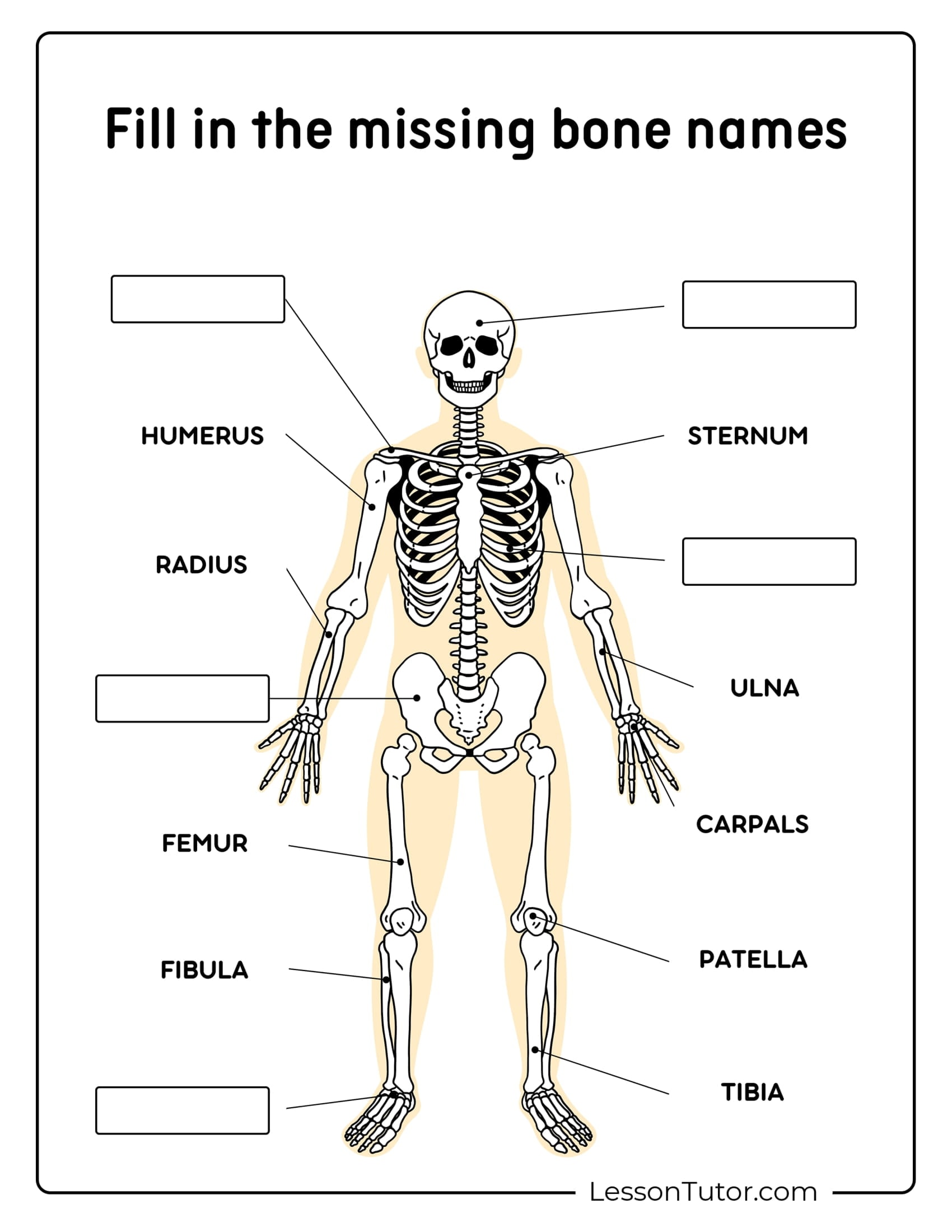
What are Ribs?
300
This organ breaks down food, mixes it with digestive juices and absorbs over 90% of the body's nutrients and water.
What is the small intestine?
300
This is the largest muscle in the human body.
What is the gluteus maximus?
300
We can do these 3 things to keep healthy.
What is exercise regularly, eat healthy, and get lots of rest?
400
This system protects us from bacteria, holds our organs in place, regulates body temperature, allows us to sweat & sense things, and produces vitamin D.
What is the integumentary system?
400
The dark circle (b) is the...

What is the nucleus?
400
Deoxygenated blood travels through these.
What are the veins?
400
This bone is named after a Cuckoo bird's beak.
What is the coccyx?
400
This disorder is what occurs when your body no longer produces insulin to regulate blood sugar.
What is diabetes?
500
This system regulates our hormones.
What is the endocrine system?
500
#4 on the diagram is...
What is the aorta?
500
A thin, dome-shaped sheet of muscle on the floor of the thoracic cavity. It is the primary muscle involved in respiration.
What is the diaphragm?
500
While sitting and calm, the average human heart beats this many times per minute.
What is 60-100 beats per minute?
500
Blood disorders, leukemia, and immune deficiencies are often treated with this specific type of cells found in bone marrow.
What are stem cells?