Types of Bonds
What's my Name?
Determining Chemical Formulas
Polar or Nonpolar?
Properties of Bonds
100
This type of bond results from a SHARING of electrons between atoms.
What is covalent?
100
Describe how we name IONIC compounds.
Metal + nonmetal with -ide ending if it contains MONOATOMIC ions
**If it contains a polyatomic ion, then its Cation + Anion
Ex) CaSO4 = Calcium Sulfate
100
Describe the steps to determining a chemical formula for a COVALENT compound given the name of that compound.
Look at prefixes
Prefixes become subscripts in formula
ex) Nitrogen dioxide = NO2
100
Describe the difference between a POLAR and a NONPOLAR covalent bond. You may use examples in your answer.
Nonpolar = electrons EQUALLY shared between atoms
Polar = electrons UNEQUALLY shared between atoms
100
Which of the following is NOT a property of IONIC compounds?
A) can conduct electricity when dissolved in water
B) low melting point
C) hard, brittle solids at room temperature
D) Soluble (aka dissolves well in water)
B) Low melting point
200
This type of bond occurs between metals. Electrons are allowed to flow freely, resulting in a "sea" of electrons.
What is a metallic bond?
200
Describe how we name COVALENT compounds
First element + Second Element with -ide ending
- Use PREFIX in front of second element to indicate # of that type of atom in compound
- NO prefix in front of first element UNLESS there is more than one in the compound
200
Describe the steps to determining a chemical formula for an IONIC compound given its name.
1. Determine charge of element as an ion using group #
2. Determine how many of each is needed so that charges cancel
3. Write the formula.
Ex) Calcium Chloride --> Ca is 2+, Chlorine is 1- so formula would be CaCl2
200
How can we determine if a compound is POLAR or NONPOLAR?
- Difference in EN (based on location on PT)
- Look at if there is symmetry in the compound (if there is, it is NONPOLAR; if there isn't then it may be POLAR)
200
Compare and contrast the differences in properties between IONIC and COVALENT compounds
- Hint: think back to the labs we have done
Ionic: soluble, conducts electricity when dissolved, High MP/BP, hard brittle solids at room temperature
Covalent: sometimes soluble, cannot conduct electricity, Low MP/BP, can be solid liquid OR gas at room temperature.
300
This type of bond forms as a result of a TRANSFER of electrons, resulting in the formation of ions.
What is an ionic bond?
300
Name the compound:
NaF
Sodium Fluoride
300
Determine the formula for the following compound:
Oxygen Difluoride
OF2
300
Which of the following would you predict to be polar covalent? (may be more than one answer)
- CO2
- H2O
- HF
- Cl2
Water and HF
300
You and a friend have two unknown substances in your kitchen that look identical. You want to determine which one is which based on their chemical properties.
Describe one or more tests you could carry out to determine which one is sugar, and which one is table salt.
Conductivity test
Melting point test
400
Why do atoms form bonds between each other?
To gain stability. All atoms (except H) want 8 valence electrons as they are most stable this way.
400
Name the compound:
SiO2
Silicon Dioxide
400
Determine the formula of the following compound:
Barium Nitride
Ba3N2
400
Is the following compound POLAR or NONPOLAR? If Polar draw the dipole arrows
Polar; N is more electronegative.
400
Which type of substance would be most ideal to use for bakeware in the kitchen?
- covalent compound
- ionic compound
ionic; they have high melting points
500
What type of bond would form between the following atoms?
Silicon (Si) and Oxygen (O)
Covalent
500
Name the Compound:
N2O
Dinitrogen monoxide
500
Determine the name of the following compound:
Dicarbon Hexafluoride
C2F6
500
Based on the lewis structure for the given compound, determine if it would be POLAR or NONPOLAR. Then explain WHY
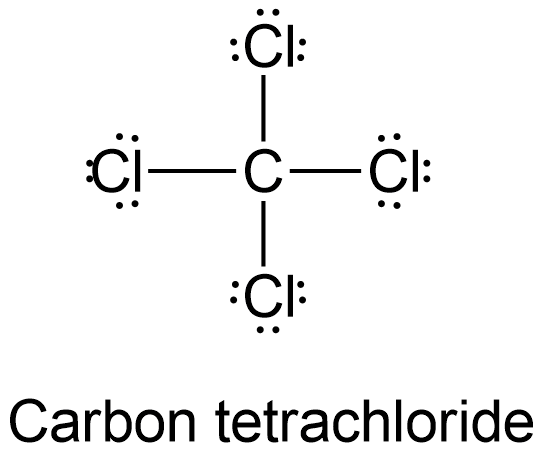
Nonpolar, although there is a difference in EN; the dipoles cancel each other out due to symmetry.
500
Double Jeopardy!
Propose an experiment you could carry out to determine if a substance is POLAR or NOPOLAR covalent.
- Answers will vary