Gram Slam
Going Viral!
Immunity Idol
Pharmageddon
Tissue Issues
100
This cell structure is common to all bacteria.
What is a ribosome?
100
This virus can cause fatigue, lymphadenitis, pharyngitis, and hepatosplenomegaly. It can cause what is colloquially known as "the kissing disease."
What is the Epstein-Barr virus (EBV)?
100
This organ is the site of T-cell maturation.
What is the thymus?
100
This antibiotic is commonly used to treat methicillin-resistant S. aureus.
What is vancomycin?
100
This type of collagen is synthesized first during the very early stages of wound repair.
What is type III collagen?
200
This bacteria is a gram-positive B-hemolytic rod that can be found in deli meat and can cause meningitis in neonates.
What is Listeria monocytogenes?
200

This virus is commonly known to infect immunocompromised patients, like those receiving a kidney transplant.
What is Cytomegalovirus (CMV)?
200
This antibody is predominantly found in body fluids and mucosal linings.
What is Immunoglobulin A (IgA)?
200
This antibiotic is commonly used as prophylaxis for those who come in contact with a patient infected with Neisseria meningitidis.
What is rifampin?
200
This molecule is released by the mitochondria into the cytoplasm, eventually triggering programmed cell death.
What is cytochrome c?
300
This bacteria can cause invasive infection in patients with impaired immune defense, including burn patients. It is a lactose negative, oxidase positive gram-negative bacteria that produces a blue-green exudate.
What is Pseudomonas aeruginosa?
300
This virus is the causative agent of erythema infectiosum in children, as well as aplastic crisis in patients with sickle cell disease.
What is Parvovirus B19?
300
This is the only antibody class that can cross the human placenta.
What is Immunoglobulin G (IgG)?
300
The mechanism of action for this antibiotic class involves inhibiting two essential bacterial enzymes: DNA gyrase (topoisomerase II) and topoisomerase IV.
What are fluoroquinolones?
300
This type of necrosis commonly occurs in the brain after a stroke or during bacterial infections due to enzymes digesting dead cells.
What is liquefactive necrosis?
400
This is the preferred diagnostic test for a bacteria that can cause mild to severe pneumonia from inhalation of contaminated aerosolized water.
What is a urine antigen test? (for Legionella pneumophila)
400
This viral illness can cause orchitis, oophoritis, pancreatitis, and meningitis in unvaccinated children.
What is mumps?
400
This T-cell subset helps stimulate antibody class switching to IgE, as well as production of intestinal mucus and activation of mast cells and eosinophils.
What are Type 2 helper T-cells (Th2 cells)?
400
This antibiotic drug class is contraindicated in pregnant patients as it can cause permanent yellow or brown discoloration of the fetus's teeth and impaired bone growth.
What are tetracyclines?
400
These cells contract to bring the wound edges closer together during secondary wound healing, eventually allowing for re-epithelialization to occur.
What are myofibroblasts?
500
This bacteria can cause anaerobic infection of the posterior pharyngeal space accompanied by thrombophlebitis of the internal jugular vein.
What is Fusobacterium necrophorum?
500
This term refers to an abrupt major change in viral genome RNA due to reassortment of segments of the genome, leading to the ability to cause epidemics or pandemics.
What is antigenic shift?
500
This chemokine acts as a primary chemical signal to pull and guide neutrophils to sites of infection, injury, or inflammation.
What is Interleukin-8 (IL-8)?
500
This antibiotic drug class can cause side effects like GI distress, arrhythmias, ototoxicity, or hepatotoxicity.
What are macrolides?
500
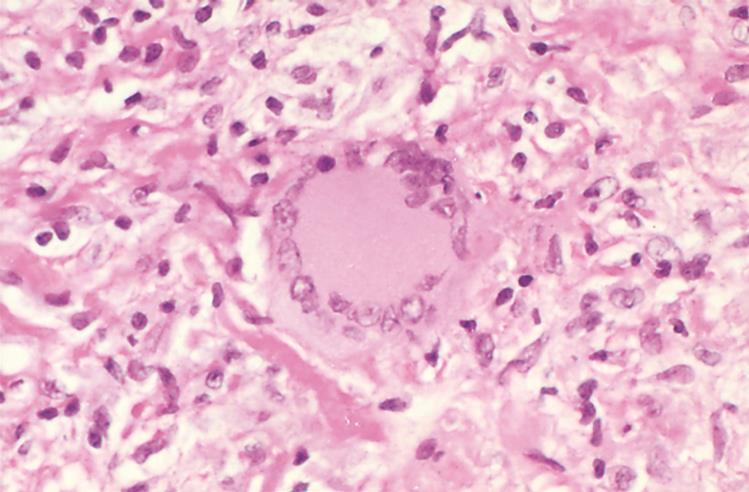
These cells were named after a German pathologist studying chronic inflammation and are formed when activated epithelioid macrophages fuse together.
What are Langhans giant cells?