First Derivative
Second Derivative
Graphs/Tables
100
This is what we call a point on f(x) where the first derivative f'(x) = 0.
What is a critical point?
100
This is what we call a point on f(x) when the second derivative f"(x) changes sign.
What is an inflection point?
100
The graph shown is f'(x). This is where f is concave down.
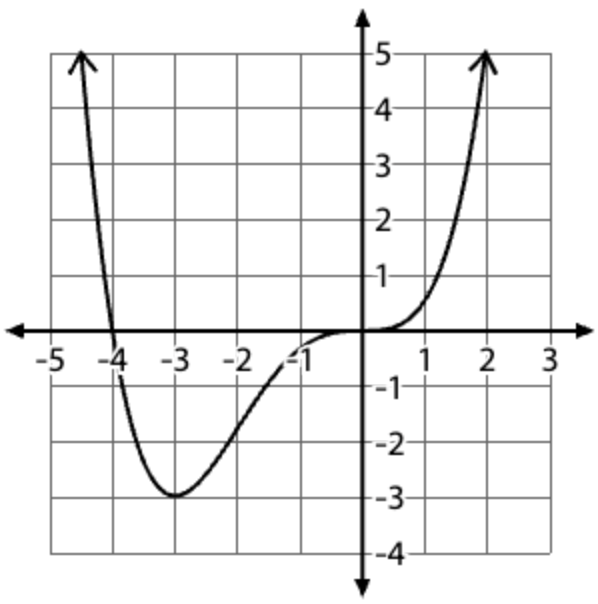
What is
(-infty , -3) ?
200
The original function f(x) does this when the derivative f'(x) is negative.
What is decreases?
200
An inflection point is where the graph of f(x) does this.
What is changes concavity?
200
The graph of f(x) is shown. This is where f'(x) > 0 and f"(x) < 0.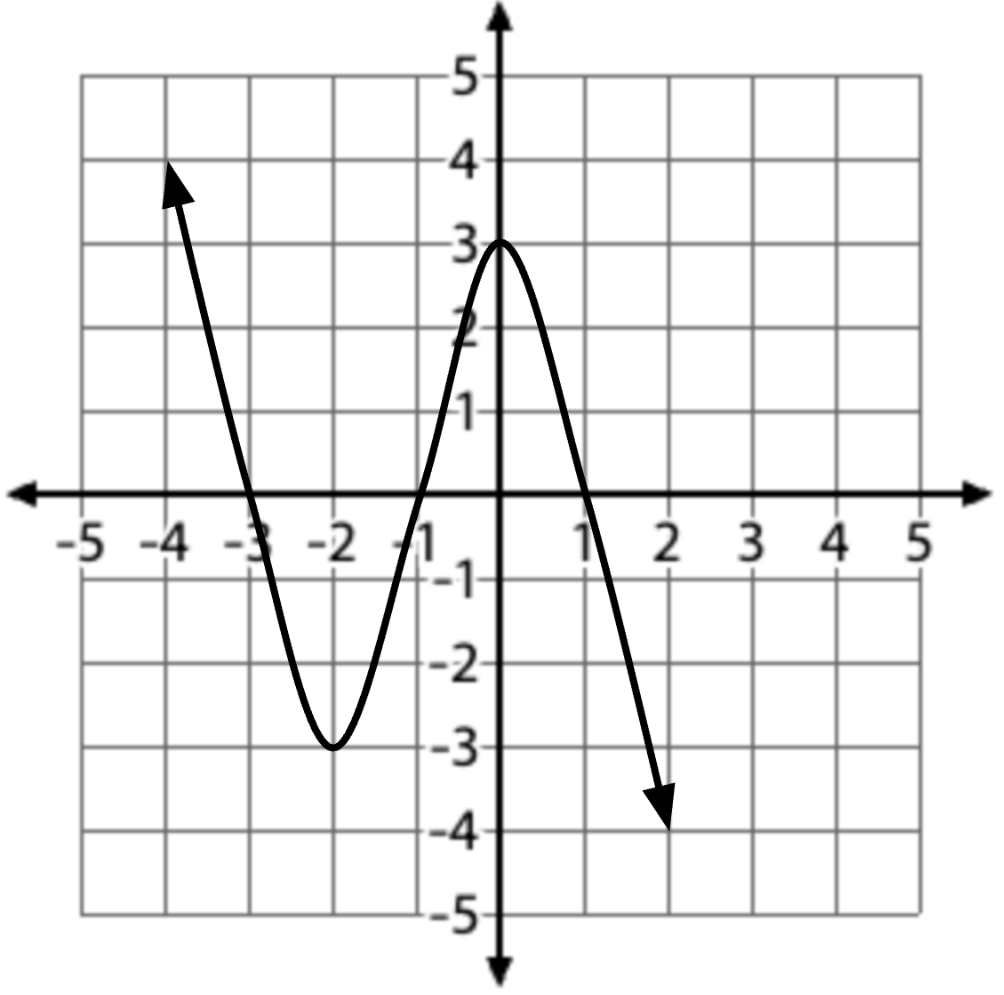
What is the interval (-1,0) ?
300
This is what we call a point on f(x) when the first derivative f'(x) changes from increasing to decreasing.
What is relative maximum?
300
This is what we call an interval on f(x) when f"(x) is positive.
What is concave up?
300
This is the order of f(-3), f'(-3), and f"(-3) from least to greatest.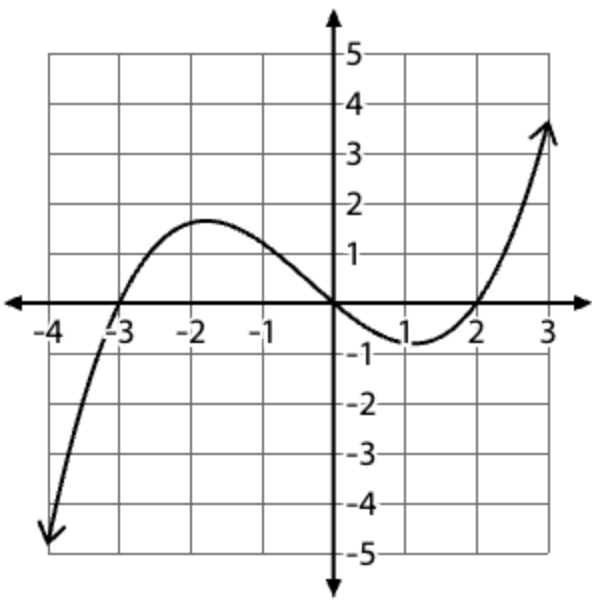
What is f"(-3) < f(-3) < f'(-3) ?
400
These are the critical numbers of
f(x) = 3x^3+12x^2-36x.
What are x = 0, 2, and -6?
400
These are the inflection points of
f(x) = 1/2x^4-12x^2+18x.
What are x = 2 and x = -2 ?
400
These are the x coordinates of the critical points of f.

What are x = 1 and x = 2 ?
500
The graph of f'(x) is shown. This is where f(x) has a relative maximum.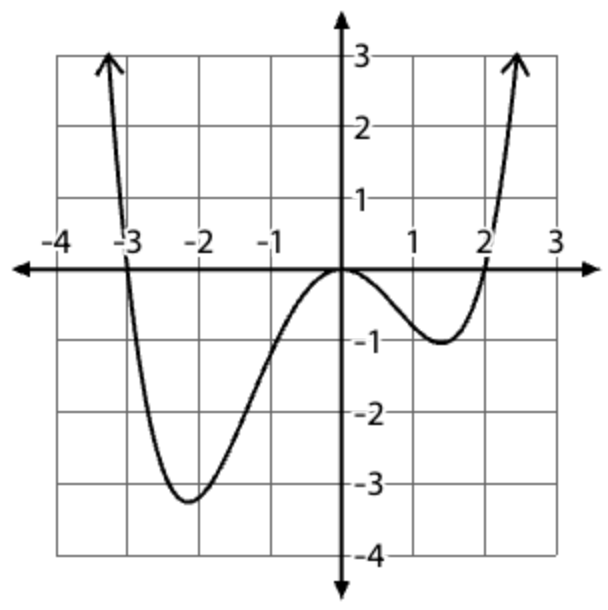
What is x = -3 ?
500
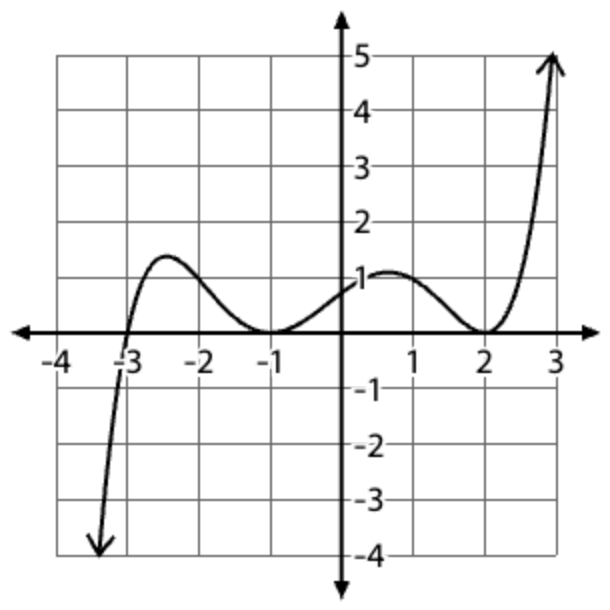
The graph shown is f"(x). This is where f has inflection point(s).
What is x = -3 ?
500
These are the x values of the inflection points of f.

What is x = 1 ?