Dysrhythmias & ECG Interpretation
Cardiac Medications
Angina & CAD
MI / ACS / STEMI
PCI & Thrombolytics
CABG & Valvular Disease
Variety
100
This rhythm has a regular rate of 60-100 bpm with a P wave before every QRS.
What is Normal Sinus Rhythm (NSR)?
100
This medication inhibits platelet aggregation and is given for chest pain.
What is Aspirin?
100
This type of angina is predictable and relieved by rest or nitroglycerin.
What is Stable Angina?
100
These biomarkers are most specific for myocardial injury.
What are Troponin I and Troponin T?
100
The priority complication monitored after PCI.
What is bleeding?
100
Sudden cessation of chest tube drainage after CABG may indicate this emergency.
What is cardiac tamponade?
100
Rhythm with no electrical activity?
What is Asystole?
200
This dysrhythmia is characterized by an irregularly irregular rhythm and no discernible P waves.
What is Atrial Fibrillation?
200
The effectiveness of this antiarrhythmic drip is evaluated by observing for resolution of dysrhythmias.
What is Amiodarone?
200
This type of angina often occurs at rest and may indicate impending MI.
What is Unstable Angina?
200
This ECG finding indicates myocardial irreversible injury.
What is ST-segment elevation?
200
Back pain and hypotension after PCI suggest this complication.
What is retroperitoneal hemorrhage?
200
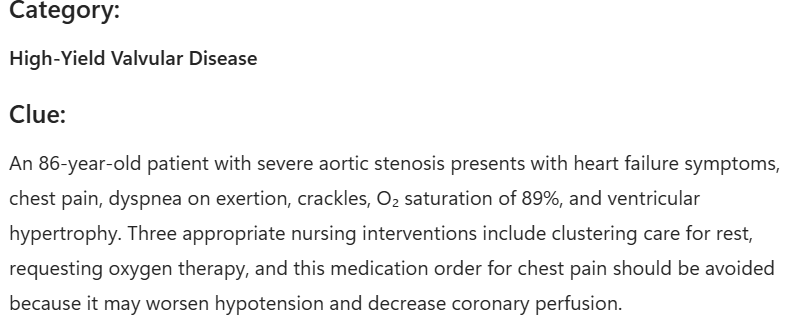
What is nitroglycerin?
200
Rhythm most commonly requiring anticoagulation?
What is Atrial Fibrillation?
300
This lethal rhythm appears as chaotic ventricular activity with no cardiac output.
What is Ventricular Fibrillation?
300
A common adverse effect of metoprolol requiring monitoring.
What is Bradycardia?
300
This type of angina results from coronary artery vasospasm.
What is Prinzmetal (Variant) Angina?
300
This complication post-MI is suggested by crackles halfway up the lungs.
What is Heart Failure/Reduced Cardiac Output?
300
Severe chest pain after PCI requires immediate assessment for this problem.
What is coronary artery re-occlusion or ongoing ischemia?
300
The priority treatment for complete heart block after valve surgery.
What is external pacing?
300
ECG finding of STEMI
What is ST-segment elevation?
400
This rhythm is identified by saw-tooth flutter waves
What is Atrial Flutter?
400
This laboratory value is used to monitor warfarin therapy.
- What is INR?
400
The nurse's priority assessment question for chest pain patients addresses this factor.
What were you doing when the pain began?
400
The nurse's first goal priority in a patient with STEMI and severe chest pain.
What is reducing pain and myocardial oxygen demand?
400
Frank blood in the urinary catheter during alteplase therapy indicates this complication.
What is major bleeding?
400
Severe aortic stenosis patients should avoid this level of activity before surgery.
What is strenuous activity/exertion?
400
Most common beta-blocker adverse effect
What is Bradycardia?
500
This rhythm is associated with a prolonged QT interval and appears to "twist" around the baseline.
What is Torsades de Pointes?
500
This medication should be questioned if the patient's INR is 4.2.
What is Warfarin (Coumadin)?
500
Women often experience these atypical symptoms, leading to delayed MI recognition.
What are nonspecific or atypical symptoms?
500
This lab value would make an exercise stress test unsafe.
What is an elevated troponin?
500
Rapid irregular heart rate after femoral PCI may indicate this complication.
What is a dysrhythmia?
500
The most important therapy when selecting a mechanical valve replacement.
What is ability to comply with lifelong anticoagulation?
500
Immediate intervention for third-degree heart block
What is External Pacing?