Work it, work it!
If I were a flower growing wild and free...
Name that Biomolecule
Reach for the STAARs
Miscellaneous
100
Which two animal systems are interacting in the following scenario?
During labor and delivery, contractions push the baby through the vaginal canal.
Reproductive and Muscular
100
List and describe the role of the plant systems.
1. Shoot System - where reproduction and photosynthesis occur in the plant
2. Root System - responsible for the uptake of water and minerals from the soil
100
Stores genetic information in its sequence of nitrogen bases.
Nucleic Acid
100
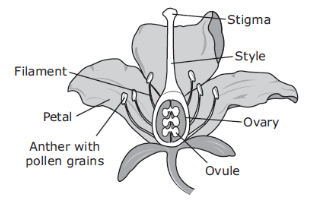 Use the diagram to explain how this plant would self-pollinate.
A pollen grain is transferred from the anther to the stigma of the same flower.
100
Enzymes are proteins that have a three-dimensional shape that is specific to a particular substrate. Environmental conditions can change the shape of the protein.
What is the most likely result if the shape of the enzyme changes?
A. The substrate will change its shape to match the enzyme.
B. The enzyme will no longer be able to catalyze the reaction with the substrate.
C. The products made from the enzyme and the substrate will be changed.
D. The enzyme will be able to bind to more diverse substrates than before.
B. The enzyme will no longer be able to catalyze the reaction with the substrate.
SHAPE DETERMINES FUNCTION
200
Which two animal systems are interacting in the following scenario?
Hormones stimulate respiration and cause breathing to increase when the body senses stress.
Endocrine and Respiratory
200
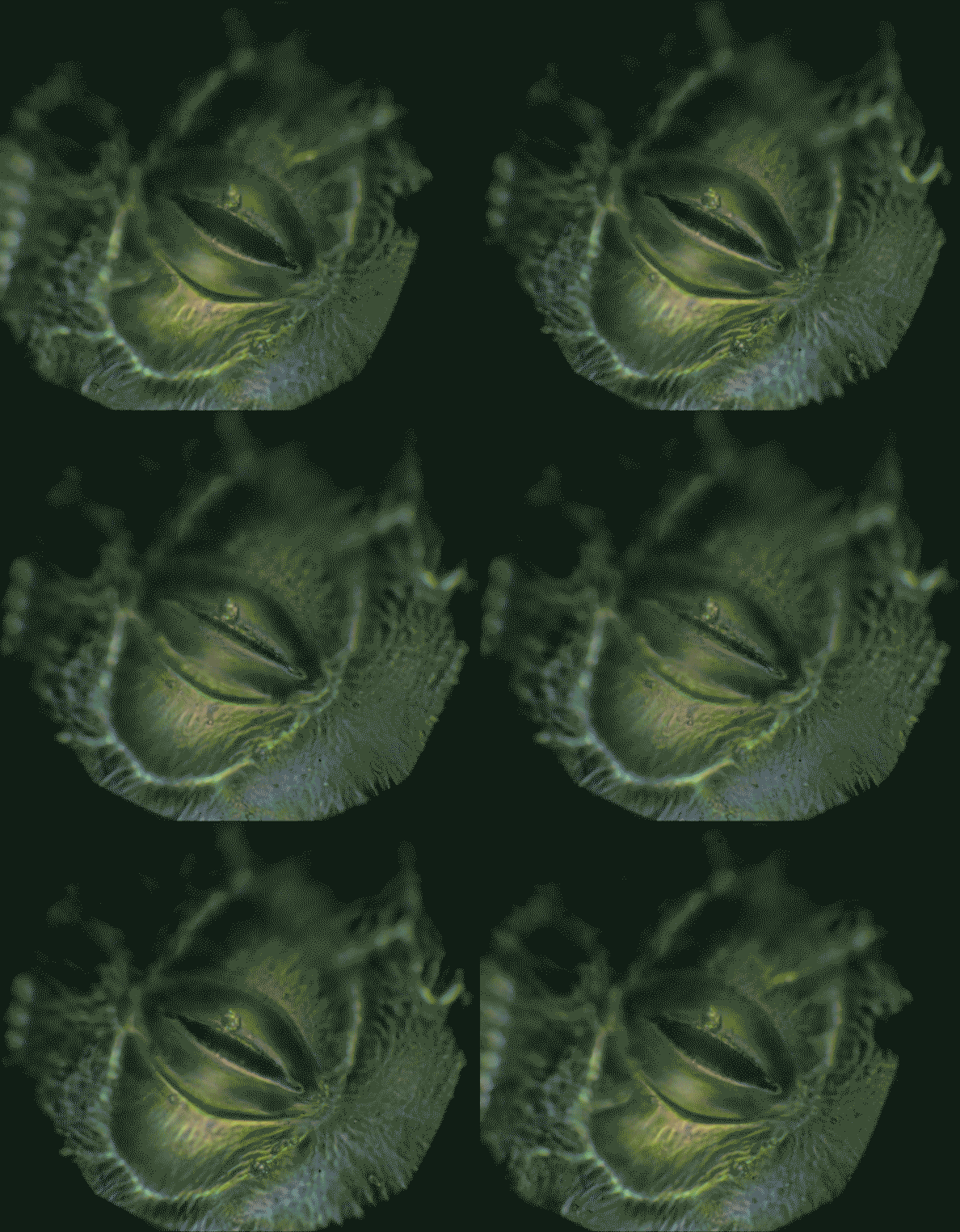
You could call us air traffic controllers. We open and close the stomata, which allows for gas exchange with the plant's shoot system. We are important cells since carbon dioxide in the air is the plant's only source of carbon for making carbohydrates.
Guard Cells
200
Main energy source used in cellular respiration to make ATP.
Carbohydrate (Glucose)
200
Photosynthesis and cellular respiration both involve the use and release of gases. Which statement correctly identifies the role gases in the two processes?
A. Photosynthesis and cellular respiration both use carbon dioxide and release oxygen.
B. Photosynthesis and cellular respiration both use oxygen and release carbon dioxide.
C. Cellular respiration uses oxygen and releases carbon dioxide, while photosynthesis uses carbon dioxide and releases oxygen.
D. Cellular respiration uses carbon dioxide and releases oxygen, while photosynthesis uses oxygen and releases carbon dioxide.
C. Cellular respiration uses oxygen and releases carbon dioxide, while photosynthesis uses carbon dioxide and releases oxygen.
200
Which answer choice best describes the a community?
A. Praying mantises caring for their young
B. Three-spined sticklebacks living in estuaries
C. Different species of lizards occupying the same niche in the desert
D. Roosting mother bats recognizing their offspring
C. Different species of lizards occupying the same niche in the desert
300
Which two animal systems are interacting in the following scenario?
Sometimes bacteria can enter the bladder through the urethra and cause bladder infections. When this happens, white blood cells attack the bacteria.
Excretory and Immune
300
The function of parts 1 & 2.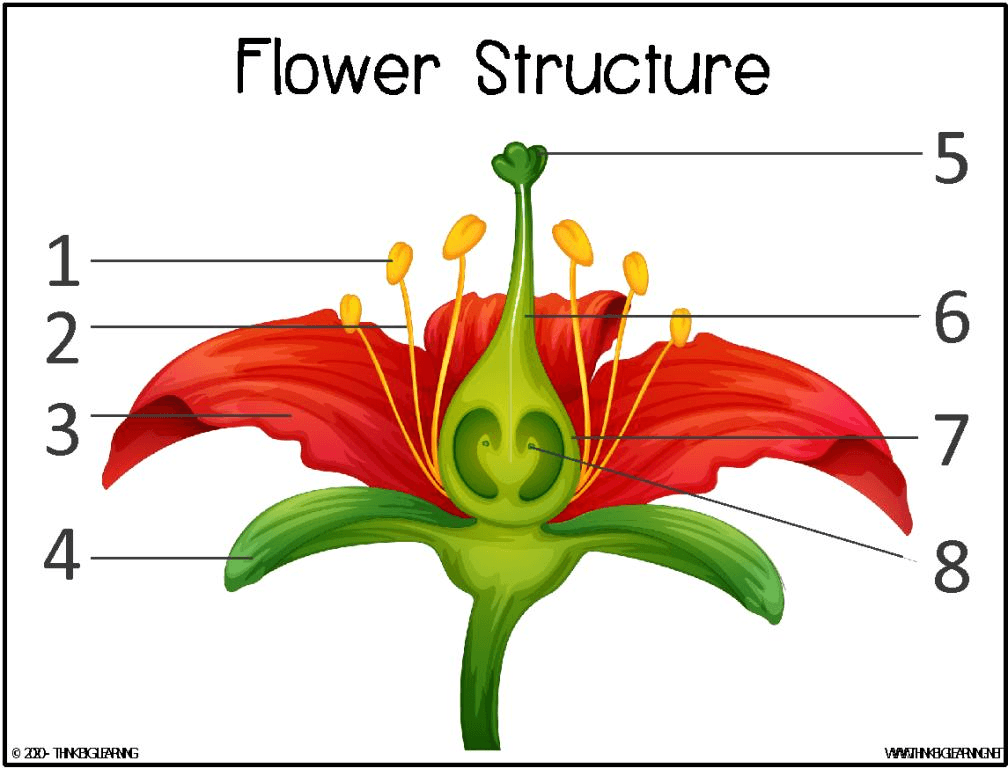
Production of the male gamete (pollen)
300
Regulates what comes into and out of the cell and is insoluble in water
Lipid
300
Which statements best compare the function of an ATP molecule to a DNA molecule?
A. ATP carries and transmits the genetic information of organisms. DNA serves as a biological catalyst that speeds up the rate of chemical reactions.
B. ATP provides energy for chemical reactions in the cell. DNA carries and transmits the genetic information of organisms.
C. ATP serves as a biological catalyst that speeds up the rate of chemical reactions. DNA acts as a structural sugar in the cell walls of plants.
D. ATP acts as a structural sugar in the cell walls of plants. DNA provides energy for chemical reactions in the cell.
B. ATP provides energy for chemical reactions in the cell. DNA carries and transmits the genetic information of organisms.
300
What is the name of the process occurring in the image and what is the stimulus?
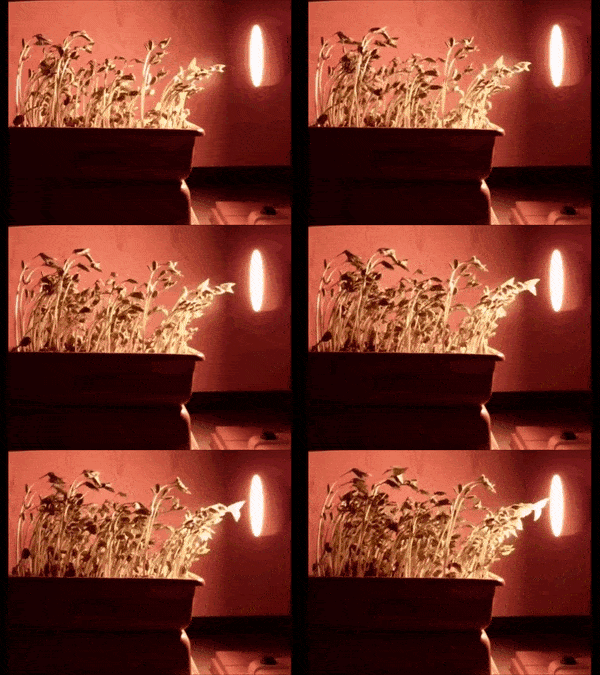
Phototropism
Stimulus: light
400
Which two animal systems are interacting in the following scenario?
Growth hormones from the pituitary gland regulate growth of the bones.
Endocrine and Skeletal
400
Similar to the endocrine system in animals, what is responsible for the growth and development in plants?
Hormones (ex: Gibberellins and Auxins)
400
Some types are catalysts and speed up biochemical reactions by lowering activation energy.
(enzymes such as amylase or lipase)
Protein
400
Which statement best describes an interaction between the muscular system and the respiratory system?
A. The hormone adrenaline causes blood vessels to contract and send more blood to major muscles.
B. Metabolic wastes generated by muscle cells are eliminated in urine.
C. The diaphragm contracts causing the chest cavity to expand, which draws air into the lungs.
D. Nutrients absorbed in the small intestine are transported in blood in the brain.
C. The diaphragm contracts causing the chest cavity to expand, which draws air into the lungs.
400
Which graphic organizer best compares the energy inputs and outputs of cellular respiration and photosynthesis?
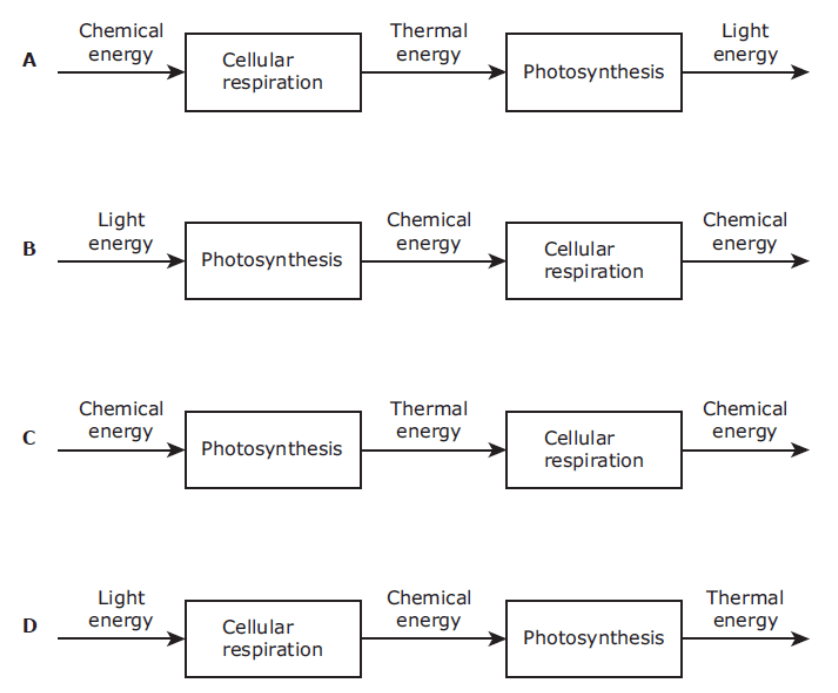
B.
500
Which two animal systems are interacting in the following scenario?
Nerves in our skin sense external conditions such as temperature and pain.
Nervous and Integumentary
500
1. The plants water and mineral pipeline.
2. The plant's energy pipeline that transports sugars to fuel metabolism and growth.
What word describes these two types of transport tissues?
1. Xylem
2. Phloem
Vascular Tissue
500
Give at least 2 items that could fill the place of the question mark on the venn diagram below.
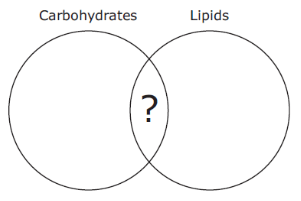
1. Energy storage
2. Made of monomers
3. Polymers
4. Contain Carbon, Hydrogen, and Oxygen
5. Organic Molecules
500
Is the following diagram describing a TRUE or FALSE interaction? Explain how you know.
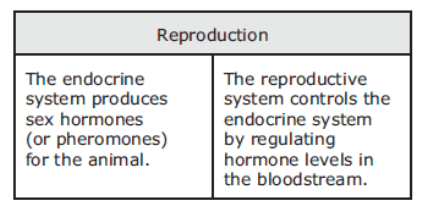
FALSE. The endocrine system does release hormones, but the release of these hormones is NOT controlled by the reproductive system.
500
Which of the following student observations describes an ecosystem?
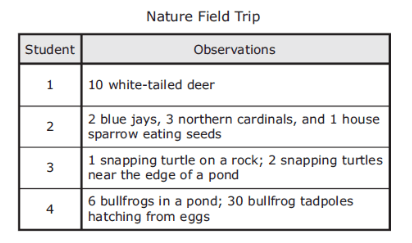
Student 3
600
What sequence best describes an interaction between the integumentary and excretory systems that helps maintain homeostasis?
F. Heart rate increases - Blood vessels contract - Blood pressure increases
G. Blood vessel is damaged - Platelets begin to clump - Blood vessel ruptures
H. Blood sugar levels rise - Pancreas secretes insulin - Blood sugar continues to rise
J. Body temperature increases - Gland release sweat - Body temperature decreases
J. Body temperature increases - Glands release sweat - Body temperature decreases
600
What is the name of the process occurring in the image and what is the stimulus?
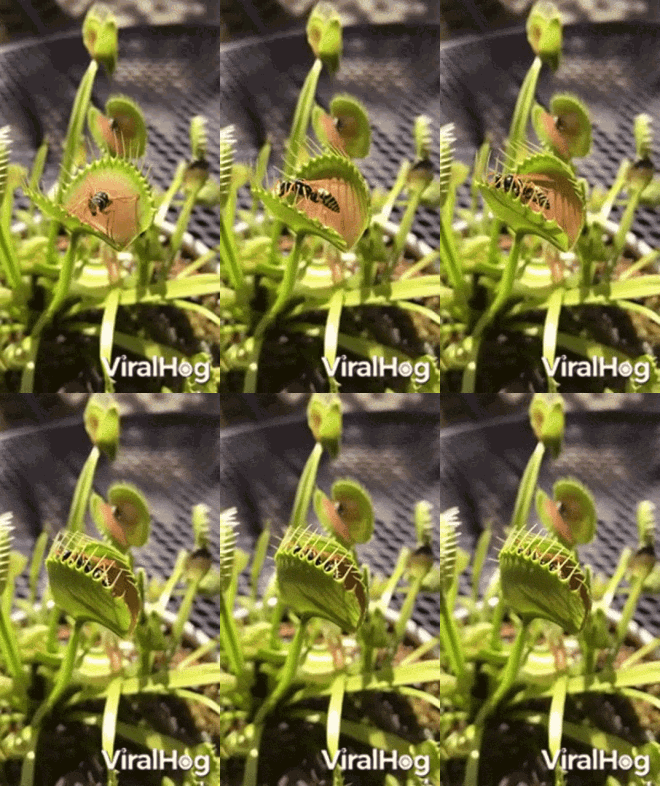
Thigmotropism
Stimuli: Touch
600
1. Which biomolecules are present in the plasma membrane of a cell?
2. What is the purpose of regulating the movement of molecules into and out of a cell?
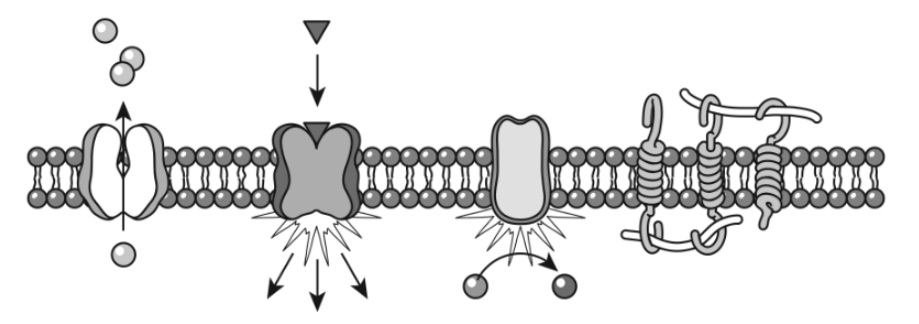
1. Carbohydrates, Lipids, and Proteins
2. Homeostasis
600
Name the organelle and determine the reactants of the cellular process for that organelle.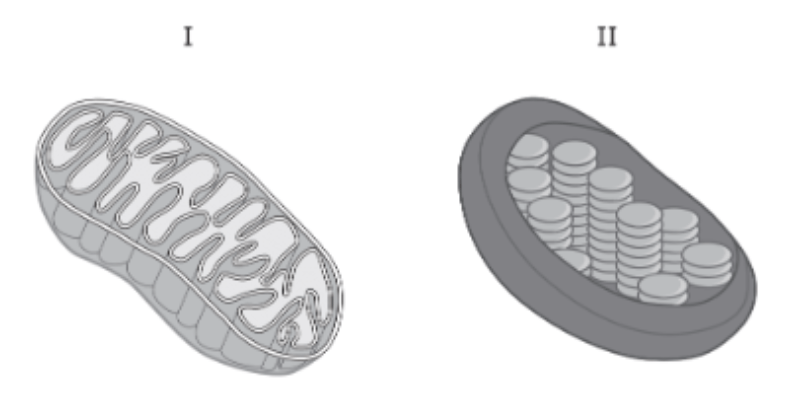
I. Mitochondria - Glucose & Oxygen
II. Chloroplast - Carbon dioxide, Water, & Light
600
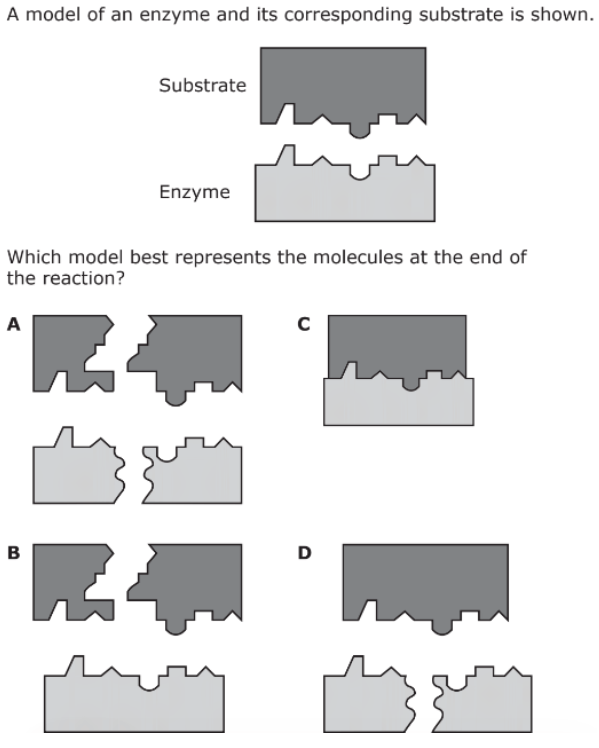
B - ENZYMES DO NOT CHANGE DURING THE REACTION