Transition to Adult Care
Perioperative Care
Preop Renal
Renal Knowledge
Clinical Correlates
100
With advances in technology and pharmaceuticals, this percentage of children born with life-shortening diseases will survive to adulthood.
What is 90%.
100
In accordance with the American College of Cardiology/American Heart American (ACC/AHA) guidelines, evaluation of such surgical patients should always begin with these 3 things.
What is a thorough history and physical examination including a 12-lead resting electrocardiogram.
100
This is required preoperatively in patients with nephrotic syndrome that are on corticosteroids (prednisone >5 mg daily) for the management of this condition, it should be assumed that their hypothalamic-pituitary- adrenal (HPA) axis is at least partially compromised.
What is a stress dose of corticosteroids.
100
This approximate percentage of the cardiac output is distributed to the kidneys, where the blood is continuously cleansed of toxins.
What is approximately 25%.
100
A patient undergoes major surgery and develops hypotension and decreased urine output. After evaluation of their urine, brown muddy casts are found. What type of kidney injury does this person have?
What is acute tubular necrosis.
200
This disease is characterized by chronic cough, bronchiectasis, chronic rhinosinusitis, and recurrent otitis media.
What is primary ciliary dyskinesia.
200
This drug is the first line treatment option to decrease preoperative cardiovascular risk in patients with known atherosclerosis. What is the MOA of this first line treatment.
What is a statin.
MOA: HMG-CoA reductase inhibition.
200
The three fundamental processes by which the kidney determines what ultimately appears in the urine are these.
What are filtration, reabsorption, and secretion.
200
This is the functional unit of the kindey.
What is a nephron.
200
A 68-year-old man is being evaluated before elective surgery. He has a history of CHF, insulin-dependent diabetes, and a creatinine of 2.3 mg/dL. His planned procedure is intraperitoneal. What is his Revised Cardiac Risk Index (RCRI)?
What is 4.
Breakdown:
High-risk surgery = 1; CHF = 1; Insulin-dependent DM = 1; Creatinine >2 = 1.
The RCRI assigns 1 point for each of the following six clinical criteria: high-risk surgery, ischemic heart disease, congestive heart failure, cerebrovascular disease, preoperative insulin treatment for diabetes, and preoperative renal insufficiency (creatinine > 2.0 mg/dL)
300
In the CF acronym R.I.S.E (a transition resource that includes patient assessments and checklists, care team progress reports, and educational resource guides to optimize the transition process over time), the I stands for this.
What is independence.
Bonus: R.I.S.E. = Responsibility, Independence, Self-care, Education.
300
This class of drug is frequently prescribed for the management of hypertension, CHF, chronic renal failure, and ischemic heart disease. This side effect is the most concerning/dangerous
What is an ACE inhibitor.
What is angioedema.
300
This portion of the adrenal glad produces aldosterone.
What is the zona glomerulosa.
300
A patient with CKD comes into clinic and their GFR is estimated to be 58 mL/min/1.73 m² , they have this stage of CKD.
What is stage 3a. 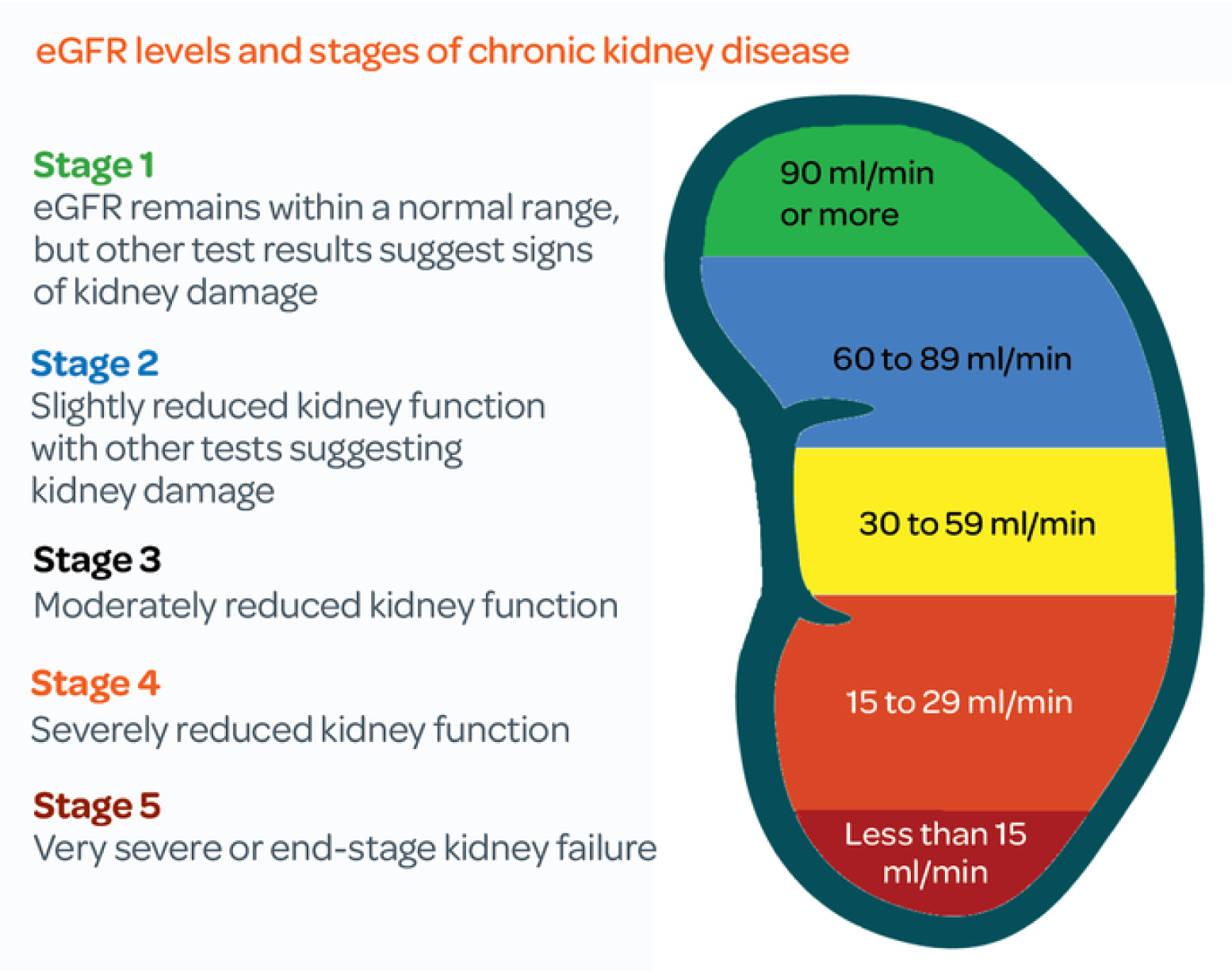
300
A patient with chronic kidney disease is undergoing surgery. Afterward, his creatinine rises and his urine output decreases. The team suspects the kidney injury is related to the surgery itself.
Which part of the kidney is especially vulnerable to ischemic injury, and why?
What is the renal medulla, because it normally has very low oxygen tension.
400
This genetic pulmonary disease is inherited in an autosomal recessive pattern and results from mutations in the CFTR gene on chromosome ___.
What is chromosome 7.
400
MIs typically occur this many days post non-cardiac surgery.
What is 3 days.
400
Patients on dialysis need to be dialyzed at least this amount of time before a planned procedure.
What is at least 24 hours.
400
The juxtaglomerular apparatus is comprised of these structures.
What is the macula densa, afferent & efferent glomerular arterioles, and the extraglomerular mesangium.
400
A 14-year-old with cystic fibrosis is being seen in clinic. His parents answer every question, manage his medications, schedule appointments, and communicate with his doctors. The physician wants to begin preparing him for eventual transfer to adult care.
According to the Uncle Cecil, what is the most important reason to begin this process years before the actual transfer?
What is to progressively develop the patient's knowledge, self-management skills, independence, and ability to navigate the healthcare system.
500
This disease is frequently associated with atelectasis, emphysema, pulmonary fibrosis, and bronchial vasculature hypertrophy.
What is bronchiectasis.
500
It is thought that in this form of valvular heart disease faster heart rates are better tolerated than slow ones because slow heart rates lead to increased diastolic filling and can exacerbate left ventricular volume overload.
What is aortic insufficiency/regurgitation.
500
In a preoperative patient with poor kidneys, it is especially important to maintain these 3 electrolytes before taking them back for surgery.
What is potassium, magnesium, and sodium.
500
A 54 yo male comes in for chronic disease management. He has persistent hypertension despite being on an ARB & a CCB. You decide to place him on a mineralocorticoid to aid his management. Which one are you not going to prescribe and why.
What is spironolactone due to gynecomastia. Eplerenone for males.
500
A 24 yo female with a BMI of 24 comes in with two blood pressures of >140/90. Otherwise healthy. You are going to order these labs to rule out hypertension secondary to this disease.
What is aldosterone and renin levels.
What is fibromuscular dysplasia.