The Study of Cells
The Plasma Membrane
Types of Transport
Cytosis
Cell Organelles
Cell Division
100
the study of the structure and function of cells
cytology
100
The main structure of the membrane
phospholipid bilayer
100
the net movement of molecules from an area of higher concentration to an area of lower concentration
diffusion
100
the packaging of extracellular materials in a vesicle on the outside of a cell in order to move those substances into the cell
endocystosis
100
internal structures that perform specific functions essential to normal cell structure, maintenance, and metabolism
organelles
100
the division of a cell's nucleus into 2 exact copies
Mitosis
200
Name1 of the 2 types of microscopes used for observing cells
light and electron
200
Which part of the tail is hydrophilic and hydrophobic?
Hydrophilic: Head
Hydrophobic: tails
200
The movement of water across a membrane
osmosis
200
Requires ATP and moves substances outside of the cell through the use of a vesicle.
exocytosis
200
the internal framework that gives support and stability
cytoskeleton
200
the longest stage of a cell's life
Interphase
300
Cell theory: (2 of 4)
1. Cells are the _______ _________ of life
2. Cells are the __________ functioning units of life.
basic units
smallest
300
Which direction do the heads and tails face in the membrane?
The heads face outward towards the fluid.
The tails face inward or away from the fluid.
300
What is the main difference between active and passive transport?
Active requires energy and passive does not.
300
Cell drinking
pinocytosis
300
organelles that manufacture proteins using instructions brought from the DNA by RNA
ribosomes
300
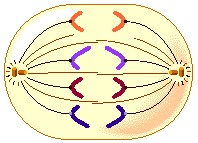
Anaphase
400
Cell Theory Co'd:
3. Cells are produced through the ________ of preexisting cells.
4. Each cell maintains ________________.
division
homeostasis
400
Not all substances can pass through the cell membrane. What type of permeability is this?
selectively permeable
400
When there is a lower solute concentration outside of the cell than inside. This causes the cell to take in water and swell.
hypotonic
400
cell eating
phagocytosis
400
has NO associated ribosomes and produces lipids and carbs
Smooth ER
400
the cytoplasmic division that forms 2 daughter cells
Cytokinesis
500
These four structures exist for all cells.
extracellular fluid
cell membrane
cytoplasm
nucleus
500
If substance cannot permeate through the lipid bilayer, what must be present?
Channel protein or Carrier protein
500

Active Transport
500
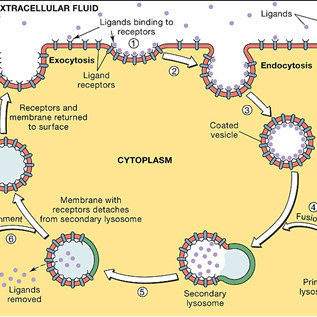
receptor mediated endocytosis
500
Proteins, carbs, and lipids are made in the ER, then transport vesicles bring these substances to this organelle for further modification.
Golgi Apparatus
500
List the stages of TRUE Mitosis in order.
Prophase
Metaphase
Anaphase
Telophase
Cytokinesis