Cell Basics
Animal Cells
Plant Cells
Compare & Contrast
Diagrams & Models
100
One characteristic of all living things is that they are made of units. What are these units called?
A. Tissues
B. Organs
C. Cells
D. Body systems
C. Cells
100
Which structure is found in an animal cell?
A. Cell wall
B. Chloroplast
C. Nucleus
D. Large vacuole
C. Nucleus
100
Which structure is ONLY found in plant cells?
A. Nucleus
B. Cytoplasm
C. Cell wall
D. Cell membrane
C. Cell wall
100
Which explanation is correct?
A. Animal cells make food using chloroplasts
B. Plant cells do not have nuclei
C. Plant cells can make food because they have chloroplasts
D. Animal cells have cell walls for support
C. Plant cells can make food because they have chloroplasts
100
The picture shows an image of plant cells.
Which of the following best identifies what is being used to magnify these cells?
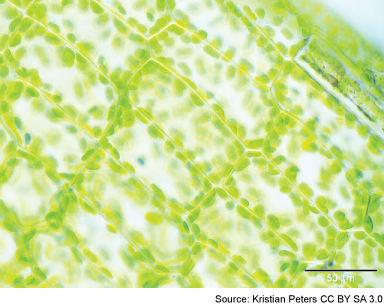
A. a magnifying glass because the parts of the cells that are normally too small to be seen are visible
B. a microscope because the parts of the cells that are normally too small to be seen are visible
C. a magnifying glass because the image of the cells seems less clear
D. a microscope because the cells appear to be very far away
B. a microscope because the parts of the cells that are normally too small to be seen are visible
200
Which tool is BEST for seeing tiny cells?
A. Telescope
B. Magnifying glass
C. Ruler
D. Microscope
D. Microscope
200
Which part of the animal cell is jelly-like and holds organelles?
A. Cytoplasm
B. Nucleus
C. Cell wall
D. Chloroplast
A. Cytoplasm
200
Which part of a plant cell does photosynthesis happen?
A. Nucleus
B. Cell Wall
C. Cytoplasm
D. Chloroplast
D. Chloroplast
200
Which sentence BEST compares plant and animal cells?
A. Both cells have chloroplasts
B. Animal cells have a cell wall
C. Plant cells have a cell wall, but animal cells do not
D. Both cells make their own food
C. Plant cells have a cell wall, but animal cells do not
200
The pictures show two views of the same plant using a microscope and a magnifying glass.
Which of the following would be the best tool to use to identify the plant?
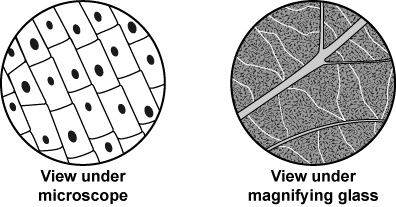
A. The microscope, as it zooms in to show the structures inside the cells.
B. The magnifying glass, as it zooms in to show the structures inside the cells.
C. The microscope, as it zooms out far enough to allow the whole plant to be seen.
D. The magnifying glass, as it zooms out far enough to allow the whole plant to be seen.
A. The microscope, as it zooms in to show the structures inside the cells.
300
Which statement describes all living things?
A. They have chloroplasts
B. They are green
C. They are made of cells
D. They have a cell wall
C. They are made of cells
300
Which statement about animal cells is INCORRECT?
A. Animal cells contain cytoplasm that supports and holds organelles
B. Animal cells have a nucleus that controls cell activities
C. Animal cells have a cell wall that provides structure and support
D. Animal cells have a cell membrane that controls what enters and leaves the cell
C. Animal cells have a cell wall that provides structure and support
300
Which structure gives plant cells a rigid shape?
A. Cytoplasm
B. Cell wall
C. Nucleus
D. Cell membrane
B. Cell wall
300
Two cells are observed under a microscope.
Cell A can make its own food using light energy.
Cell B must obtain energy by eating other organisms.
Which structure BEST explains this difference?
A. Nucleus
B. Cytoplasm
C. Cell membrane
D. Chloroplast
D. Chloroplast
300
The diagram shows the structures within a type of cell.
Label P is pointing to the
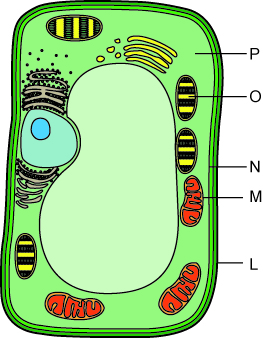
A. cytoplasm, which is a jelly-like substance that holds the organelles.
B. chloroplast, which is a water-like substance that controls the organelles.
C. cell membrane, which is a thick substance that communicates with other cells.
D. cell wall, which is a thin substance that allows water to move in and out of the cell.
A. cytoplasm, which is a jelly-like substance that holds the organelles.
400
Which statement BEST explains why cells are considered the basic unit of life?
A. Cells are the smallest objects that can be seen using tools
B. Cells are found only in plants and animals
C. Cells make up all living things and carry out life processes
D. Cells are larger than tissues and organs
C. Cells make up all living things and carry out life processes
400
A student is comparing a diagram of an animal cell to a diagram of a plant cell. The student notices that both diagrams show a nucleus, cytoplasm, and a cell membrane, but only one diagram shows chloroplasts.
Which conclusion BEST explains why chloroplasts are NOT shown in the animal cell diagram?
A. Animal cells do not need energy
B. Animal cells do not perform photosynthesis
C. Animal cells cannot store genetic information
D. Animal cells do not have cytoplasm
B. Animal cells do not perform photosynthesis
400
Which TWO structures are found in plant cells but NOT animal cells?
A. Nucleus and cytoplasm
B. Cell membrane and nucleus
C. Cell wall and chloroplasts
D. Cytoplasm and vacuole
C. Cell wall and chloroplasts
400
The model below shows a plant cell.
Which two structures are also found in an animal cell?
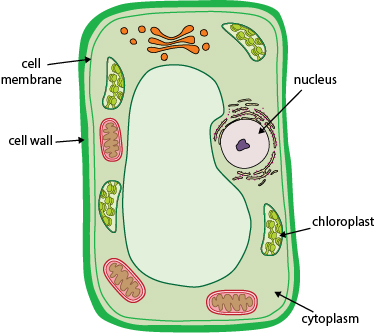
A. cell wall and nucleus
B. cytoplasm and cell wall
C. cell membrane and nucleus
D. chloroplasts and cytoplasm
C. cell membrane and nucleus
400
The model shows a type of cell.
What is located at T?
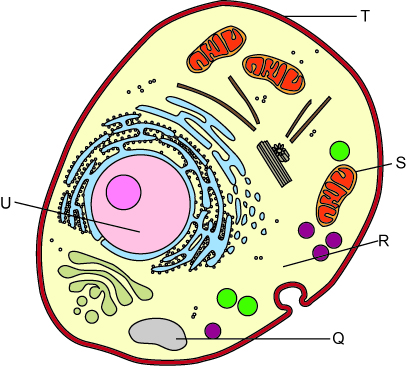
A. the cell membrane, found in animal and plant cells
B. the cell membrane, found only in animal cells
C. the cell wall, found in plant and animal cells
D. the cell wall, found only in plant cells
A. the cell membrane, found in animal and plant cells
500
Jackie learned in science class that the water in the lake near her house is filled with tiny organisms. She wants to examine the tiny creatures in the lake water. She takes a glass jar to the lake and fills it with lake water. When she looks at the water, she can't see any tiny organisms. What would be the best tool for Jackie to use to see whether there are any organisms in the water?
A. a microscope
B. a graduated cylinder
C. a magnifying glass
D. a telescope
A. a microscope
500
The diagram shows a model of an animal cell.
Which organelle is found at the letter X?
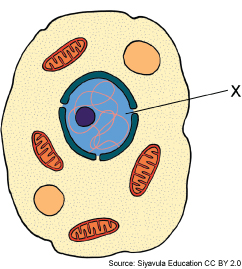
A. nucleus
B. membrane
C. cytoplasm
D. chloroplast
A. nucleus
500
The diagram shows a model Maisie is making of a plant cell.
Maisie wants to label the diagram. Which letter should be labeled as the cytoplasm?
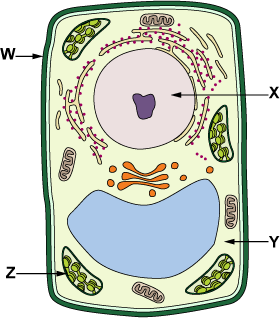
A. W
B. X
C. Y
D. Z
C. Y
500
A student looked at two different cells under a microscope. She drew what she saw.
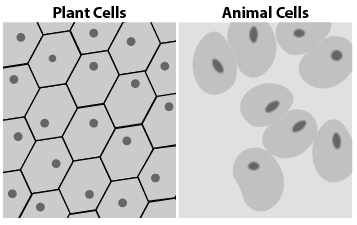
She noticed that the plant cells were rigid and had a more definite shape. The animal cells had a round shape, but the shape seemed to be more flexible.
What difference in plant and animal cells allows this to happen?
A. The plant cells have a cell wall.
B. The plant cells have chloroplasts.
C. The plant cells have ribosomes.
D. The plant cells have a vacuole.
A. The plant cells have a cell wall.
500
The diagram shows the structures within a type of cell.
Which important structure responsible for controlling the rest of the cell does not have a label in the diagram?
A. chloroplast
B. cytoplasm
C. membrane
D. nucleus
D. nucleus