Infection Prevention
Peripherals, Midlines, and Central Lines Oh My!
Melissa Taught me what? (Central Line Overview)
Fill in the Blank
I'm a visual learner
100
How often do CHG baths need to completed on a patient who has a central line?
Melissa: What is 24 hours.
100
What type of IV must be replaced within 24 hours of placement?
Melissa, what is all antecubital IVs.
100
If extravasation is suspected what should you do?
Melissia I would:
1. Stop the IV
2. Disconnect the IV from the patient
3. Attempt to aspirate
4. Notify Vat team
5. Elevate extremity and place heat/cold per policy
6. Photos via Rover
7. VOICE report
8. Nursing note
100
I chart on my central / peripheral lines every ___ hours in EPIC.
Melissa: What is every 4 hours.
100
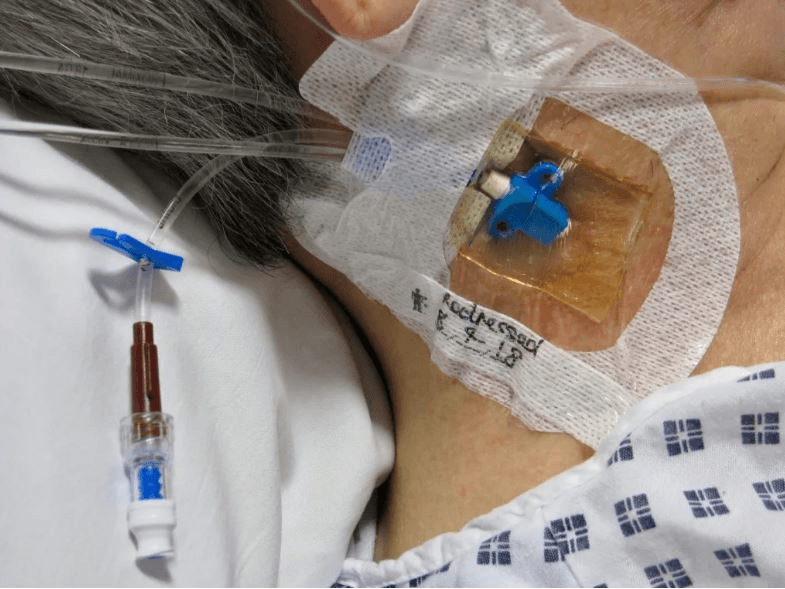
Melissa what is an external jugular or EJ line (this is a trick question this line is NOT a central line)
200
How often should you change your IV tubing?
Melissa: What is every 96 hours or 4 days.
200
Give at least 3 examples of when you would need to notify the Vascular Access team?
- Present on Admission Lines
- Any patient who arrives with a home infusion
- Port access/deaccess
- Blood cultures on patients with central lines - including those with hemodialysis catheters
- A CVC that does not flush or aspirate
- CVC dressings that are soiled, peeling, or are off
- Extravasation
200
The nurse is priming the tubing for a continuous IV infusion. As the nurse goes to attach the distal end of the IV tubing to a needleless device, the exposed tubing drops and hits the top of the medication cart.
Stop - discard tubing and get new tubing
200
___ is the inadvertent leakage of a non-vesicant solution from its intended vascular pathway (vein) into the surrounding tissue
infiltration
200
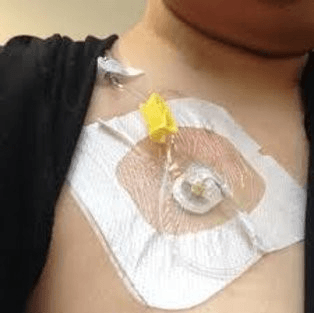
Melissa what is a port
300
The most common pathogens of central line infections are Coagulase-Negative Staphylococci (CoNS), Staphylococcus aureus, and Candida. These species are all part what?
Melissa: What is normal flora of the human skin!
300
Given at least 2 examples of the medications that CANNOT be infused in a midline.
Melissa what are:
- Dilantin
- Nafcillin
- Phenergan
- Primaxin
- Vancomycin
-Chemotherapy
300
The nurse is making initial rounds on the nursing unit to assess the condition of assigned clients. The nurse notes that a client's IV site is cool, pale, and swollen, and the solution is not infusing. The nurse concludes that which complication has occurred.
Melissa, what is infiltration
300
___________ is the inadvertent leakage of a vesicant solution from its intended vascular pathway (vein) into the surrounding tissue.
extravasation
300
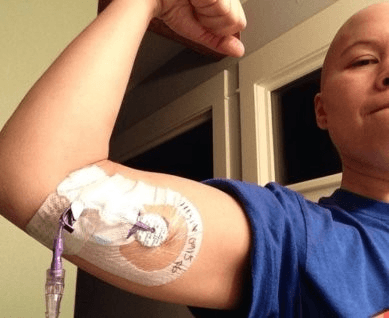
Melissia what is a PICC Line
400
Daily Double!!!!! You must answer all parts of the question to receive points!
Scenario: A patient has a daily order for TPN. What line supplies do you need to in order to give the TPN?
What must the RN wear during the administration?
What should the RN use to clean the microclave and for how long?
Line supplies: New tubing, new filter, and a new microclave.
RN must wear: mask and sterile gloves when replacing microclave
Clean: scrub with CHG pad (for 30 seconds) before placing new cap and tubing on central line.
400
What are the nurses responsibilities during a central line placement?
Melissa, the RN should get consent and call the vascular access nurse.
400
What is the policy you need to review if extravasation is suspected?
Management of Extravasation and Infiltration of IV Medications
400
After transfusing 2 units of PRBcs (packed red blood cells) you are required to flush with ___ ml of normal saline using the push / pause technique.
20 ml
400
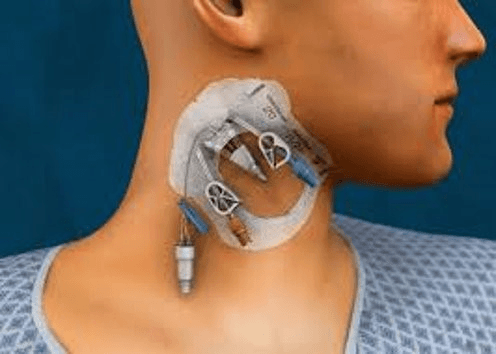
Melissa what is an IJ (internal jugular) central line or a quinton catheter - this has dialysis access and central line access.
ONLY the central line access is used by Med Surg staff - we NEVER access the dialysis ports.
500
For how long can IV tubing be disconnected from the patient and then reconnected?
Melissa: What is - NEVER! If you are disconnecting the patient, then the tubing should be thrown away and new tubing should be used.
500
A new admission is coming from the ED, the patient has an Ash cath what do you need to confirm when receiving report?
Confirm the catheter is on the LDA, and vascular access has been called to perform cultures on the line.
500
You are caring for a patient with a double lumen central line. One line in use and the second one is not. How should you care for the second line?
Every shift, flush and confirm aspiration (blood return). Ensure there is a microclave on the line, and after flushing clamp and put a new orange cap on the microclave.
500
The nurse provides a list of instructions to a client being discharged to home with a peripherally inserted central catheter. The nurse determines that the client needs further instructions if the client made which statement?
1. I need to wear a medic-alert tag or bracelet
2. I need to have a repair kit available in the home for use if needed.
3. I need to keep the insertion site protected when in the shower or bath.
4. I need to keep my activity level to a minimum while this catheter is in place.
4. I need to keep my activity level to a minimum while this catheter is in place.
500
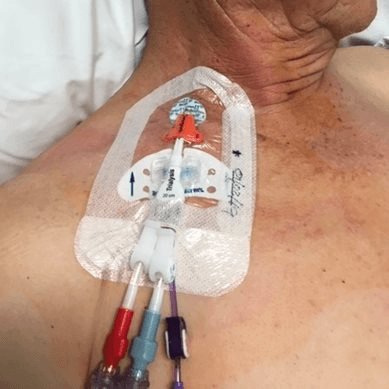
Answer: Melissa what is an ash cath/dialysis catheter