Chronic Illness, Disability, End of Life Care
Cognitive or Sensory Impairment
Illness & Hospitalization
Pediatric Variations
Dosage Calculation
100
When caring for a child with a chronic or complex condition, which principle should guide the nurse’s approach to care?
A. Focus primarily on the child’s chronological age when planning interventions
B. Base all care decisions strictly on the medical diagnosis
C. Limit parental involvement to reduce emotional stress
D. Focus on the child’s developmental level and strengths rather than chronological age alone
Answer: D
Rationale:
Care for children with chronic or complex conditions should be developmentally appropriate and strength-based. Planning should focus on the child’s developmental level rather than chronological age or diagnosis alone, while supporting family-centered care.
100
A child with this chromosomal disorder presents with an upward slant to the eyes, hypotonia, and a single transverse palmar crease.
Down Syndrome
Rationale: Characteristic findings of Down syndrome include upward slanting eyes, hypotonia, a depressed/flat nasal bridge, protruding tongue, low-set small ears, and a single transverse palmar crease.
100
What is the greatest stress imposed by hospitalization during early childhood (toddlers)?
A. Fear of painful procedures
B. Loss of routine
C. Separation from parents
D. Fear of strangers
Answer: C
Rationale:
Separation anxiety is the greatest stress for young children during hospitalization. When separation is minimized, children have a strong ability to cope with other hospital-related stressors.
100
When administering a cleansing enema to a 3 year old child, which solution and insertion depth are most appropriate?
A. Normal saline; insert 3 inches
B. Isotonic solution; insert 2 inches
C. Mineral oil; insert 2 inches
D. Hypertonic solution; insert 3 inch
Answer: B
Rationale:
Isotonic solution (normal saline) is the recommended solution for children to prevent fluid and electrolyte imbalance. 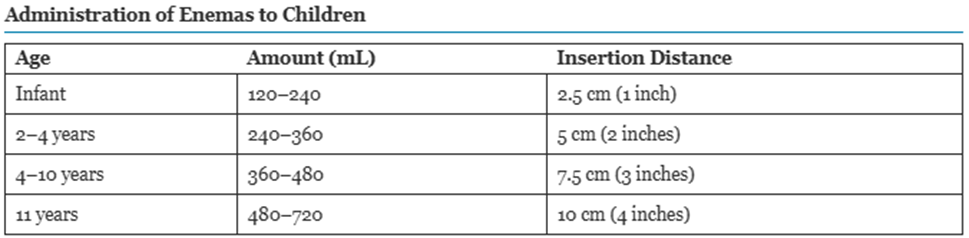
100
The recommended dose of IV tobramycin sulfate for a full-term neonate is 2.5 mg/kg/dose every 12 hours. An infant in the nursery weighting 5.5 lbs has an order for 5 mg of tobramycin sulfate every 12 hours. The clinician knows that the recommended dose of tobramycin every 12 hours should be:
A. 2.5 mg/dose
B. 6.25 mg/dose
C. 3.7 mg/dose
D. 13.75 mg/dose
 B. 6.25 mg/dose
200
A family has just learned their child has a chronic condition and states, “There must be a mistake. This can’t be happening.” Which stage of reaction is this family most likely experiencing?
A. Gradual acceptance
B. Reintegration and acknowledgment
C. Shock and denial
D. Overprotectiveness
Answer: C
Rationale:
Families of children with chronic conditions commonly progress through stages of reaction. Shock and denial are typically the initial responses following diagnosis.
200
A child with this chromosomal disorder presents with a long narrow face, large ears, intellectual disability, and behavioral challenges such as hyperactivity.
Fragile X Syndrome
Rationale:
Fragile X syndrome is characterized by a long narrow face, large ears, intellectual disability, and behavioral features such as hyperactivity, anxiety, or autistic-like behaviors.
200
A parent of a hospitalized child repeatedly asks the nurse to explain the treatment plan in simple terms and questions whether the staff is providing the best care. How should the nurse interpret this behavior?
A. The parent is being uncooperative and distrustful
B. The parent is demonstrating normal reactions such as fear, helplessness, and a need for reassurance
C. The parent lacks understanding of the child’s condition
D. The parent is interfering with the child’s recovery
Answer: B
Rationale:
Parents of hospitalized children commonly experience helplessness, fear, uncertainty, and a need for reassurance. Questioning and seeking simple explanations are normal coping responses.
200
A nurse is caring for a child receiving total parenteral nutrition (TPN). Which action is most appropriate?
A. Increase the infusion rate if the child appears hungry
B. Decrease the rate temporarily if the pump alarm sounds
C. Maintain the prescribed infusion rate and notify the practitioner before making any changes
D. Pause the infusion for routine repositioning
Answer: C
Rationale:
TPN must be infused at the prescribed rate. Altering the rate without practitioner guidance can cause significant blood glucose fluctuations, including hyperglycemia or hypoglycemia.
200
A neonate is to receive 0.5 mg of vitamin K. The vial contains 2 mg/mL. How many mL should be administered?
A. 0.13 mL
B. 0.25 mL
C. 0.5 mL
D. 2.5 mL
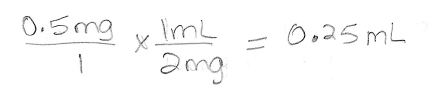 B. 0.25 mL
300
A school-age child has recently been diagnosed with a chronic illness. Which nursing intervention is most appropriate to support this child’s developmental needs?
A. Provide sensory stimulation and gross motor play
B. Encourage consistent caregivers and emphasize healthy qualities
C. Encourage school attendance and prepare the teacher for expected changes
D. Encourage increased independence in managing health care
Answer: C
Rationale:
For school-age children, maintaining school attendance and preparing teachers for potential changes in abilities or condition supports normal development, peer relationships, and academic progress.
300
A child has a history of recurrent otitis media and now demonstrates hearing loss involving both the middle ear and inner ear structures. What type of hearing loss is most likely?
A. Conductive hearing loss
B. Sensorineural hearing loss
C. Mixed conductive–sensorineural hearing loss
D. Central auditory imperception
Answer: C
Rationale:
Mixed conductive–sensorineural hearing loss involves both middle ear dysfunction and inner ear or neural pathway involvement. It commonly results from recurrent otitis media and its complications.
300
An adolescent is hospitalized for several days. Which intervention is most appropriate to support normal developmental needs?
A. Limit peer visits to promote rest
B. Encourage frequent parental presence at all times
C. Facilitate peer visitation when possible
D. Expect the adolescent to independently request help when needed
Answer: C
Rationale:
During adolescence, peer relationships are highly important. Allowing peer visits supports normal development and coping during hospitalization.
300
The nurse needs to obtain a small urine specimen from an infant wearing a diaper. What is the most appropriate technique?
A. Squeeze the diaper into a specimen cup
B. Insert a cotton swab into the diaper and send it to the lab
C. Use a needleless syringe to aspirate urine from gauze or cotton balls placed inside the diaper
D. Wait until the infant voids into a collection hat
Answer: C
Rationale:
For small urine samples from infants in diapers, place gauze or cotton balls inside the diaper to collect urine and use a needleless syringe to aspirate the specimen.
300
An 8-year-old boy, weighing 40 kg, is admitted to the unit for post-op management of a Tonsillectomy and Adenoidectomy. Cefazolin is ordered every 8 hours for three doses. The recommended dose is 50 to 100 mg/kg/day divided every 8 hours. What is the minimum individual dose?
A. 667 mg
B. 2000 mg
C. 4000 mg
D. 1333 mg
 A. 667 mg
400
When speaking with the tearful parent of a child newly diagnosed with a chronic illness, the nurse asks, “Who do you talk with when something is worrying you?” What is the purpose of this question?
A. To assess the parent’s available support system
B. To identify someone who can immediately solve the problem
C. To divert the parent’s attention away from the current crisis
D. The question is inappropriate because the parent is upset
Answer: A
Rationale:
Asking who the parent turns to during stress helps the nurse assess the family’s support system, which is essential when coping with a new chronic diagnosis.
400
A child arrives in the emergency department with a penetrating eye injury from a sharp object. What is the nurse’s priority intervention?
A. Remove the object carefully to prevent further damage
B. Apply pressure to control bleeding
C. Irrigate the eye immediately with normal saline
D. Leave the object in place and apply a protective shield over the injured eye
Answer: D
Rationale:
For penetrating eye injuries, the object should never be removed. A protective (fox) shield should be applied to prevent further damage and minimize eye movement.
400
Which nursing action best supports a child’s emotional well-being during hospitalization?
A. Perform painful procedures in the child’s hospital bed for convenience
B. Conduct assessments in the child’s room and use a separate treatment room for painful procedures
C. Perform all procedures in the playroom to reduce anxiety
D. Encourage the child to associate the hospital bed with all treatments
Answer: B
Rationale:
Assessments should occur in the child’s room to avoid associating play areas with procedures. Painful procedures should be performed in a separate treatment area so the child does not associate the bed with pain.
400
Which procedure requires written informed consent from a parent or legal guardian before it is performed on a child?
A. Lumbar puncture
B. Applying a topical antibiotic ointment
C. Measuring vital signs
D. Administering oral acetaminophen
Answer: A
Rationale:
Invasive procedures that involve risk, such as lumbar puncture, chest tube insertion, bone marrow aspiration, and surgery, require written informed consent from a parent or legal guardian.
400
20. A 15 kg infant is prescribed acetaminophen at a dose of 15 mg/kg every 4 hours as needed for pain. The recommended daily dose is 10-20mg/kg/day. What is the safe dose range for each dose?
a) 20-75 mg
b) 15-20 mg
c) 25-50 mg
d) 30-60 mg
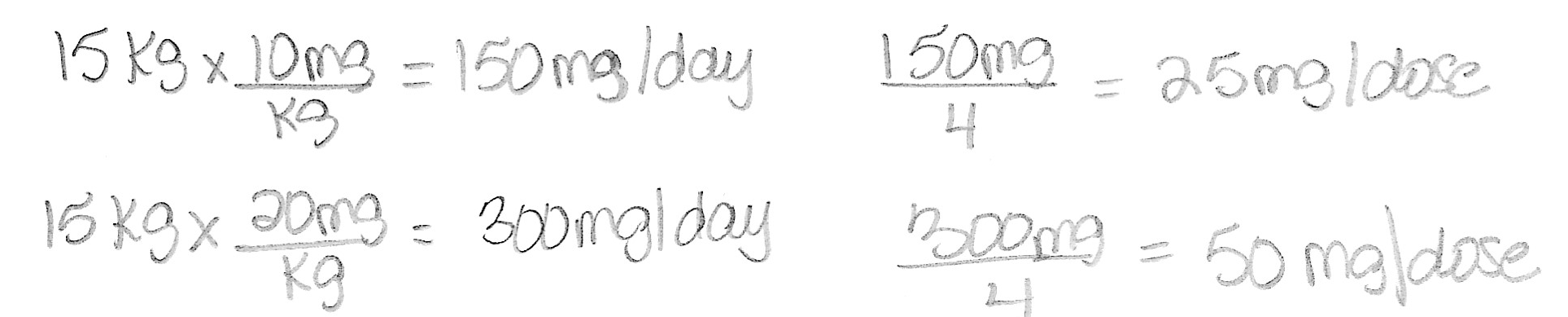 C. 25-50 mg/dose
500
An 8-year-old child is returning to school after an injury that resulted in several chronic disabilities. Which action by the school nurse would BEST support a smooth transition back to school?
A. Recommend that the child’s parents attend school during the first two days
B. Prepare classmates and teachers for expected changes
C. Refer the child to a school for children with similar disabilities
D. Limit the child’s participation in extracurricular activities to prevent fatigue
Answer: B
Rationale:
Preparing classmates and teachers for expected changes promotes understanding, reduces stigma, and supports social integration. Maintaining normal peer relationships is a key developmental priority for school-age children.
500
A child reports difficulty seeing the board at school but can clearly read a book held close. Which visual condition does the nurse suspect?
A. Hyperopia
B. Myopia
C. Glaucoma
D. Cataracts
Rationale:
Myopia (nearsightedness) is the inability to see distant objects clearly while near vision remains intact.
Hyperopia- farsightedness (can see objects at a distance)
Strabismus (may or may not be refractive)
Malalignment or squint
Amblyopia- lazy eye
Cataracts- opacity of the crystalline lens
Glaucoma- increased intralocular pressure
500
A sibling of a hospitalized child begins acting out and tells the nurse, “My parents only care about my brother now.” How should the nurse interpret this behavior?
A. The sibling is demonstrating normal emotional responses such as jealousy and resentment
B. The sibling is unaffected and seeking attention
C. The sibling is experiencing developmental regression unrelated to hospitalization
D. The sibling is manipulating the parents for special privileges
Rationale: A
Siblings of hospitalized children commonly experience emotions such as loneliness, fear, anger, jealousy, resentment, and guilt due to changes in family dynamics and reduced parental attention.
500
This intervention is used in emergency situations, such as circulatory collapse or hypovolemic shock, when venous access is not possible. A large-bore needle is inserted into the medullary cavity of a long bone, commonly the proximal tibia.
Intraosseous infusion is used in emergency situations, such as circulatory collapse or hypovolemic shock, when venous access is not possible. A large-bore needle is inserted into the medullary cavity of a long bone, commonly the proximal tibia.
500
A 12 kg child is prescribed amoxicillin at a dose of 20 mg/kg/day in divided doses every 8 hours. The safe dose range is 20-25 mg/kg/day.
What is the safe dose range for each dose?
A. 60-80 mg
B. 80-100 mg
C. 100-120 mg
D. 120-140 mg
 B. 80-100 mg/dose