Circumcenter & Orthocenter
Incenter & Centroid
Inequalities
Indirect Proofs
More Inequalities
100
PQ is an example of a(n) ______________________. 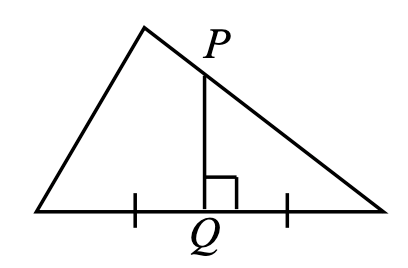
Perpendicular Bisector
100
PQ is an example of a(n) ___________________.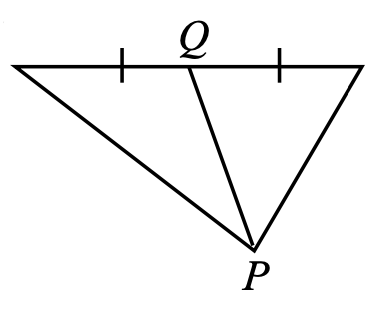
Median
100
List the side lengths from shortest to longest.
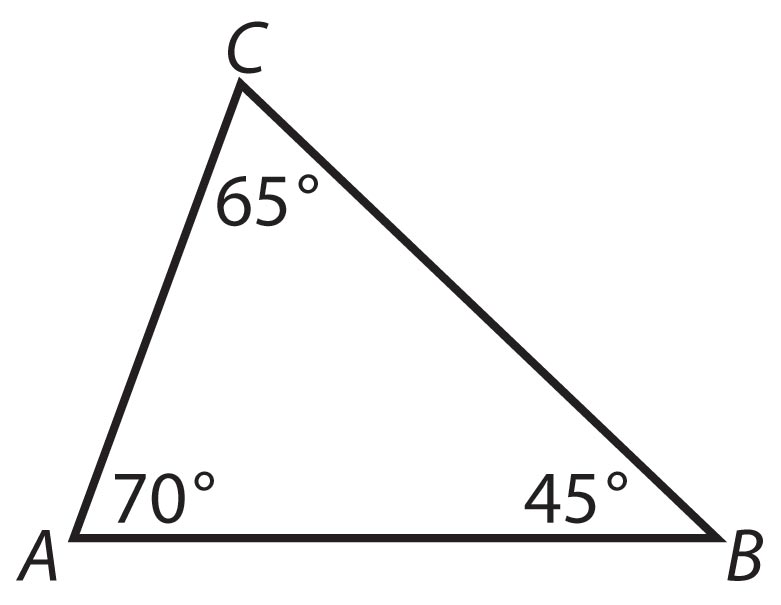
AC, AB, BC
100
State the three steps of an indirect proof.
1. Assume the opposite of the conclusion.
2. Find a contradiction
3. Conclude the assumption false
100
State whether attempting to construct a triangle with side lengths of 35, 62, and 4 would produce a triangle, collinear points, or segments that do not meet. Show your work to justify.
Triangle
200
PQ is an example of a(n) _____________________.
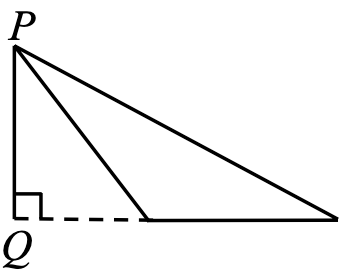
Altitude
200
PQ is an example of a(n) ______________________. 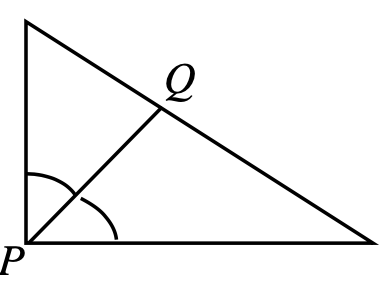
Angle Bisector
200
State the longest side of the triangle. 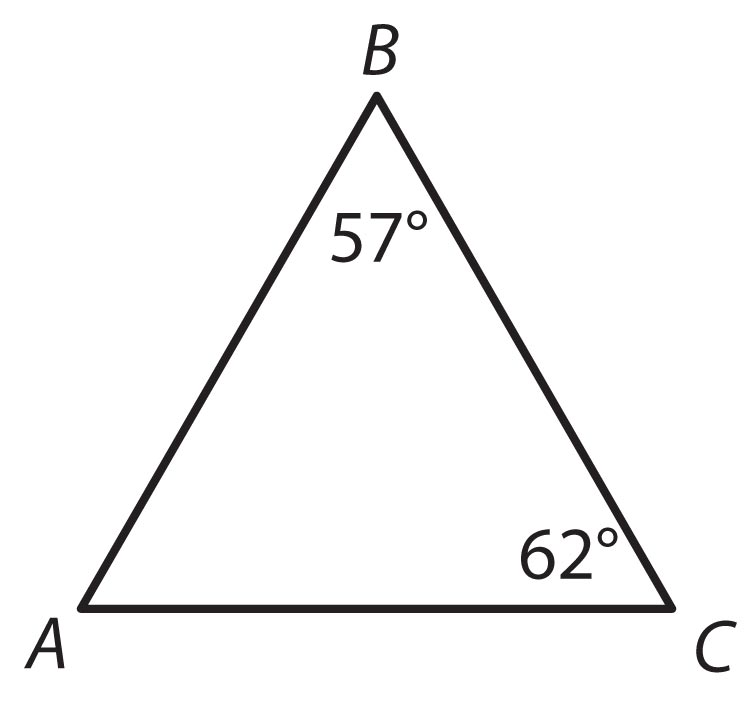
AB
200
Which two statements are contradictions?
P: angle 1 and angle 2 are supplementary
Q: angle 1 and angle 2 form a linear pair
R: angle 1 and angle 2 are not adjacent
Q & R
200
Find the range of possible lengths for the third side of a triangle with two side lengths of 4 and 12.
8 < x< 16
300
Which point of concurrency is shown below?
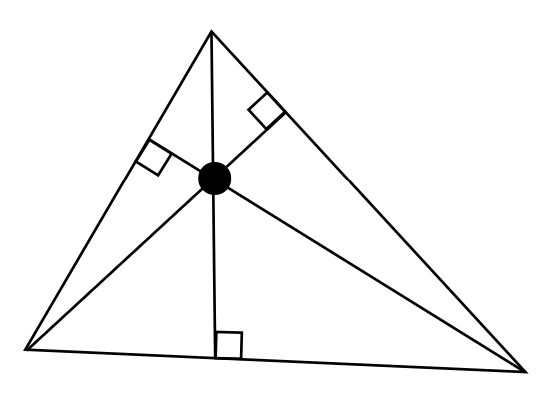
Orthocenter
300
Which point of concurrency is shown below?
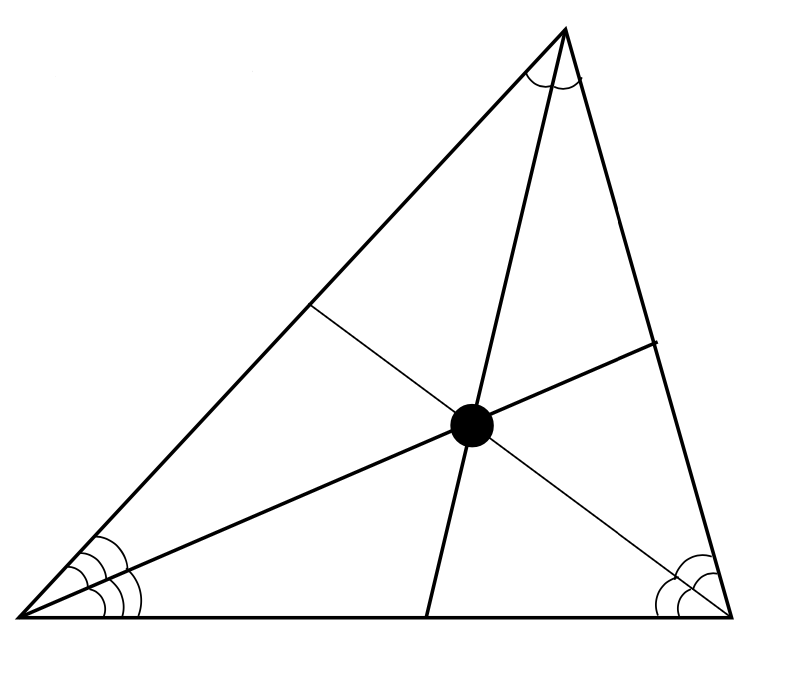
Incenter
300
List the angles from smallest to largest. 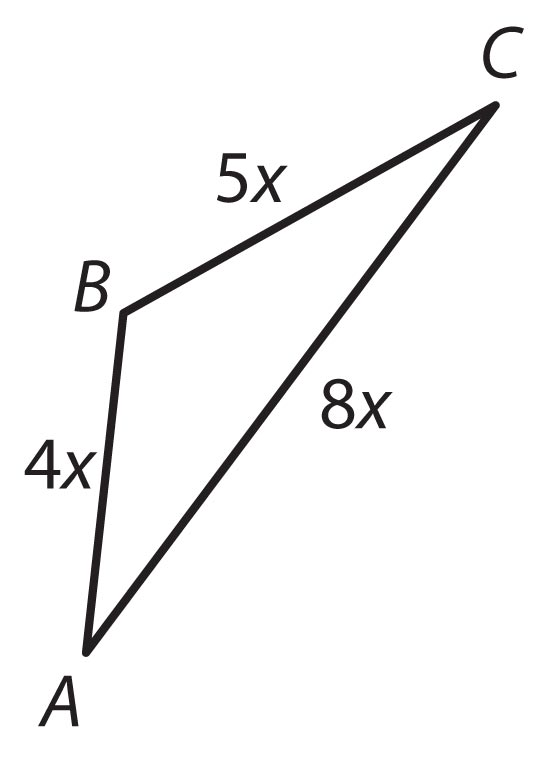
C, A, B
300
Write the initial assumption for the indirect proof of the statement: "If a car has antilock breaks, it will not make skid marks on the pavement"
Assume the car made skid marks on the pavement.
300
Compare AC __________ PR
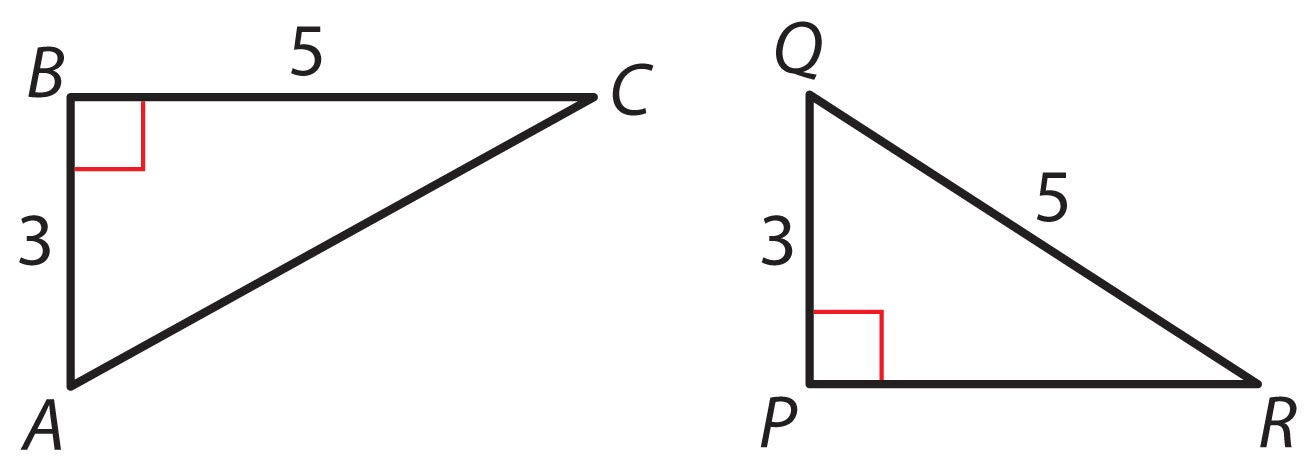
AC > PR
400
G is the circumcenter. Find x.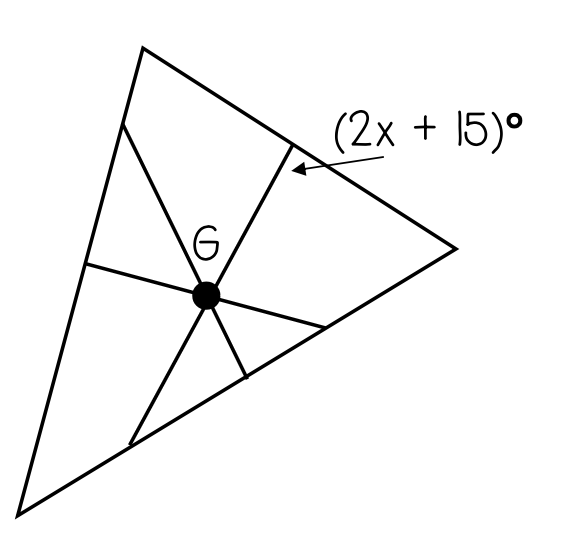
x=37.5
400
PE=4x-8; FP=x+7; Find GP.
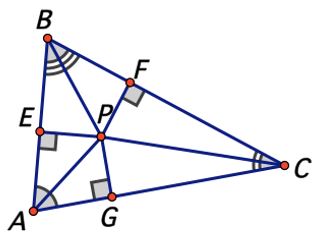
12
400
Compare the given measure. Then, name the property of theorem that justifies your answer.
mangle4 underline" " mangle2
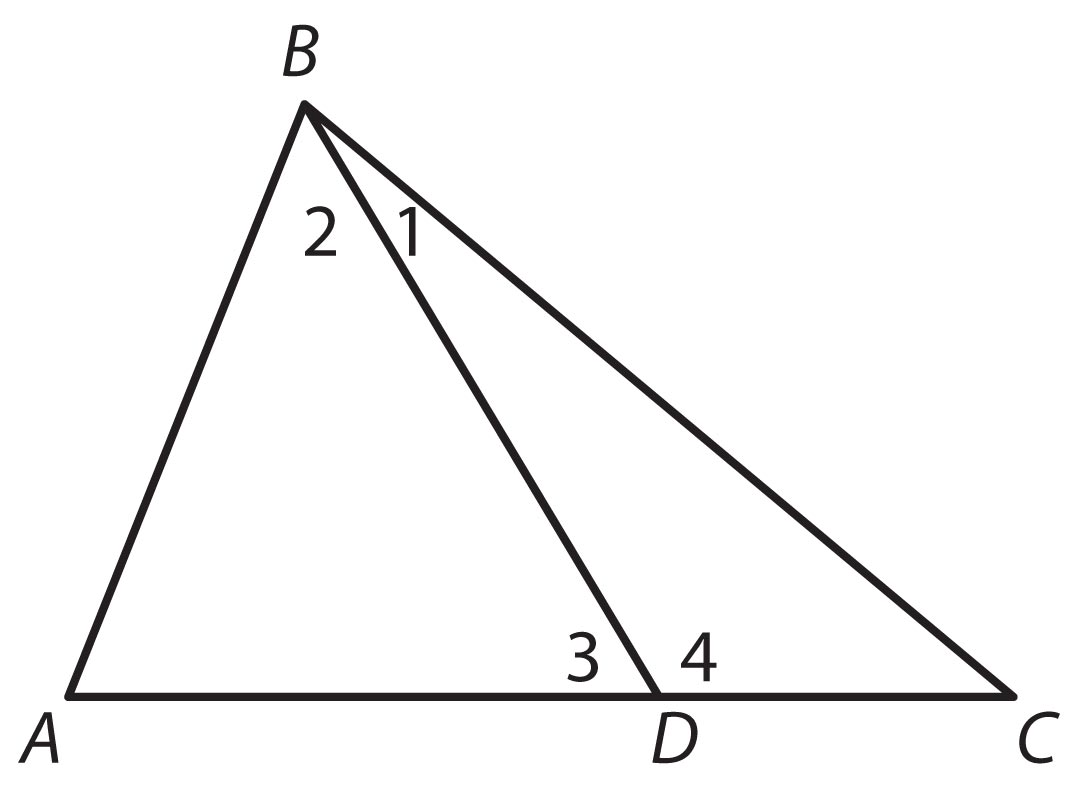
mangle4>mangle2
Exterior Angle Inequality Theorem
400
Write the first step of an indirect proof for:
Given: a+b > 100
Prove: Either a or b is greater than 50
a and b are less than or equal to 50.
400
Find the range of possible values for x. Assume a>0.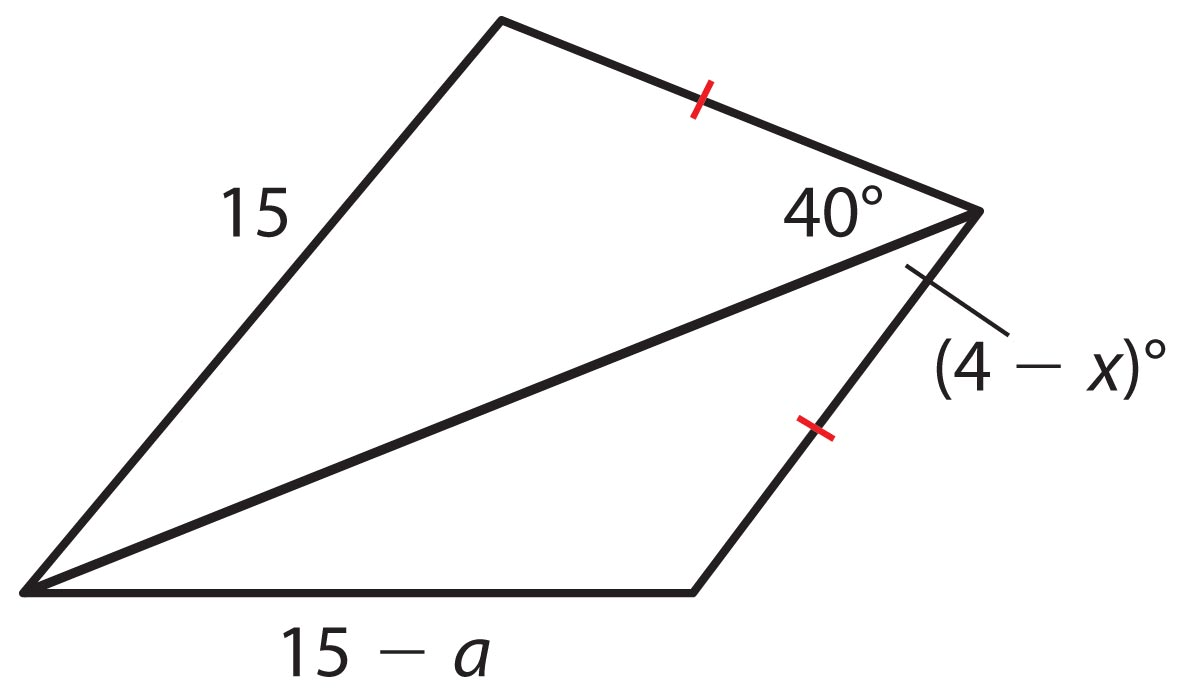
-36<x<4
500
PB=4x-2; PE=3x+2; PA=2x+8. Find PC.
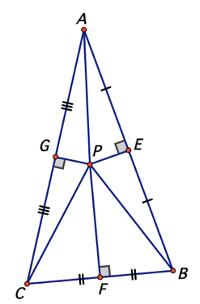
PC=18
500
If PF=7, Find AF.
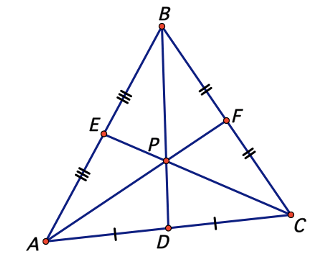
21
500
List the segments in order from shortest to longest.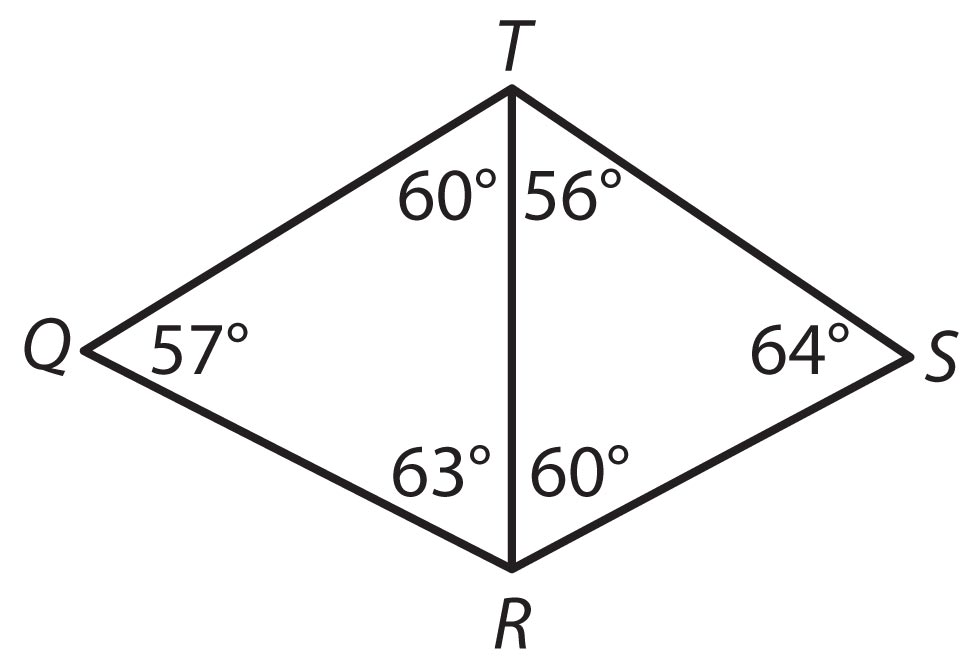
RS, ST, TR, QR, QT
500
Write an indirect proof for:
"If " a+b>= 20 ",then " a>=10 " or " b>=10
1. Assume a<10 and b<10.
2. Then a+b < 20. But,
a+b>=20
3. So,
" a>=10 " or " b>=10
500
Find the range of possible values for x. Assume a>0
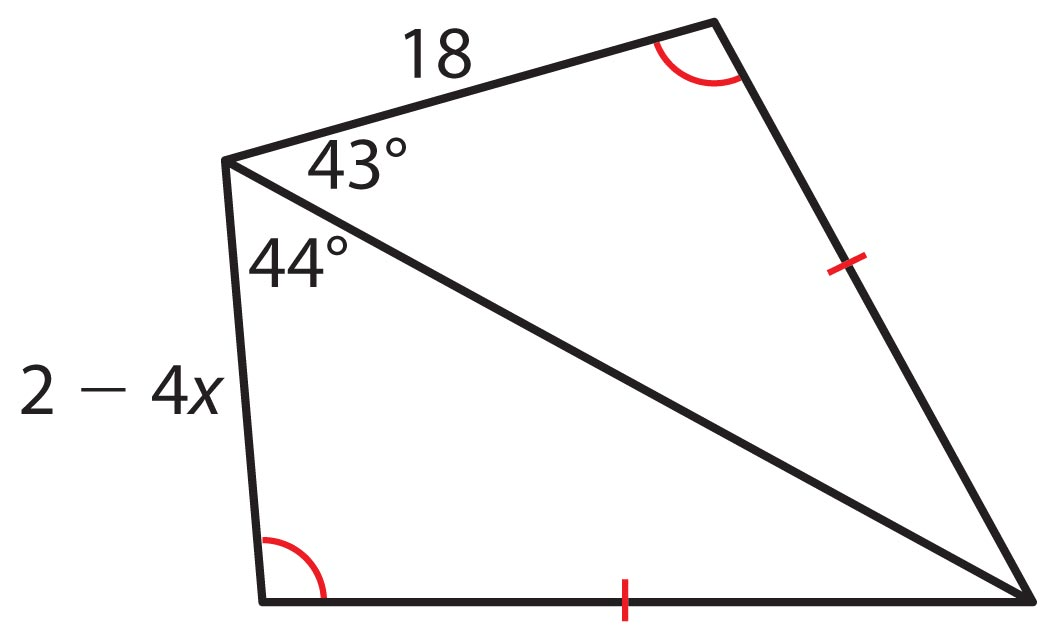
-4 < x < 1/2