Clouds & Condensation
Precipitation Processes
Air Masses & Fronts
Weather & Hazards
Vocabulary Quickfire
Random
100
Name the high-level, wispy cloud made of ice crystals often indicating fair weather.
Cirrus
100
What term describes liquid water drops smaller than raindrops that fall from clouds?
Drizzle.
100
What name is given to a cold, dry air mass that forms over land?
Continental polar (cP).
100
What do meteorologists call an extended period of heavy snow and high winds?
Blizzard
100
Give the textbook term for the temperature at which air becomes saturated and condensation begins
Dew point.
100
Describe the formula for density
Mass / Volume
200
Explain why condensation nuclei are necessary for cloud formation.
Because water vapor requires microscopic particles (dust, salt, etc.) to condense upon; without nuclei cloud droplets rarely form.
200
What is the difference between sleet and freezing rain?
Sleet = raindrops that freeze into ice pellets before reaching ground; Freezing rain = liquid drops freeze on contact with subfreezing surfaces.
200
What type of air mass forms over the Caribbean Sea (give abbreviation and meaning)?
Maritime tropical (mT) — warm, moist air from ocean (e.g., Caribbean).
200
Define drought in meteorological terms and name one type of drought listed in Chapter 8.
A meteorological drought: prolonged period with below-normal precipitation; one type: agricultural drought.
200
What is the name for the movement of water from Earth’s surface to the atmosphere and back?
Hydrologic (water) cycle.
200
Name all 4 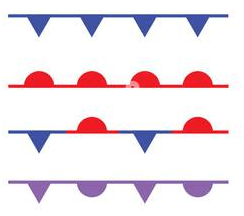
Cold front
Warm Front
Stationary Front
Occluded Front
300
Give the name and a one-sentence description of a lens-shaped cloud that commonly forms near mountains.
Lenticular cloud — lens-shaped cloud, stationary relative to mountain waves.
300
How is hail formed in thunderstorms? Include the role of updrafts.
Hail grows when graupel or frozen droplets are lifted by strong updrafts through supercooled regions, collecting layers of ice until too heavy to be supported and fall.
300
Define a frontal cyclone and state from which air mass it typically draws energy.
A low-pressure system formed along a front; it draws energy from contrast between warm and cold air masses, typically from the warm air mass.
300
A location under a nearly stationary, warm, moist air mass has had frequent thunderstorms and light rain for days. Where did that air mass most likely originate and why?
Over tropical ocean (maritime tropical), because warm, moist, and relatively stationary air produces frequent convection and thunderstorms.
300
What is meant by “saturated” air?
Air holding the maximum amount of water vapor possible at that temperature (evaporation and condensation rates equal).
300
A droplet is > 0.5mm its ...
Rain droplet
400
Contrast low, mid-level, and high clouds by altitude ranges and one distinguishing characteristic for each.
Low (surface to ~2 km): stratus, cumulus — thicker water droplets; Mid (~2–6 km): altostratus/altocumulus — mixed-phase; High (~6–13 km): cirrus/cirrostratus — ice-crystal clouds.
400
Compare how rain usually forms in tropical areas versus mid-latitude regions (name the dominant process in each).
Tropics: collision–coalescence (large droplets collide and merge in warm clouds). Mid-latitudes: Bergeron–Findeisen (ice-crystal growth) is common in colder clouds.
400
Describe how an occluded front forms (sequence of frontal movement).
An occluded front forms when a faster-moving cold front overtakes a slower warm front, lifting the warm air off the ground.
400
What three major factors cause Earth’s weather? List them.
Uneven heating of Earth’s surface (solar radiation differences), rotation of the Earth (Coriolis effects), and differences in atmospheric composition and moisture/pressure patterns (or simply: unequal heating, rotation, and atmospheric composition/pressure systems).
400
Define "condensation nuclei" in one short sentence.
Small airborne particles (dust, salt, smoke) that provide surfaces for water vapor to condense onto.
400
This molecule can be solid, liquid, or invisible in the air depending on temperature.
Water
H2O
500
Describe the Bergeron–Findeisen process (what forms in the cloud, and how this leads to precipitation).
Bergeron–Findeisen process: in cold clouds ice crystals grow at the expense of supercooled water droplets because vapor pressure over ice is lower than over water; crystals grow and fall as snow or melt into rain.
500
Explain the collision–coalescence process and identify the cloud particle size range where it is most effective.
Collision–coalescence: larger cloud droplets collide with and merge with smaller droplets to form raindrops; most effective in warm clouds with many droplets of varying sizes.
500
Sketch the typical vertical temperature arrangement and surface motion for a cold occlusion (describe in words).
Cold occlusion: cooler air behind the occluding front is colder than the air ahead, so the colder air undercuts the cooler ahead air; surface map shows occluded front with cold air behind and even colder air overtaking cooler air.
500
Briefly explain how photochemical smog forms (ingredients and main chemical produced).
Photochemical smog forms when nitrogen oxides and volatile organic compounds react in sunlight to produce ozone and other oxidants.
500
Provide a concise definition for "frontal cyclone."
A low-pressure system (cyclone) that forms and develops along the boundary between differing air masses (a frontal low).
500
This describes the statistical patterns and variability of temperature, precipitation, and atmospheric conditions in a region measured over decades rather than day-to-day conditions
Climate