vocabulary
Fill in the Blank
Explain Yourself
100
The breakdown of solid materials into very small particles by water, air, and natural events
weathering
100
The force that causes objects with mass to attract to one another is called ___________.
gravity
100
After a heavy rain, you notice soil from your flower beds has washed into the street. Explain what happened and why it happened.
WEATHERING happens when the water lifts the soil from the flower bed. EROSION happens when the soil is carried to the street. This happened because a large amount of water caused land to change by moving it around.
200
The GRADUAL wearing down by wind, water, air and natural events.
Erosion
200
How fast the process by which water, ice, wind, and gravity transport sediments from one place to another is called the ________________
rate of erosion
200
What environment do you think will become eroded faster- a beach with tall grasses and shrubs OR a beach with many sand dunes and no grass. Explain
The beach with many sand dunes and no grass will erode faster because there is nothing to keep the sand from washing away. The roots of the grass and shrubs help keep the sand in place.
300
Mixture of sand, silt, clay, rock, and humus.
Soil
300
The smallest possible pieces of something are called ___________.
particles
300
Deserts experience a lot of wind erosion. Describe the relationship between rainfall, vegetation (plants), and erosion in the desert.
Answers will vary. Possible answers may include the following: There is very little rainfall in the desert, so plants cannot grow. Since there are very few plants, the wind easily moves the sand around and causes changes to the land. If there were more plants, the plants would help hold the sand in place.
400
All the plants found in a particular area
vegetation
400
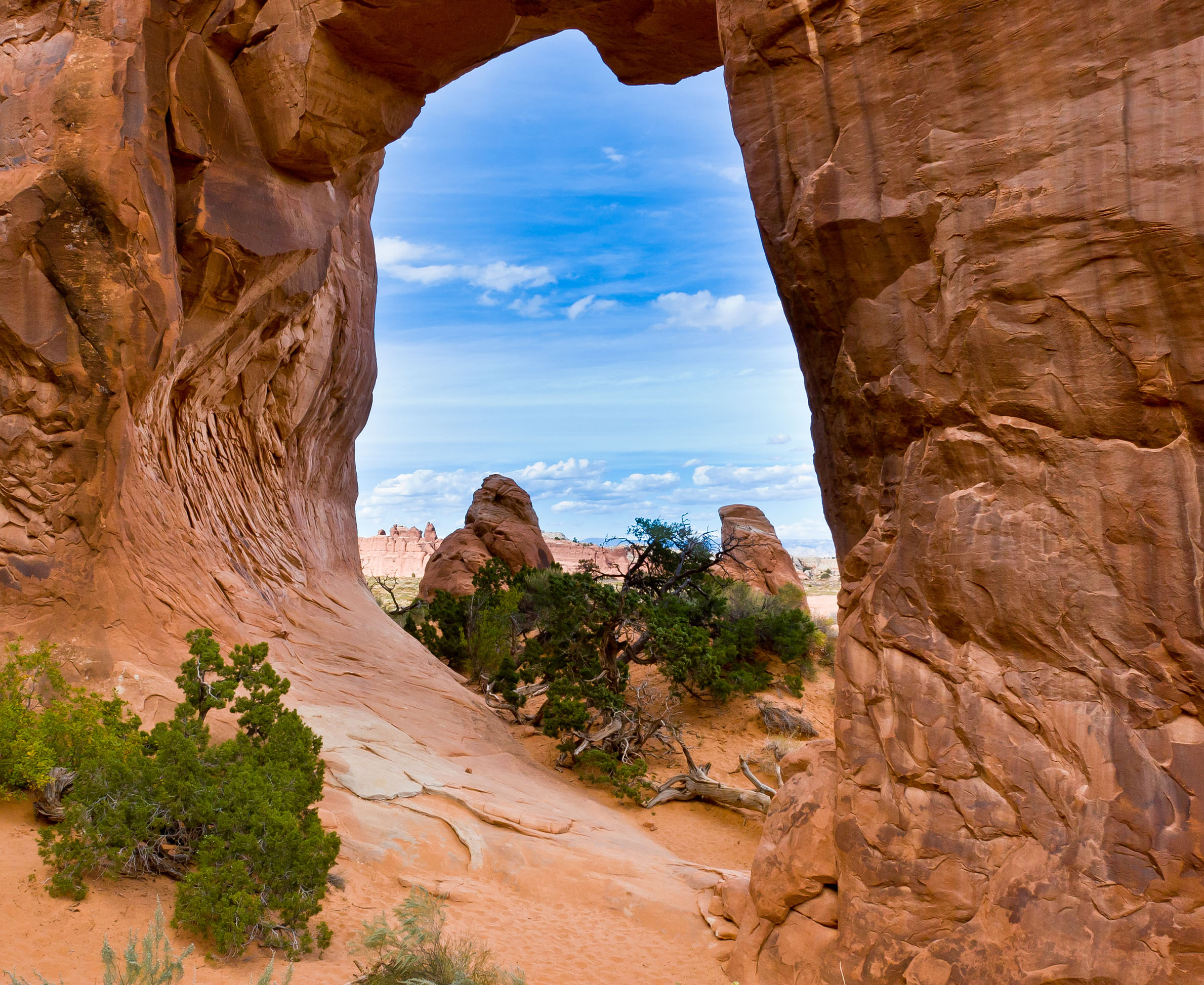 This land form was created by?
wind
400
What happens to a shoreline as waves crash into it?
sand is washed away
500
Sand or small pieces of rock broken down by weathering and deposited on the land or at the bottom of a body of water.
Sediments
500
Three examples of mechanical weathering are:
waves, wind, rain
500
A student was observing rocks he found at a riverbed. The rocks he found were smooth and rounded because the rocks–
were in a river that had fast-moving water.