Homeostasis
Organ Systems
Anatomical Terms/Body Cavities
Organic Molecules
100
Name an example of the human body maintaining homeostasis?
Shivering/sweating
100
Which two organ systems are responsible for excretion of wastes?
Urinary and digestive
100
What is the term for closest to point of origin
Proximal
100
What are the two components of a triglyceride?
Glycerol head and three fatty acid chains
200
What does dynamic equilibrium refer to?
The constant changes/adjustments the body makes in order to maintain homeostasis
200
Name 2 key structures of the endocrine system
Pancreas, pituitary gland, adrenal gland, thyroid, parathyroid
200
What is the term for the abdominal region directly above the umbilical?
Epigastric
200
What is the definition of an acid?
A substance that releases positive H ions when in water.
300
Homeostasis through two different ways, although one is more common than the other. What are the two ways?
Positive and negative feedback loops
300
Which organ system is responsible for production of immune cells?
Lymphatic
300
What is the anatomical term for the region around the neck?
Cervical
300
What is the structural difference between saturated and unsaturated fats?
The carbons in saturated fats have all their hydrogen requirements met. The carbons in unsaturated fats have to make double bonds in order to meet their requirements, which leads to kinks in the fatty acid chains.
400
What is a set point range?
The normal range of a body condition (ex. temperature)
400
Name all 12 organ systems
Integumentary, skeletal, muscular, lymphatic, respiratory, urinary, nervous, endocrine, circulatory, digestive, male reproductive, female reproductive
400
What are the names of all 6 body cavities?
Ventral, dorsal, thoracic, abdominopelvic, abdominal, pelvic
400
Identify this nucleotide and the three main components labeled on the diagram. 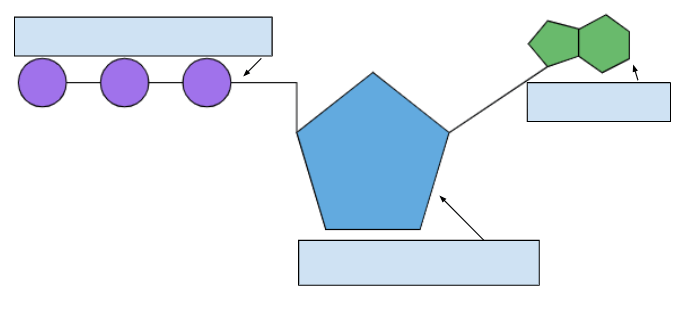
ATP, 5 pentose sugar, nitrogenous base, 3 phosphate groups
500
Name the three steps of homeostatic regulation and what happens at each.
Receptor: receives information about change in environment
Control center: receives and processes information from receptor
Effector: responds to signals from control center by either opposing or enhancing a stimulus
500
The pharynx is included in which two organ systems?
Respiratory and digestive
500
You have a scratch on your inner right forearm directly above your wrist. How would you describe it using the correct anatomical terms and the following directional terms:
Medial/Lateral
Superior/Inferior or Proximal/Distal
Right medial antebrachial superior to carpal/inferior to antecubital
Right medial antebrachial proximal to carpal/distal to antecubital
500
Name this monomer and the two labeled sections.
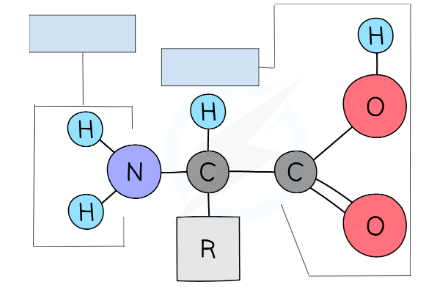
Amino acid, amino and carboxyl group