Words That Matter
Treaties and Promises
Indian Act and Identity
Métis Rights
Language and Education
Read Between the Lines
100
A law recognizes and supports a community’s rights. Which chapter vocabulary word describes this?
Affirm.
100
A treaty promises a payment every year. What is this annual payment called?
An annuity.
100
Historically, what title was given to government officials appointed to oversee many affairs on First Nations reserves?
Indian Agents.
100
What is the name of the certificate historically issued to Métis that could be exchanged for land or money?
Scrip.
100
Which two languages have official-language status at the federal level in Canada?
English and French.
100
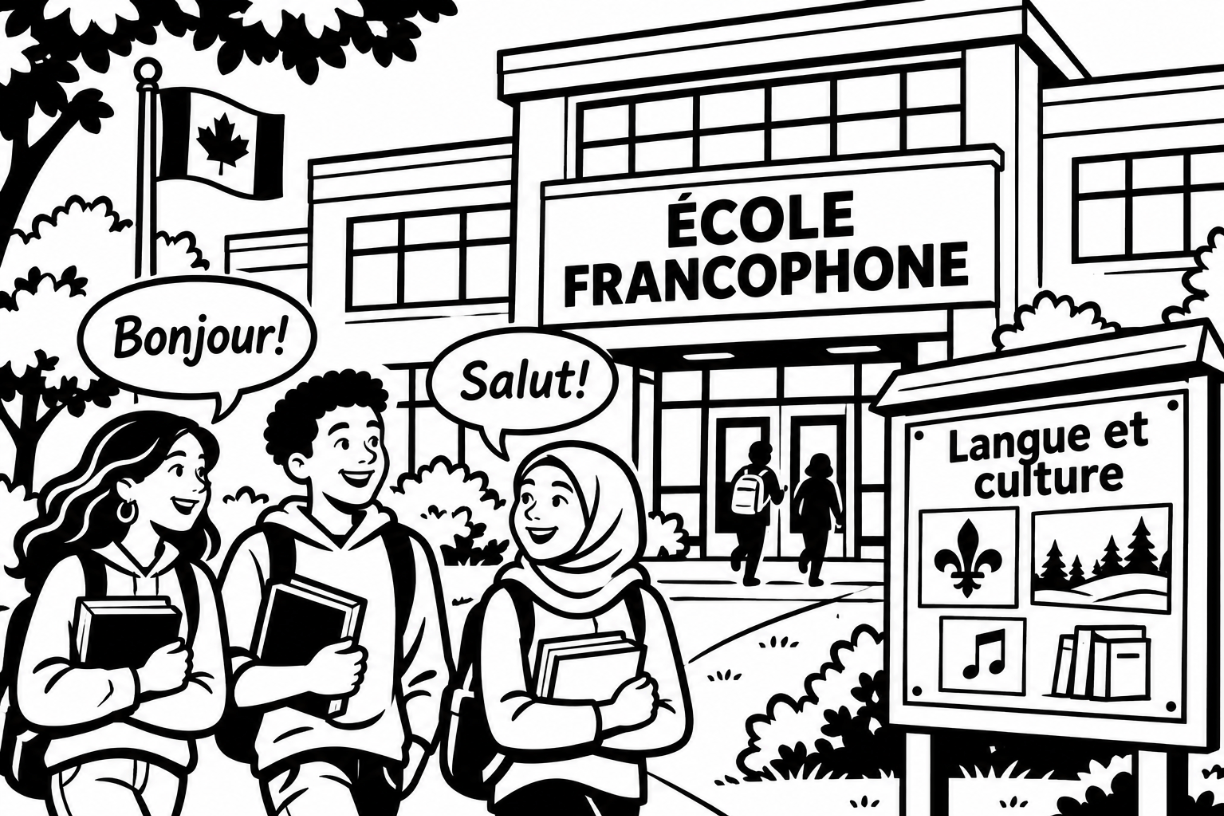
What aspect of collective identity does this school help protect? Give one detail from the image.
French language and culture. Evidence could include the French school sign, greetings or cultural noticeboard.
200
A government pressures a people to give up their language and traditions and adopt another culture. Name this process.
Assimilation.
200
Give two different kinds of promises found among the Numbered Treaties.
Reserve land, payments, education, hunting/fishing provisions, farming assistance or health-related provisions. (Promises varied by treaty)
200
How could banning a community’s ceremonies affect more than its ability to hold an event?
It could disrupt beliefs, cultural learning, relationships and passing traditions to younger generations.
200
Explain why “Métis” means more than simply having some Indigenous and European ancestry.
Métis are a distinct Indigenous people, with their own communities, history and culture.
200
Which section of the Charter addresses minority-language education rights?
Section 23.
200
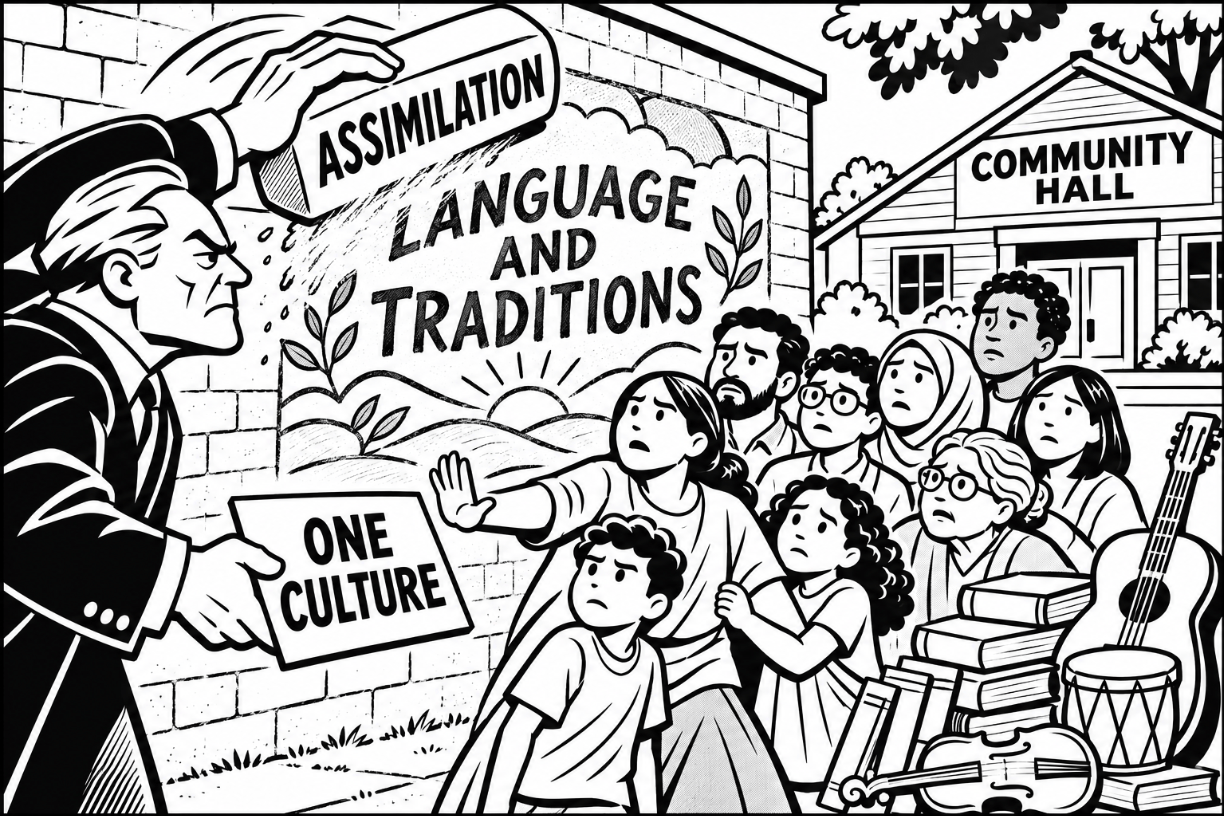
What opinion about assimilation does this cartoon express? Explain the eraser’s meaning.
Assimilation threatens or removes a community’s language and traditions. The eraser symbolizes attempts to eliminate cultural differences.
300
A government official claims that European ways are superior to First Nations ways. Which term describes judging other cultures as inferior to your own?
Ethnocentrism.
300
Some First Nations understood treaties as agreements to share land, while government representatives understood them as surrendering land. Why could this difference cause conflict?
The parties could believe they agreed to different things, leading to disputes over land use, control and obligations.
300
A government promises education in a treaty. Does that promise automatically mean First Nations agreed to residential schools? Explain.
No. A promise of education does not establish agreement to residential schools or their assimilation policies. The government’s implementation could differ from First Nations’ understanding of the promise.
300
Which 1938 Alberta law established temporary Métis settlements?
The Métis Population Betterment Act.
300
A Francophone school and a French immersion program both use French. What important different separates their purposes?
A Francophone school supports the education, language, and culture of a Francophone community; French immersion primarily teaches French as an additional language.
300
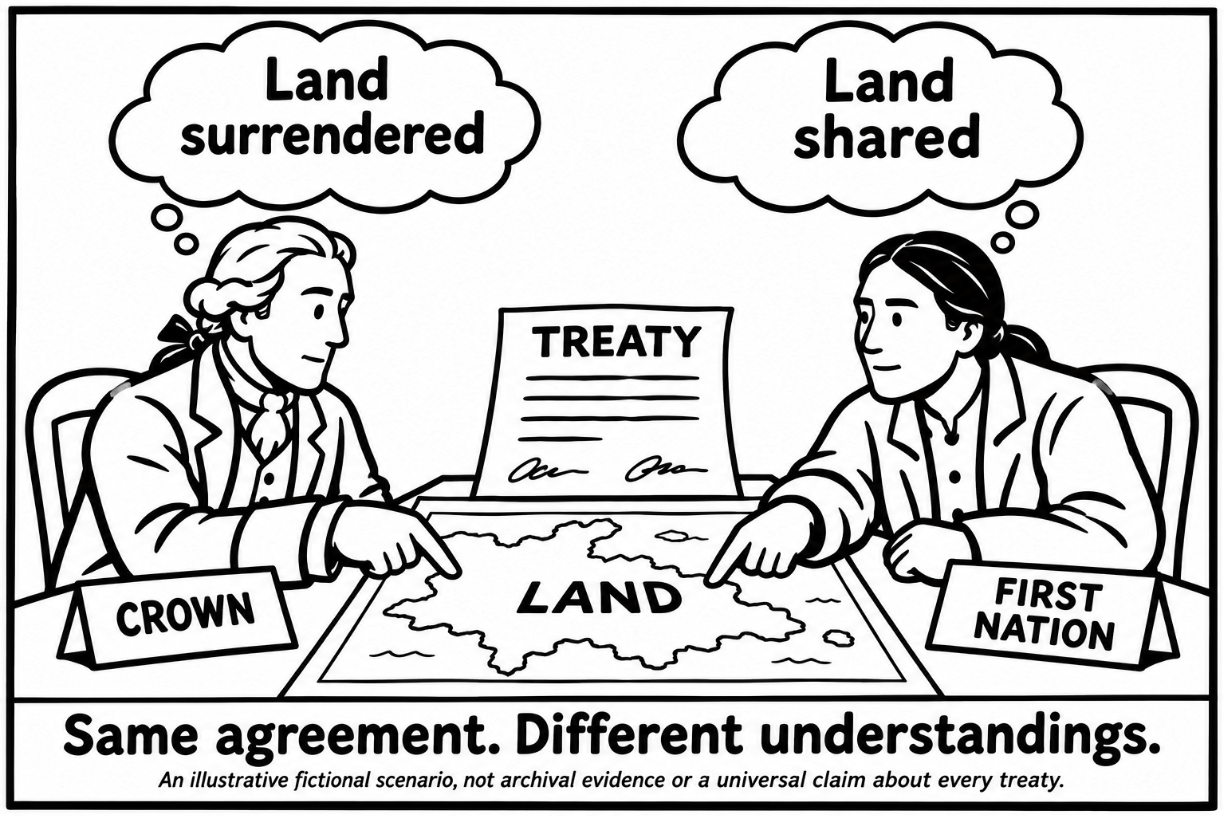
What problem with treaty negotiations does this cartoon illustrate, and how could it lead to conflict?
The parties understand the land agreement differently: surrendering land versus sharing it. This could create disputes over control, land use and treaty obligations.
400
Name the term for the shared sense of belonging that comes from a community’s language, culture and history.
Collective identity.
400
Why should a historian consider both oral accounts and written treaty documents?
Both provide evidence of what was communicated and understood. Written documents alone may not capture oral promises or First Nations perspectives.
400
Why could preventing children from speaking their languages at residential schools affect future generations?
It interrupted language learning and transmission, affecting later generations’ connections to culture, family knowledge and identity.
400
A Métis community wants to protect its identity for future generations. Explain how recognition of its rights in Canada’s Constitution could help.
Constitutional recognition provides a legal foundation for protecting Métis rights and challenging actions that threaten them. This can help communities maintain their culture, traditions and ways of life.
400
What concern about French language and identity helped motivate Bill 101 in Québec?
Concern that French could become marginalized or weakened, and the desire to protect and strengthen its place in Québec society.
400
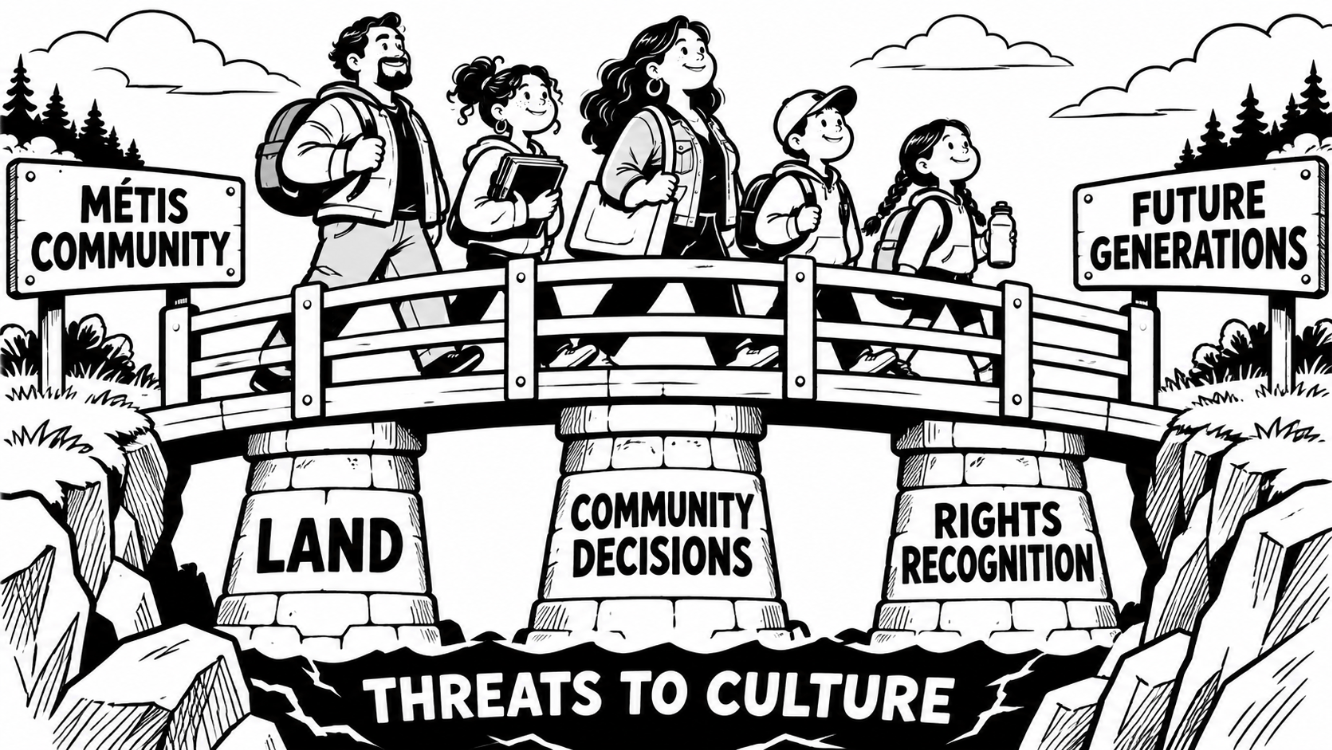
What does the bridge symbolize? Explain how TWO of its supports could help maintain Métis identity.
The bridge represents cultural continuity into future generations. Land supports community life and traditions; community decisions support autonomy; rights recognition supports protection of collective rights.
500
Explain the difference between a law and a policy.
A law is a legally enforceable rule; a policy is a plan or course of action. Governments use policies to decide how to act or implement laws.
500
A student says, “A treaty promise appears in writing, so that proves the promise was fulfilled.” Explain the error.
Recording a promise establishes an obligation; it does not prove implementation. Evidence of what happened afterward is needed. (Actions have not been taken)
500
A student says, “Bill C-31 changed unfair rules, so every problem involving Indian status ended in 1985.” Correct this statement.
Bill C-31 addressed some discrimination, but it did not resolve every inequity involving registration and status.
500
Explain two ways a secure land base and community decision-making can support Métis identity.
Maintaining traditions, passing on knowledge, sustaining community relationships, supporting cultural activities, or exercising autonomy.
500
Explain how protecting French in Québec and protecting French-language minority education in Alberta can serve a similar purpose, even though French has a different position in each province.
Both help maintain Francophone language, culture and identity. In Québec, French-language protections strengthen its place in society. In Alberta, minority-language education helps Francophone communities maintain their language within an English-majority setting.
500
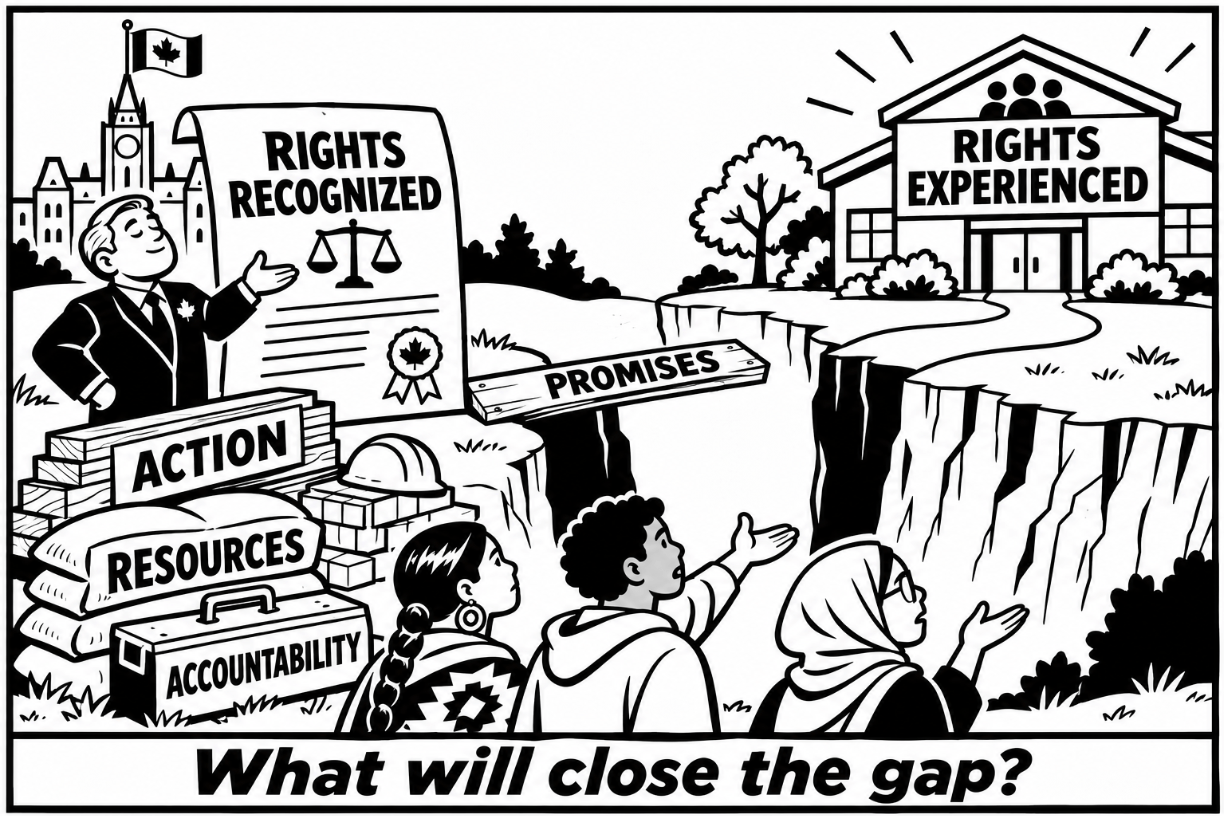
What is the cartoonist’s main argument about collective rights? Explain TWO visual details that support your answer.
Recognizing rights on paper must be followed by action so communities can exercise them. The gap represents incomplete implementation; the short “Promises” plank shows promises alone are insufficient; unused materials represent action, resources and accountability still needed.