Vocabulary
Lesson 1
Lesson 2
Lesson 3
50
The movement of weathered rock and soil is _______.
erosion
50
Which of these is a low area?
A. Mesa
B. Mountain
C. Plateau
D. Valley
D. Valley
50
Which of these is an effect of weathering?
A. Mountain building
B. Water freezing
C. Volcano erupting
d. Rock splitting
D. Rock splitting
50
Where do most earthquakes happen?
a. On buttes
b. On plains
c. At faults
d. In valleys
C. At faults
100
An opening in Earth’s surface from which lava flows is a _______.
volcano
100
Which of these words describe a plain?
A. Deep
B. Flat
C. Hilly
D. Steep
B. Flat
100
Which of these causes the land to change slowly?
A. Flood
B. Earthquake
C. Glacier
D. Volcano
C. Glacier
100
Which type of landform is a kind of mountain?
a. Volcano
b. plain
c. Plateau
d. Valley
A. Volcano
150
A valley with steep sides is a _______.
canyon
150
Which landform does this illustration show?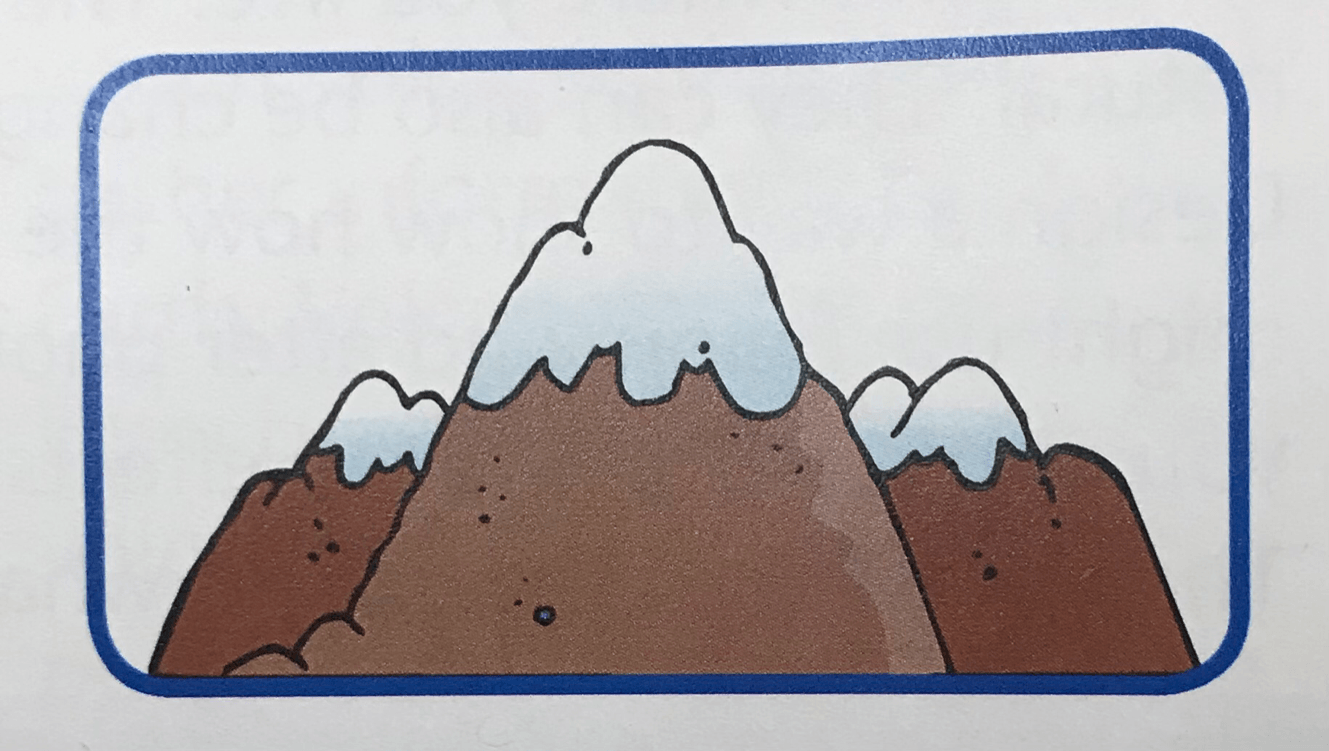
A. Mountain
B. Plain
C. Plateau
D. Valley
A. Mountain
150
What is creep?
Creep is a very slow type of erosion that moves rocks and soil.
150
How does a flood change the land?
a. It cracks rock.
b. It drops soil.
c. It lifts mountains.
d. If sends out lava.
B. It drops soil.
200
A huge block of moving ice is a _______.
glacier
200
Where can you find beaches?
a. mountains
b. Great Plains
c. coastal plains
d. canyon
c. coastal plains
200
In deserts, ________ forms big piles of sand called dunes. Sand dunes can be taller than a 20-story building.
wind
200
What is a landslide?
A landslide is when large amounts of rock or soil from a mountain slides downhill.
250
The shaking of Earth’s surface is an _________.
earthquake
250
How are some mountains different from others?
Some are rocky and pointed. Others are rounded. Some mountains are low. Others are very high and have snow on top.
250
How does wind break down rocks?
Wind picks up sand and then smashes it against rocks.
250
Which of these is an effect of earthquakes?
a. Burned forest
b. Large cracks in Earth
c. Gas clouds
d. Crops washed away
B. Large cracks in Earth
300
A flat area higher than the land around it is a _______.
plateau
300
What is a butte?
a. A deep canyon
b. A rocky mountain
c. A table made of rock
d. A flat-topped hill with steep sides
d. A flat-topped hill with steep sides.
300
Compare and contrast the effects of weathering and the effects of erosion.
Weathering is the breaking down of rocks. Erosion is the movement of rocks and soil.
300
In which of these areas do you think flooding would most likely happen? Explain your answer. 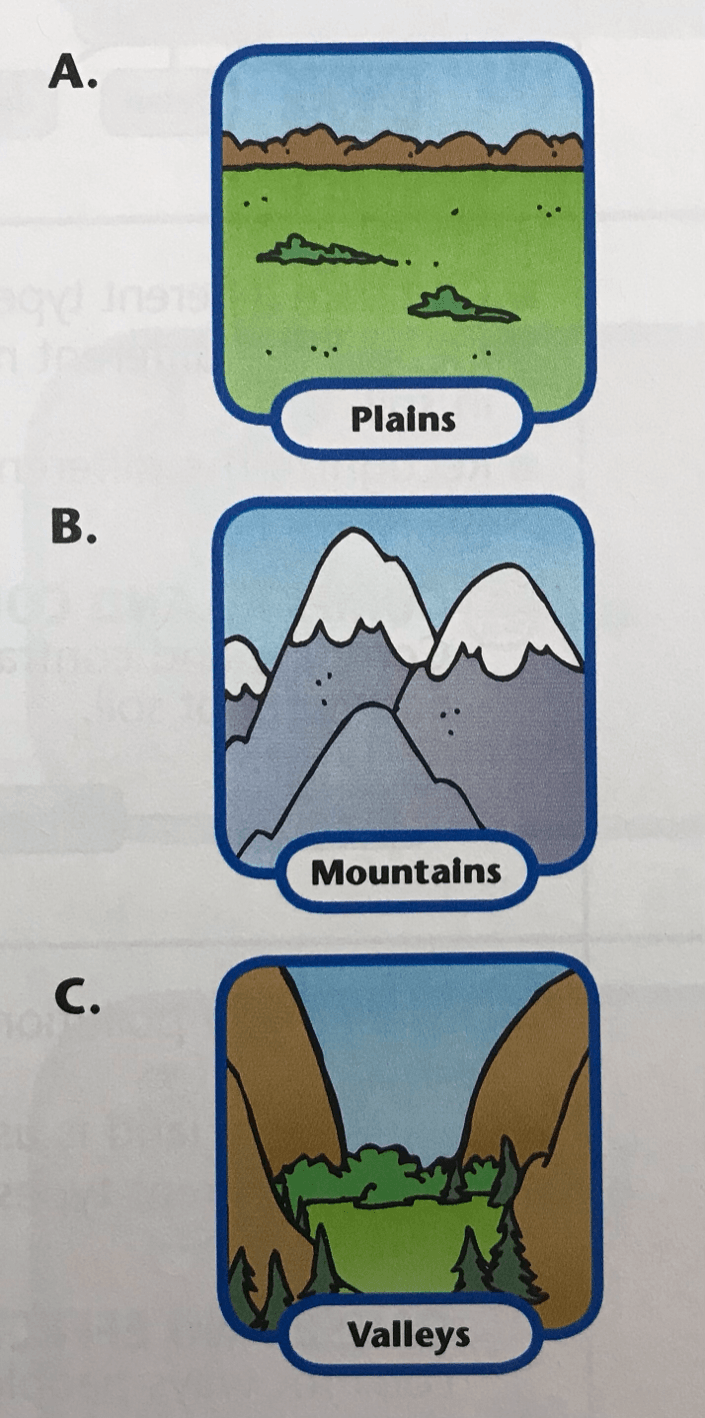
Flooding would most likely happen in the valleys because the water would get trapped between the mountains.
350
The breaking down of rocks into smaller pieces is _______.
weathering
350
How is a valley different from a mountain?
A valley is a low area. A mountain is a high area. Valleys can be low areas between mountains.
350
How does a glacier form a hill?
As glaciers move, they pick up rocks and soil. When glaciers melt, the rocks and soil drop. Their forms a hill.
350
What causes a flood?
Heavy rainfall can make rivers overflow their banks, causing floods.
400
A large amount of water that covers the land is a _________.
flood
400
A small plateau is a __________.
*Hint: it means table in Spanish because they look like tables made of rock
mesa
400
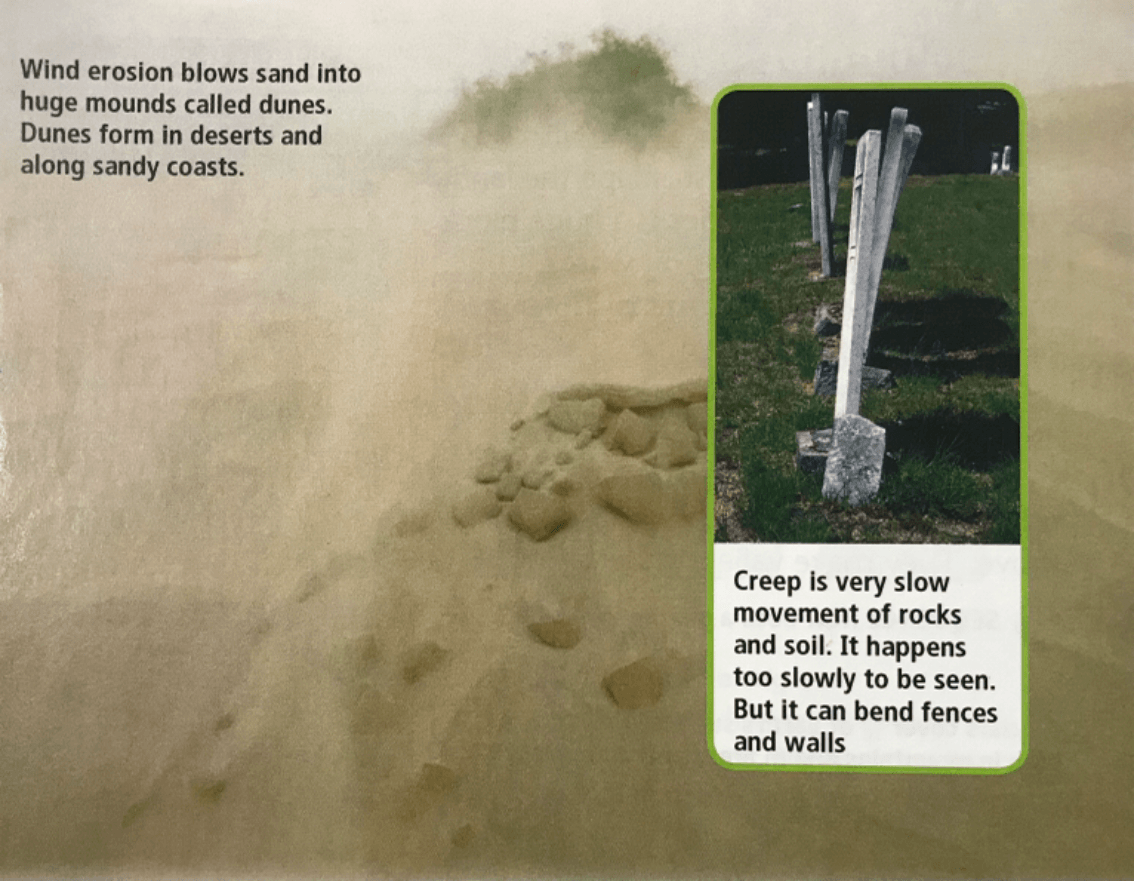 How can you tell that erosion is occurring in the photo of sand dunes?
There are brown clouds along the ground, which is wind that is full of small pieces of sand.
400
When a river’s water flow slows down, the sediments drop along the bank. This is one way the shape of a river can change. Is it possible for a river’s course to change? Explain.
Yes, it is possible for a river’s course to change over time. Fast moving water carries sand and weathered rocks. When the river’s flow slows down, the river drops them on the banks. New land builds up and changes the course of the river.