small subjects
Organization
A bonding moment
Mostly measures
(mostly)
(mostly)
Let's get closer
visual
arts
arts
Let's surf and orbit
Wave bye to the shell
Principles rule the effect
But wait there's more
mixalot
I C you
and the rest
100
a region of space in which there is a high probability of finding an electron
atomic orbital
100
molecular structure
arrangement of atoms in a molecule or ion
100
bond distance
distance between the nuclei of two bonded atoms
100
2.998 x 10^8 m/s
The speed of light (C)
100
ionic bond
strong electrostatic force of attraction between cations and anions in an ionic compound
100
This is an example of one.
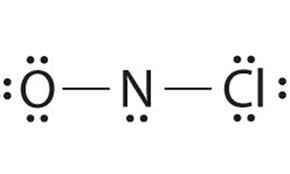
Lewis structure
100
Amplitude
Height of a wave
100
s orbital
spherical region of space with high electron density
100
inert pair effect
the tendency of heavy atoms to form ions in which their valence s electrons are not lost
100
electron configuration
the arrangement of electrons in an atom
100
electron-pair geometry
arrangement around a central atom of all regions of electron density
100
a particle of light
Photon
100
vector
quantity having magnitude and direction
200
spin quantum number
direction of the intrinsic quantum"spinning" of the electron
200
two or more Lewis structures that have the same arrangement of atoms but different arrangements of electrons
resonance forms
200
polar molecule
molecule with an overall dipole moment
200
1nm = 10^-9m
Nanometer (nm)
200
lone pair
a pair of electrons that is not involved in bonding and that belongs exclusively to one atom
200
This is an example of this type of bond
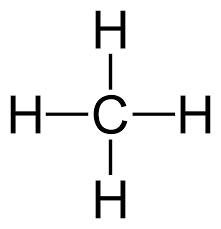
Single bond
200
the shape of the orbital
angular momentum
200
shell
set of orbitals with the same principal quantum number
200
valence bond theory
description of bonding that involves atomic orbitals overlapping to form σ or π bonds, within which pairs of electrons are shared
200
valence electrons
electrons in the outermost or valence shell
200
dipole moment
property of a molecule that describes the separation of charge determined by the sum of the individual bond moments based on the molecular structure
200
idealized perfect absorber of all incident electromagnetic radiation
Blackbody
200
coexistence of orbitals from two different atoms sharing the same region of space, leading to the formation of a covalent bond
overlap
300
d orbital
region of space with high electron density that is either four lobed or contains a dumbbell and torus shape;
300
axial position
location in a trigonal bipyramidal geometry in which there is another atom at a 180° angle and the equatorial positions areat a 90° angle
300
arrangement around a central atom of all regions of electron density
electron-pair geometry
300
Energy = h x frequency
Planck's formula
300
triple bond
bond in which three pairs of electrons are shared between two atoms
300
These eight valence electrons show this.
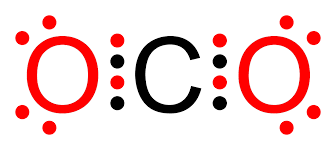
Octet rule
300
magnetic quantum number
orientation of the orbital
300
set of orbitals in an atom with the same values of n and l
subshell
300
Hund's rule
every orbital in a subshell is singly occupied with one electron before any one orbital is doubly occupied
300
valence shell
the outermost shell of electrons in a ground-state atom
300
polar molecule
molecule with an overall dipole moment
300
a spectrum of separate and distinct colors in which not all colors are present
Discrete Spectrum
300
node
plane separating different lobes of orbitals, where the probability of finding an electron is zero
400
dumbbell-shaped region of space with high electron density
p orbital
400
bond angle
angle between any two covalent bonds that share a common atom
400
shape in which two outside groups are placed on opposite sides of a central atom
linear
400
Frequency
Frequency
400
molecule that contains an odd number of electrons
free radical
400
This is what the pictorial representation would look like: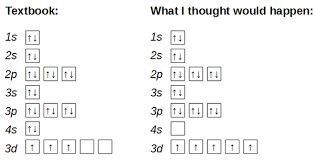
Orbital Diagraom
400
f orbital
multilobed region of space with high electron density
400
mathematical description of an atomic orbital that describes the shape of the orbital;
wavefunction
400
Pauli exclusion principle
specifies that no two electrons in an atom can have the same value for all four quantum numbers
400
resonance forms
two or more Lewis structures that have the same arrangement of atoms but different arrangements of electrons
400
tetrahedral
shape in which four outside groups are placed around a central atom such that a three-dimensional shape is generated with four corners and 109.5° angles between each pair and the central atom
400
symbolized by n, indicates the main energy level occupied by the electron
principle quantum number
400
pi bond
covalent bond formed by side-by-side overlap of atomic orbitals; the electron density is found on opposite sides of the internuclear axis
500
The link between the Carbon atoms is an example of this
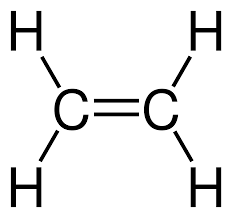
Double Bond
500
bond dipole moment
separation of charge in a bond that depends on the difference in electronegativity and the bond distance represented bypartial charges or a vector
500
Octahedral
shape in which six outside groups are placed around a central atom such that a three-dimensional shape is generated with four groups forming a square and the other two forming the apex of two pyramids
500
formal charge
charge that would result on an atom by taking the number of valence electrons on the neutral atom and subtracting the nonbonding electrons and the number of bonds
500
molecule containing at least one main group element that has more than eight electrons in its valence shel
hypervalent molecule
500
The "E"s represent this
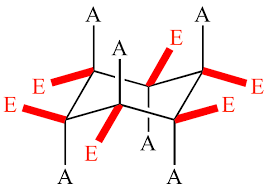
equatorial position
500
orbital created by combining atomic orbitals on a central atom
hybrid orbital
500
core electron
electron in an atom that occupies the orbitals of the inner shells
500
procedure in which the electron configuration of the elements is determined by "building" them in order of atomic numbers
Aufbau principle
500
resonance hybrid
average of the resonance forms shown by the individual Lewis structures
500
trigonal bipyramidal
shape in which five outside groups are placed around a central atom such that three form a flat triangle with 120° angles between each pair and the central atom, and the other two form the apex of two pyramids, one above and one below the triangular plane
500
Used to find the black body radition to fit experimental observation
Planck constant
6.626 x 10^-34 Js
500
valence bond theory
description of bonding that involves atomic orbitals overlapping to form σ or π bonds, within which pairs of electrons are shared
600
sigma bond
covalent bond formed by overlap of atomic orbitals along the internuclear axis
600
hybridization
model that describes the changes in the atomic orbitals of an atom when it forms a covalent compound