Chapter R
Chapter 1
Chapter 2.1-2.6
Chapter 2.7-2.13
Chapter 3.1-3.3
100
What is the formula to calculate density?
D = M/V
may also be written ρ = M/V
100
What are isotopes?
Different forms of the same element. Same number of protons, different number of neutrons.
100
What is the relationship between wavelength and frequency? Name an equation that relates the two.
Inverse: as wavelength increases, frequency decreases.
Related via this speed of light equation: c=vλ
100
What is the Pauli exclusion principle?
In a given atom, no 2 electrons can have the same 4 quantum numbers.
100
What is electronegativity? Which element has the highest electronegativity?
The ability of an atom in a molecule to attract shared electrons to itself.
Fluorine (F)
200
What units do we use in CHEM 130? Give some examples of them.
SI units: m, kg, s, K, moles, etc.
200
In carbon dioxide, the mass ratio of carbon:oxygen is 1:2.66. In carbon monoxide, the mass ratio of carbon:oxygen is 1:1.33. By taking 2.66/1.33, there is exactly twice as much oxygen by mass in carbon dioxide as in carbon monoxide. Which fundamental chemical law does this represent?
Law of Multiple Proportions
200
What is the Heisenberg Uncertainty Principle?
You cannot know BOTH the position and momentum of a particle at a given time...in the words of my GSI, "The more you know about where an electron is, the less you know about where it is going"
200
Electrons in quantum levels have a specific pattern for the energy at each orbital level. What is it?
Ens < Enp < End < Enf
200
Generally, what is the electronegativity difference in each of the 3 bond types?
Covalent = 0
Polar covalent = intermediate
Ionic = large
300
What is the formula to convert from Celcius to Kelvin?
Tc = TK - 273
(exam will most likely have 273, not 273.15)
300
What are X, A and Z? How would you calculate Z and A?
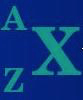
X= element
A= mass number ~ # of protons + # of neutrons
Z = atomic number ~ # of protons
300
What are the 2 limitations to the Bohr Model?
Only works for Hydrogen
Circular orbits are incorrect
300
What are the 4 orbital levels and how many orbitals are present at each level?
s = 1 orbital
p = 3 orbitals
d = 5 orbitals
f = 7 orbitals
300
To form an ionic bond, what two things do you need? Do atoms in an ionic bond share or transfer electrons?
An atom that will easily lose electrons (small ionization energy) and an atom that really wants electrons (large electron affinity).
400
What differentiates a mixture from a pure substance? Give an example of each.

Variable composition: can the proportions be different?
400
What are the 4 postulates of Dalton's Atomic Theory and which are no longer accepted today?
Elements are made up of atoms
Atoms of an element are identical ~ NO LONGER ACCEPTED because isotopes!
Chemical compounds form when atoms of different elements combine. A compound always has the same relative numbers and types of atoms.
Chemical reactions involve reorganization of atoms and changes in the way they’re bound. Atoms themselves are not changed in a chemical reaction. ~ NO LONGER ACCEPTED because atoms themselves can be changed via ionization/transferring protons, etc.
400
What is the difference between a continuous spectrum and a line spectrum? What model to electrons follow?
Continuous spectrum = all wavelengths
Line spectrum = only specific wavelengths
Electrons follow line spectrum model because they are quantized, or restricted to certain values.

Energy to move from level 3-->2 is smaller than energy to move from level 2-->1.
400
As you move down and left across the periodic table...
Ionization energy increases/deceases?
Atomic radius increases/deceases?
Electron affinity increases/deceases?

Ionization energy deceases
Atomic radius increases
Electron affinity decreases
400
What are isoelectronic ions?
Ions that have the same number of electrons but different numbers of protons.
ex. O2-, F-, Ne, Na+, Mg2+
500
What are ALL the rules for significant figures? Leading 0s? Trailing 0s? 0s between non-0 numbers? Non-0 numbers? Exact numbers? When adding/subtracting? When multiplying/dividing?
Leading 0s = not significant
Trailing 0s = significant only if decimal
0s between non-0 numbers = significant
Non-0 numbers = significant
Exact numbers = significant- infinite number of sf
Addition and subtraction = number of decimal places in answer depends on least precise measurement
Mult and division = number of sf in answer depends on least precise measurement
500
Name the 3 main experiments to characterize the atom. Who was responsible for each? What was learned from each?
Cathode Ray Tube; JJ Thomson; atoms contain - charged particles called electrons, charge-to-mass ratio of an atom
Charged Oil Drop; Robert Millikan; magnitude of charge of an electron, mass of an electron
Metal Foil; Ernest Rutherford; there is a dense, + charged center in the atom called a nucleus
500
What are the 4 quantum numbers and their rules?
Principal quantum number (n): integers 1+
Angular quantum number (ℓ): integers 0 to n-1 (s=0, p=2, d=2, f=3)
Magnetic quantum number (mℓ): integers +ℓ to -ℓ
Spinning quantum number (ms): either -½ or +½
500
What is the Aufbau principle? What are the 2 exceptions, and what are their electron configurations?
As protons are added to build up a nucleus, electrons added fill atomic orbitals of the lowest available energy levels before higher levels.
Exceptions:
Cr: [Ar]4s13d5
Cu: [Ar]4s13d10
500
Ion size influences structure and stability of ionic solids. What are 2 factors that influence ion size?
Size of parent atom
Position in periodic table--ion size increases going down a group
ex. Li+ vs Cs+ ~ Cs+ is larger because same charge, same group, but further down.