Acids and Bases
Mechanism
Synthesis
Short Answer
100
The following molecules in order of increasing basicity.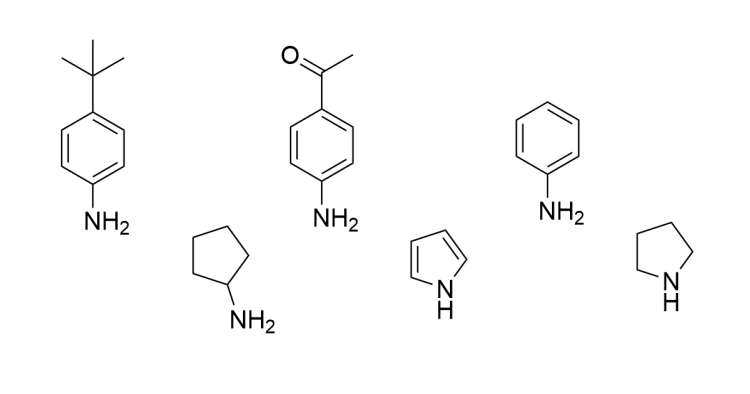
What is: 5 < 2 < 3 < 1 < 4 < 6
100
A viable mechanism for the following transformation.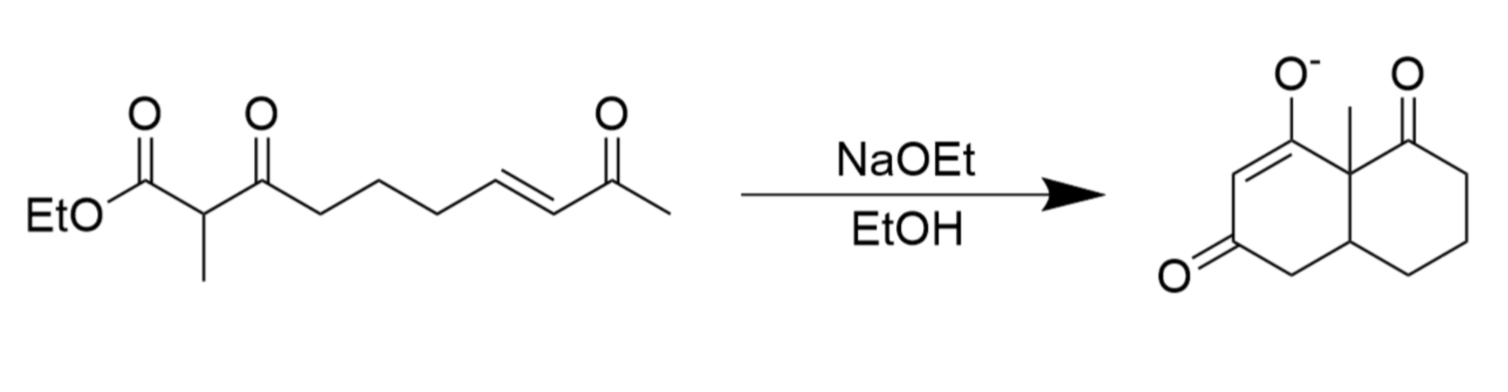
What is Michael addition followed by ketone acylation?
100
See board
See board
100
The name of the product of the following reaction.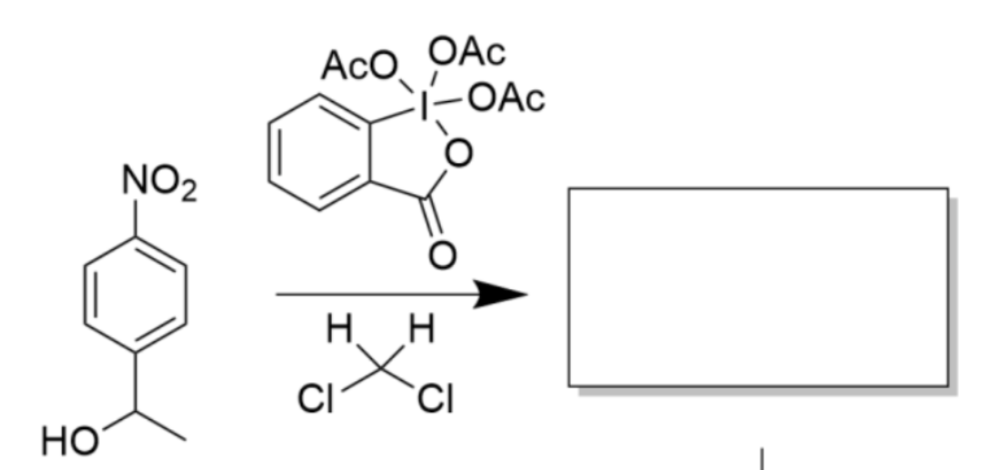
What is 1-(4-nitrophenyl)ethan-1-one or 4-nitroacetophenone?
200
The following molecules ranked in order of increasing acidity.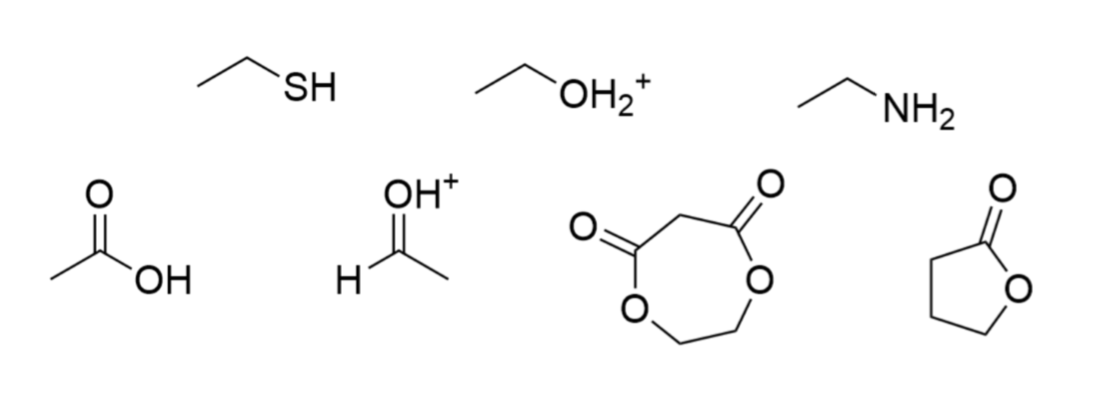
What is: 3 < 7 < 6 < 1 < 4 < 2 < 5
200
A mechanism for the following transformation.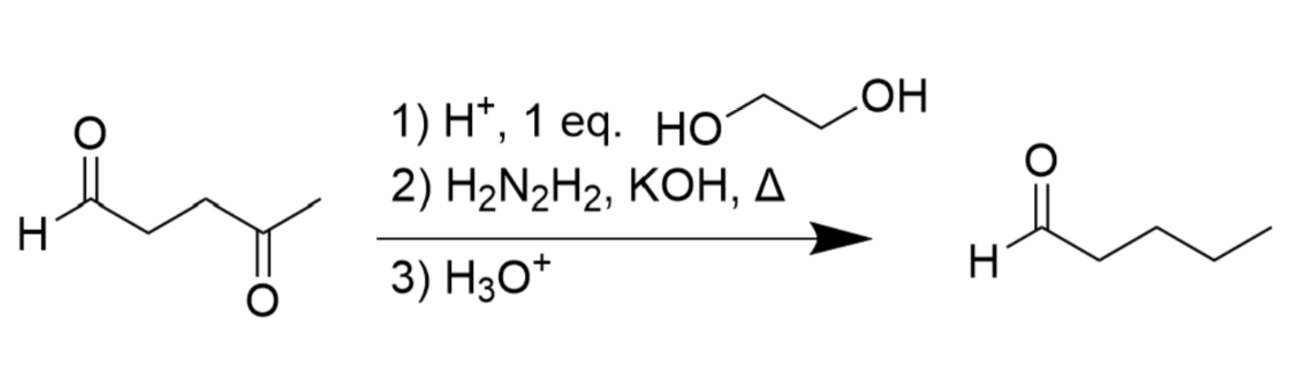
What is acetal condensation, Wolff-Kishner reduction, and acetal hydrolysis?
200
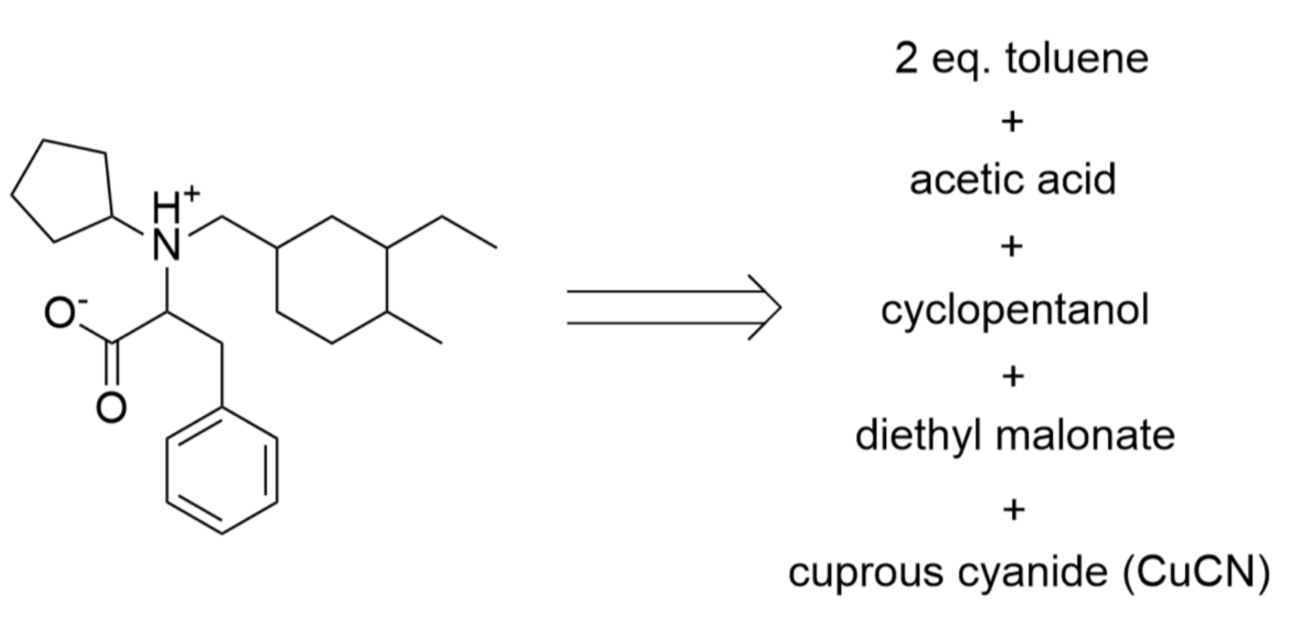
A synthesis of 1-phenyl-2-butanamine from ethyl malonate.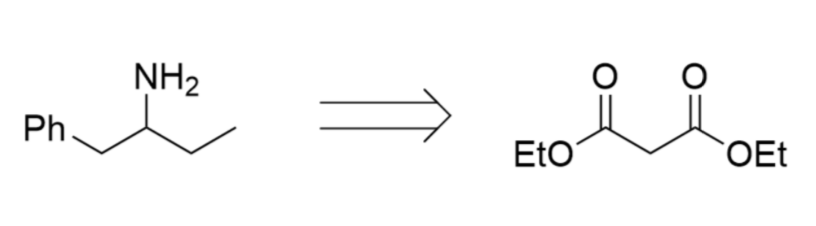
Any viable synthesis will be accepted, though a terminal Hoffman or Curtius rearrangement is preferred.
200
The reagents necessary to accomplish the following transformation.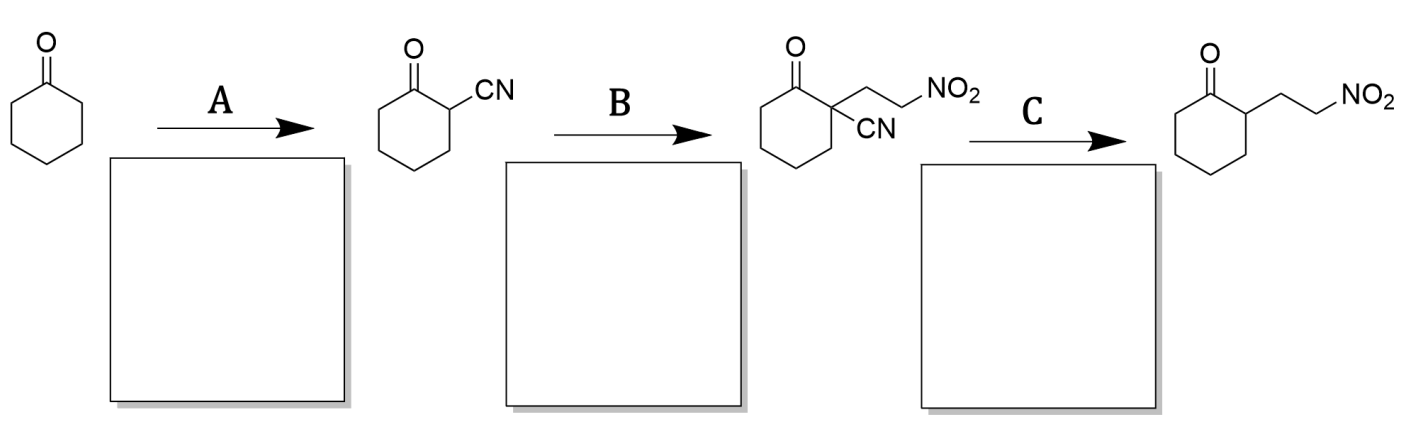
A1) AcOH, Br2
A2) KCN, DMSO
B1) KOH, EtOH
B2) CH2=CHNO2
C3) H_3O^+, Delta
300
The isoelectric point of the following peptide: LERVEA
pKas:
Terminal amine: 9.0
Terminal carboxylic acid: 2.1
Arg: 12.5
Glu: 4.2
What is 4.2?
300
A mechanism for the following transformation. Hint: this reaction makes m-Chlorobenzoic acid.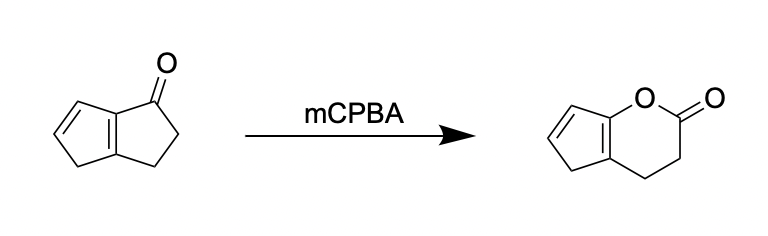
What is the Baeyer-Villiger Oxidation? See board.
300
A synthesis of the following alkene from reagents of two carbons or less. Organometallics must be synthesized.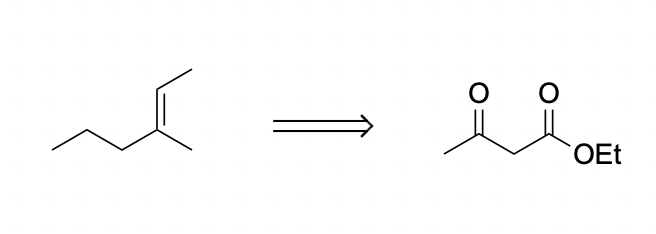
What is an acetoacetic ester synthesis followed by an Wittig?
300
The intermediates and product of the following reaction. (Note the direction).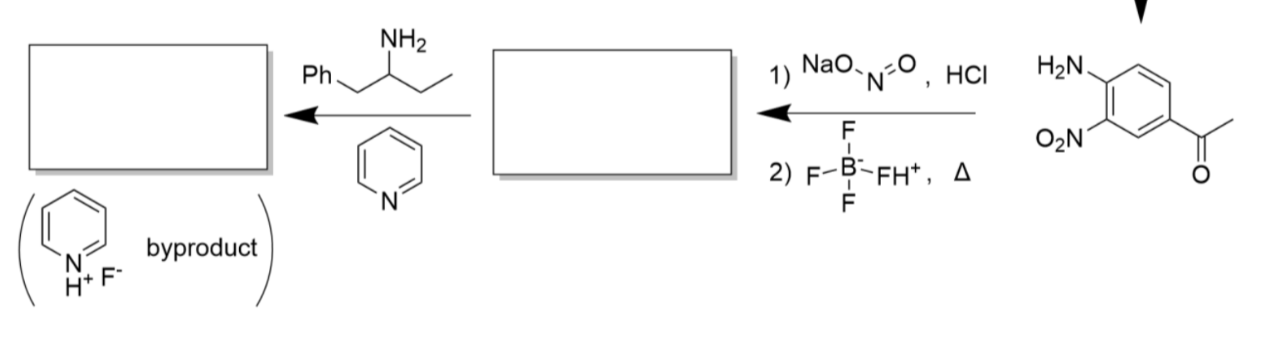
What is: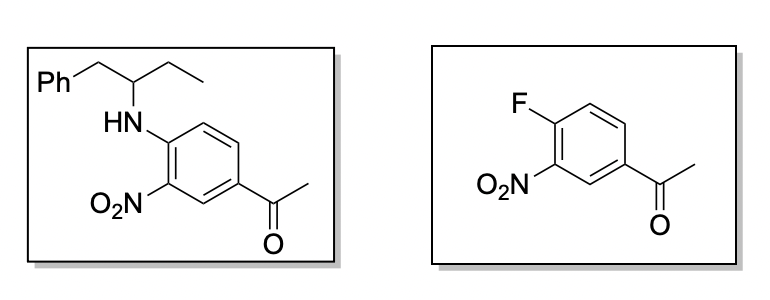
400
Final Jeopardy: Category is Synthesis. You have two minutes to determine your wager.