Subatomic Particles
Chemical Pioneers
Periodic Table (w/ EC)
Biochem
Biomimetics
100
Current flows against the direction of electron flow in this type of electrochemical cell.
battery
100
This man's law states that equal volumes of gas contain the same number of molecules; however, he played no direct role in calculating the number named for him.
Amedeo Avogadro
100
This element, discovered by Marie Sklowdowska-Curie, was named after its harmful nature and is commonly found in uranium mines.
radium (Ra)
100
Alliinase begins a cascade that produces syn-Propanethial-S-oxide when this vegetable is cut.
onion
100
Slime molds digesting oats were used to model biological efficiency as well as subway systems in this country.
Japan
200
In microwaves, a cavity magnetron creates this kind of negative-pressure environment to achieve circular electron movement.
vacuum
200
Jöns Jacob Berzelius is often credited with defining the natural phenomenon of catalysis, but this woman actually discovered the concept 40 years earlier.
Elizabeth Fulhame
200
This element is created via the breakdown of uranium or thorium and is commonly found leeching into basements.
radon (Rn)
200
This group of organisms is responsible for oxygenating early Earth with their chlorophyll a and phycobilins.
cyanobacteria
200

The wings of the aircraft shown here are modeled after the wings of this large seabird.
albatross
300
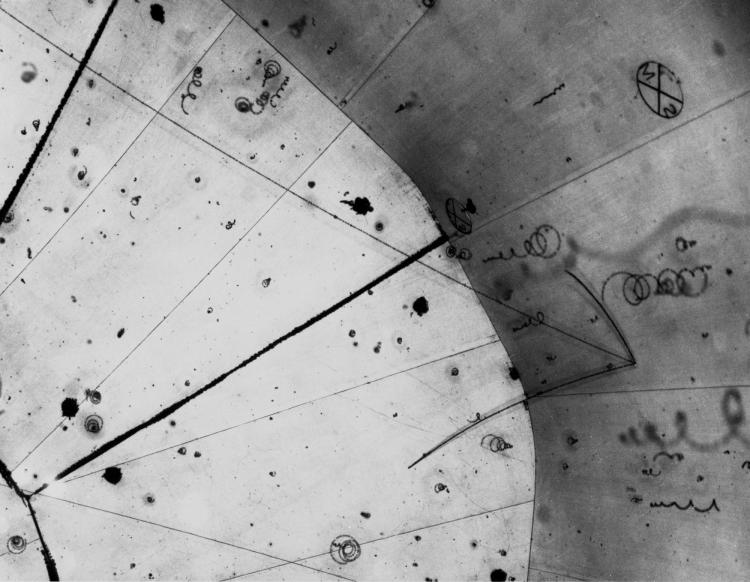
Here, a collision between a proton and this elementary ghost particle is shown.
neutrino
300
This biochemist and pharmacologist is best known for her contributions to the discoveries of 6-mercaptopurine and pyrimethamine.
Gertrude B. Elion
300
Mixing various elements with this noble gas will produce different colors when an electric current is applied to the mixture.
neon (Ne)
300
This molecule regulates blood pH and carries carbon dioxide to the lungs.
bicarbonate
300
These bug-catching photosynthesizers trap prey with overlapping epidermal cells, not a slippery liquid like once thought.
pitcher plants
400
This "sticky" elementary particle is responsible for mediating the strong nuclear force between quarks.
gluon
400
This substance, disproven in the late 18th century, was hypothesized to give materials their quality of combustibility.
phlogiston
400
This neutron-emitting element, discovered by researchers at Berkeley, is created when curium is bombarded with alpha particles.
californium (Cf)
400
They won't be escorting your kids to school, but this class of proteins do a great job when polypeptide chains need a little help folding.
chaperones
400
The blades of some wind turbines are created with these specialized bumps, inspired by humpback whales and designed to reduce drag.
tubercles
500
Unlike synchrotrons, this type of particle accelerator uses a constant magnetic field and an alternating electric field to get particles up to speed.
cyclotron
500
This father of density functional theory simplified the application of quantum mechanics to large atoms and molecules.
Walter Khon
500
This element, atomic number 106, is only used in laboratories for heavy-element synthesis. In 1997, it became the first element to be named after a living person.
seaborgium (Sg)
500
These surface glycoproteins found on antigen-presenting cells are used to communicate with T helper cells in the process of immunological memory.
MHC II proteins
500
The wings of this insect were found to kill bacteria on contact and may influence future coatings on countertops and doorknobs.
cicada