Ionic Bonding
Covalent Bonding
Metallic Bonding
Bonding in everyday life
100
What type of elements typically form ionic bonds?
Metals and non-metals.
100
What is a covalent bond?
A bond formed by the sharing of electron pairs between atoms.
100
What is a metallic bond?
A bond where positive metal ions are surrounded by a sea of delocalised electrons.
100
Why is table salt (NaCl) an example of ionic bonding?
NaCl consists of sodium ions (Na⁺) and chloride ions (Cl⁻) held together by ionic bonds.
200
What is the main force that holds ions together in an ionic bond?
Electrostatic attraction between oppositely charged ions.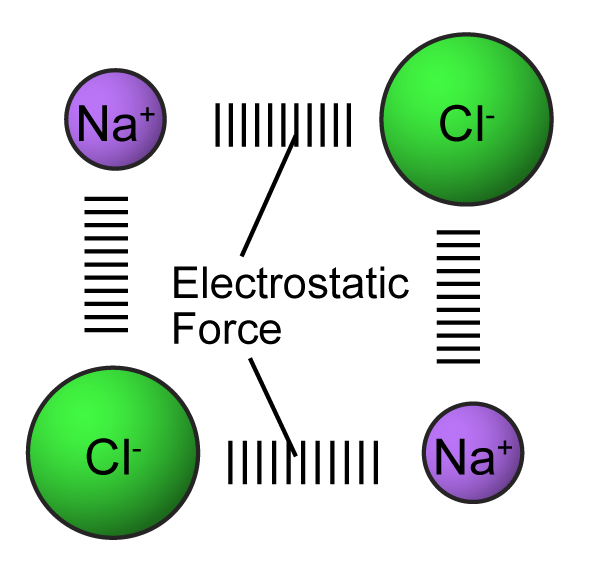
200
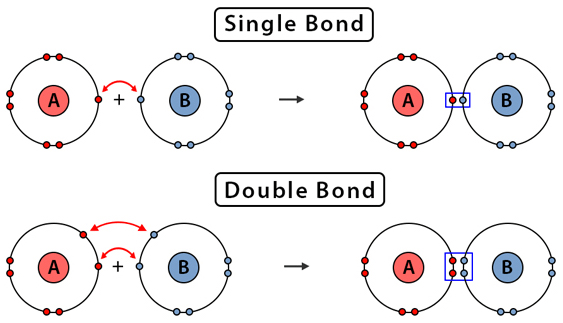
How is a double bond different from a single bond?
A double bond shares two pairs of electrons, while a single bond shares one.
200
Why are metals good conductors of electricity?
The delocalised electrons are free to move and carry charge.
200
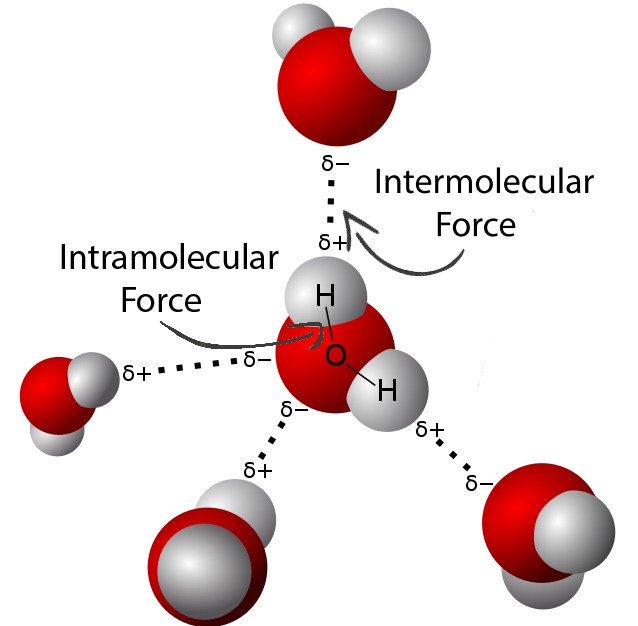
Why is water a liquid at room temperature while carbon dioxide is a gas?
Water has strong intermolecular forces, while carbon dioxide has weaker intermolecular forces.
300
Why do ionic compounds have high melting points?
Strong electrostatic forces between ions require a lot of energy to break.
300
Why are covalent compounds typically poor conductors of electricity?
They don’t have free electrons or ions to conduct electricity.
300
Identify the role of delocalized electrons in a metallic structure.

The delocalized electrons enable electrical conductivity by moving freely throughout the structure.
300
Why is copper used in electrical wiring?
Copper’s metallic bonds allow free electrons to move and conduct electricity.
:max_bytes(150000):strip_icc()/105781528-56a613de5f9b58b7d0dfcc50.jpg)
400
Explain what happens when sodium and chlorine form an ionic bond.
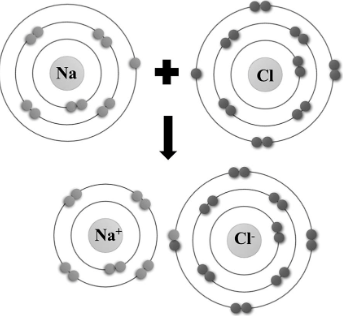
Sodium loses one electron to form Na⁺, and chlorine gains it to form Cl⁻.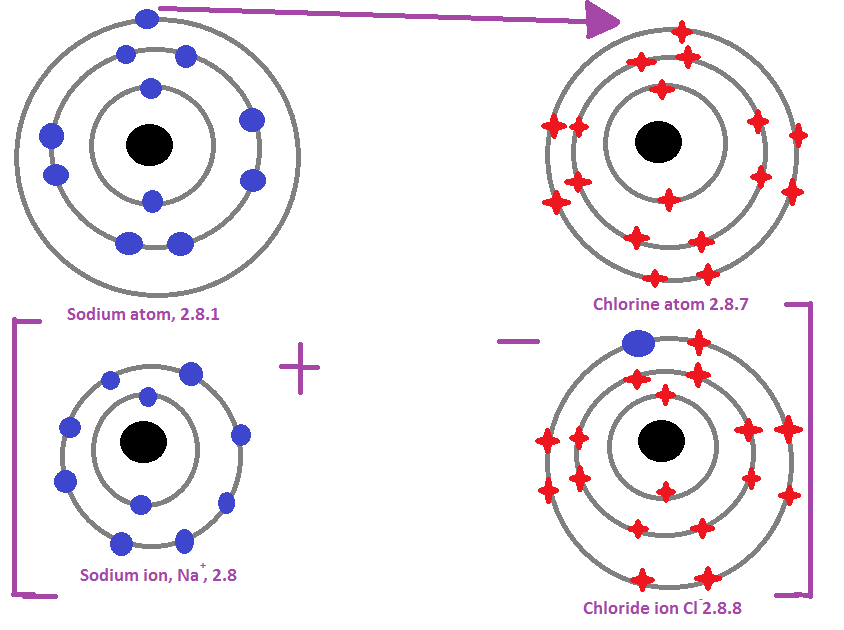
400
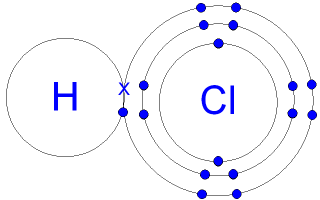
Which of the following pairs of elements can form a covalent bond?
A. sodium and oxygen
B. magnesium and oxygen
C. hydrogen and chlorine
D. magnesium and chlorine
C. hydrogen and chlorine
400
A cube has a side length of 0.2cm. What is the volume of the cube?
The volume of the cube is 0.008 cm3.

400
How do the properties of metals explain why they are used in making bridges?
Metals are strong, ductile, and malleable due to metallic bonding, making them ideal for construction.

500
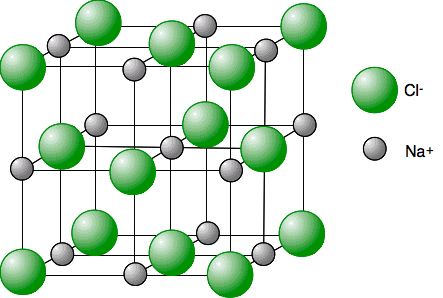
What statement describes the structure of sodium chloride?
The ions are arranged in a regular lattice.
500
Give an example of a molecule that forms a double bond.
Oxygen (O₂) forms a double bond.

500
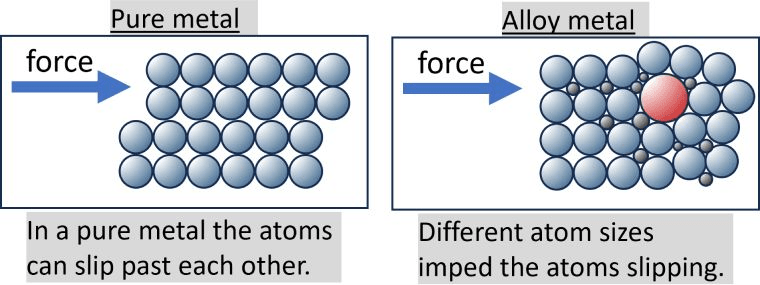
How does alloying a metal affect its properties?
Alloying disrupts the regular arrangement of metal atoms, often increasing strength and hardness.
500
Complete the sentence: Ionic compounds can conduct electricity when...
...dissolved in water or molten.