Ionic Bonding
Covalent Bonding
Non-Polar Covalent Bonding
Polar Covalent Bonding
Electronegativity
100
What energy level of electrons is used to form ionic bonds?
The outermost energy level, containing the valence electrons
100
What are the 2 types of covalent bonds?
Non-Polar covalent bond, Polar covalent bond.
100
Are the electrons in a non - polar covalent bond shared equally, or non - equally?
Equally.
100
Are electrons in a Polar - Covalent bond shared equally, or not equally.
Electrons in a Polar - Covalent bonds are not shared equally.
100
What is electronegativity?
Electronegativity is the attraction between two elements electrons.("How much a atom wants an electron")
200
What are ionic bonds formed by?(A metal and a metal, a non metal and a non metal, or a metal and a non metal?)
A metal and a non-metal
200
What are covalent bonds made up of?(A metal and a metal, a non metal and a non metal, or a metal and a non metal?
Non metal and a Non metal.
200
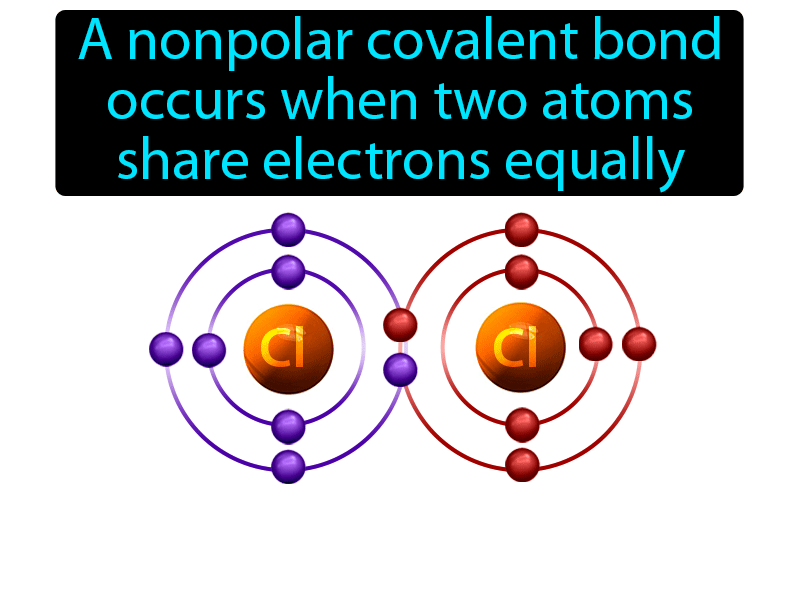
What is a non-polar covalent bond?
a type of chemical bond that is formed when electrons are shared equally between two atoms.
200
What is a polar covalent bond?
A covalent bond in which the atoms that share electrons have differences in their electronegativities. Electrons shared unequally.
200
In what direction on the periodic table does the electronegativity rise?
 As you go up the Periodic table and to the right the electronegativity rises
300
What is an Ionic Bond?
Linkage formed between oppositely charged ions in a chemical compound
300
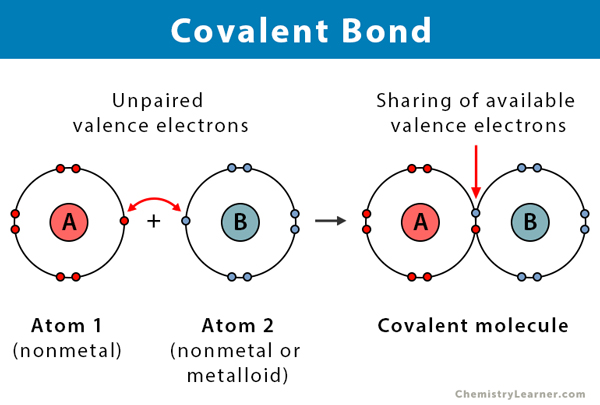
What is a covalent bond?
A chemical bond formed when electrons are shared between 2 atoms.
300
Does a non - polar molecule contain any atoms with regions of partial negative (δ –)and partial positive (δ +) charges.
No, a non-polar molecule contains no regions of partial negative (δ –)and partial positive (δ +) charges.
300
Does a Polar molecule contain any atoms with regions of partial negative (δ –)and partial positive (δ +) charges?
Yes, a polar molecule contains atoms with regions of partial negative and partial positive charges.
300
What has a higher electronegativity, non - metals or metals?
Non - metals have a higher electronegativity
400
Which of these is an example of an ionic bond?
1. NaCl - Sodium Chloride
2. H20 - Water
3. CH4 - methane
4. O2 - oxygen
NaCl - Sodium Chloride
400
What group configuration do the atoms within the covalent bond hope to achieve?
Group 18, the noble gas group.(8 valence electrons)

400
Do non - polar covalent bonds contain atoms with equal electronegativity, or not equal electronegativity.
non - polar covalent bonds contain atoms with equal electronegativity
400
Do Polar covalent bonds contain atoms with equal electronegativity, or not equal electronegativity.
Polar covalent bonds contain atoms with non-equal electronegativity.
400
Are electrons in a polar covalent bond shifted toward the more electronegative atom, or the lest electronegative atom?
The more electronegative atom.
500
What must the net charge of an ionic bond be?
1. 1
2. 0
3. 34
4. 12
0
500
Which of these is an example of a covalent bond?
1. NaCl - Sodium Chloride
2. H2O - Water
3. KCI - Potassium Chloride
4. LiBr - Lithium Bromide.
H2O - water
500
Are Diatomic ions non-polar or are Monatomic Ions non- polar?
Monatomic Ions are non-polar
500
Are Diatomic atoms or monatomic atoms polar?
Diatomic atoms are polar.
500
Does a greater difference in electronegativity between 2 atoms cause a more polarized the electron distribution, or does a smaller difference in electronegativity.
A greater difference in electronegativity between 2 atoms causes a more polarized electron distrebution.