Types of Bonding
Draw Lewis Structures; Is the molecule Polar?
Vocabulary and more
VSEPR Shape; Polar Molecule & why? Strongest IMF
Hodgepodge
100
This bond results from the unequal sharing of electrons
Polar covalent bond
100
BF3
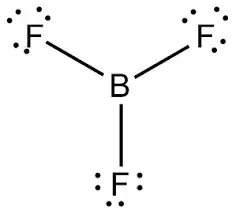
NONPOLAR
100
When more than one valid Lewis Structure may be written for a compound
Resonance
100
H2O
BENT. POLAR - shape is assymmetrical. IMF: H-Bond
100
Number of valence electrons and the common ionic charge of calcium
2 Valence electrons; +2 common ionic charge
200
Involves neutral nonmetal atoms
Covalent bonding
200
Cl3PO

POLAR
200
Define the OCTET Rule and reason for it
Most atoms form bonds to have 8 valence electrons - to have a full outer energy level which is a more STABLE configuration
200
H2CO
Trigonal planar; POLAR (symmetrical shape but all terminal atoms are NOT the same element) STRONGEST IMF: dipole-dipole
200
Which would be predicted to have the lowest boiling point and WHY? CH4, H2O , PH3 or NH3?
CH4.Because is has the weakest IMFs (only LDFs - nonpolar molecule).
300
The electronegativity difference of atoms in ionic bonds.
Greater than 1.7
300
NO+1

POLAR
300
Type of compound that can conduct electricity when liquid but not solid
Ionic Compound
300
CCl4
Tetrahedral. NONPOLAR - symmetrical shape AND all terminal atoms are the same element --> Dipoles cancel out. Strongest IMF: LDFs
300
Which has the smallest bond angle and WHY? CH4, H2O , PH3 or NH3?
All are basically tetrahedral shaped, but H2O has more lone pairs which makes bond angles smaller.
400
Type of compound with typically lowest melting points
Covalent
400
NO3-1

(and 2 more resonance structures)
NONPOLAR
400
The ability of an atom to attract electrons in a bond
Electronegativity
400
NH3
Trigonal pyramidal; Polar (assymmetrical shape) Strongest IMF: H-Bond
400
Which of the following form H-bonds? (list all): H2CO, CH4, H2O , PH3 or NH3?
H2O , NH3
500
What electrons do to form (1) metallic bonds vs. (2) ionic bonds.
Metallic: Electrons are delocalized "sea of electrons
Ionic: Electrons are transferred to/from atoms to form ions.
500
SF6

NONPOLAR
500
Smallest repeating piece of an ionic crystal
Unit Cell
500
ICl5
Square pyramidal; Yes Polar (assymmetrical shape) Strongest IMF: Dipole-dipole
500
Number of electrons in each of the bonds of CO2
Four (both are double bonds: O=C=O)