VSPER
Lewis Dot Structures
Hybridization
Pi/Sigma bonds
Pi/Sigma bonds
Polarity
Bond Character
Totally Random
100
What is the Lewis structure and molecular geometry of BCl3 as predicted by VSPER?
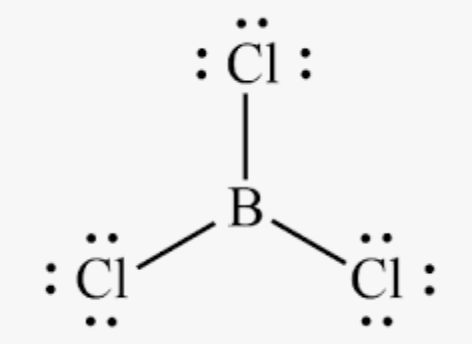 trigonal planar
100
Which atom will never be the centeral atom when drawing Lewis structures.
Hydrogen
100
What is the hybridization of the central atom in a molecule of NH3?
sp3
100
Is the following molecule polar or nonpolar?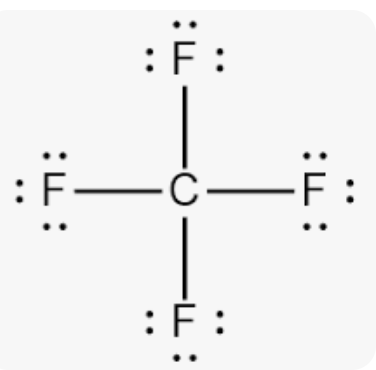
Nonpolar
100
Explain why Ionic molecules have a higher melting point than covalent molecules.
Ionic has a stronger bond than covalent
100
What is the purpose of bonding?
To get a full valence shell
200
A lewis structure for CH4 might look like whats below, but why is this incomplete. (Think about how this would look in 3-D space) What would the bond angle be?
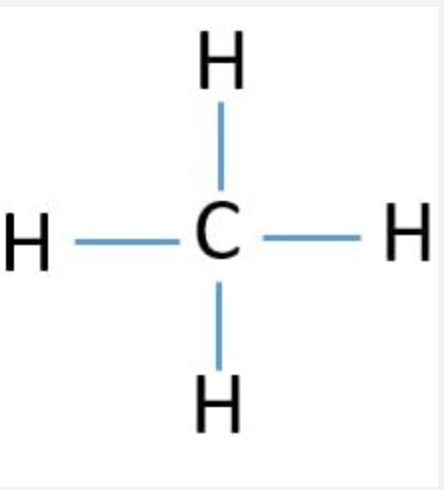
In 3-D space the atoms will have more room to spread out so in actuality it would look like this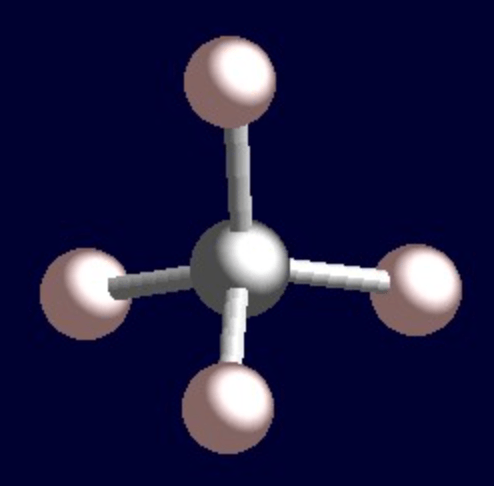 The angle in this would be 109.5
200
Draw the Lewis structure for BeF2
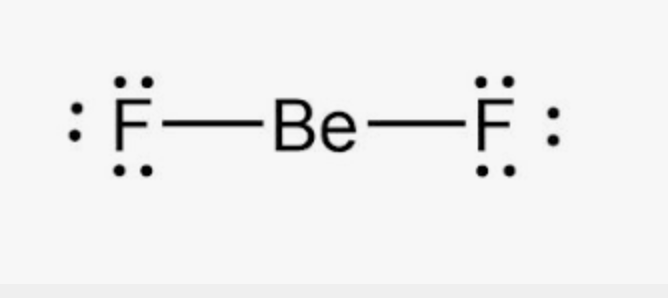
200
How many sigma bonds are present in ethene?
5 sigma bonds
200
Which of the following has the most polar bond?
Cl2
CCl4NCl3
HF
HF
200
Draw a picture and explain why ionic substance conduct electricity in a solution.
In solution, electrons are not bound to protons, and they are free to move.
200
What compound is held by electrostatic forces?
HCN
NaCl
CH4
O2
H2O
NaCl
electrostatic forces means ionic compound
300
Why would H2O have a bent shape, but SH2 have V-shape? Use a Lewis structure to support your answer.
The two pairs of lone pairs on S cause the shape to be V-shaped whereas the one pair of lone pair on oxygen causes the bent shape.
300
Which of the following exhibit resonance?
PCl5
HNO3SO2
H2SeSO2
HNO3
300
What is the hybridization of nitrogen in nitrate?
sp2
300
Can any linear molecule be polar? If so give an example.
Yes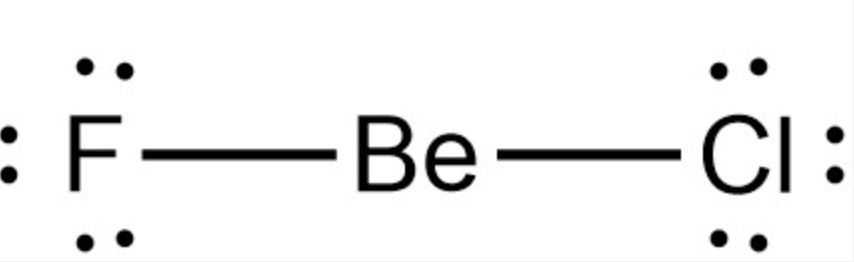
300
Explain why a solid strip of iron is an excellent conductor, but solid iron (II) sulfide is not. Use a picture to support your answer
Solid iron is made up of a metallic bond, so it has a sea of delocalized electrons that allows the electrons to flow freely. Iron (II) sulfide is an ionic bond, so its electrons are not delocalized, and they can not move freely.
300
Which compound has the biggest lattice energy?
MgCl2
LiF
CaF2
SrBr2
A bigger charge causes larger lattice energy, and a smaller atom will causes a larger lattice energy.
lattice energy refers to the bond strength
400
Why do molecules of phosphorous pentaflouride exist but molecules of pentaphosphorous monofluoride do not exist? Use lewis structures to support your answers.
phosphorous has the ability to hold more electrons because it has a 3rd energy level. Fluorine does not have a 3rd energy level, so it can only make 4 bonds.
400
Draw a Lewis structure for ICl5 and explain why this lewis structure is possible.
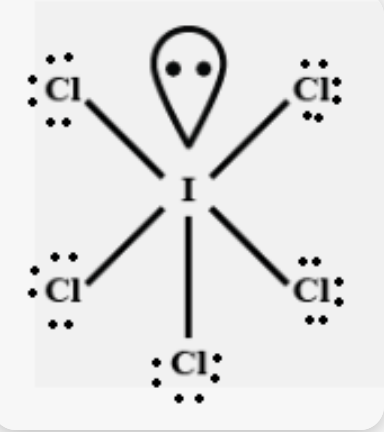
400
The perchloric acid molecule contains how many pi and sigma bond?
3 pi bonds and 5 sigma bonds
400
Provide an example for a VSEPR geometry that will always be polar. Use a lewis structure to support your answer.
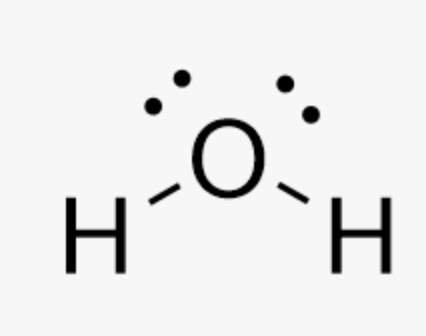 V-shape
additional answers will be accepted
400
Explain why the bond strength in diatomic oxygen is stronger than the bond in diatomic fluorine. Use a lewis structure to support your answer
F2 only has a single bond while O2 has a double bond. A double bond holds the atoms more closer together, so it is harder to break.
400
What would be an example of something that contains both an ionic and covalent bond?
a metal and a polyatomic
500
Explain why the bond angle in ammonia gas is smaller than the bond angle in the ammonium ion. Draw both Lewis structures to support your answer
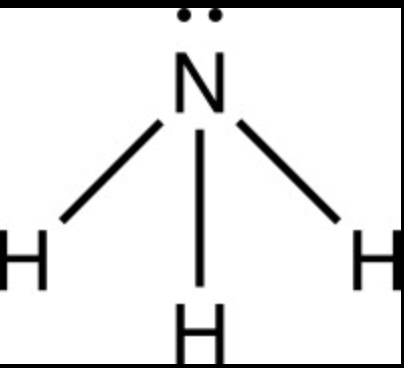
vs
trigonal pyramidal shape vs tetrahedral shape.
both have four areas, but the lone pair causes the bond angle to be less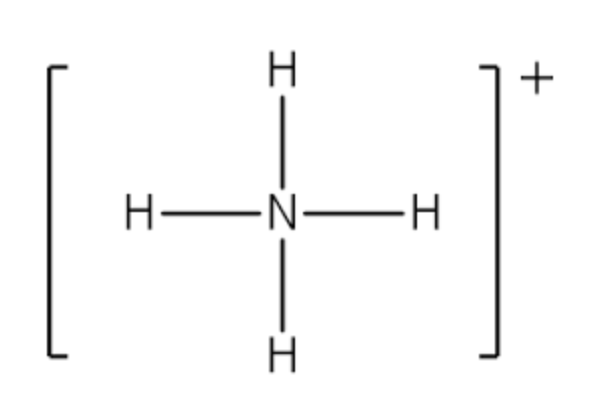
500
Draw all structures for SO3. Recall Ressonance
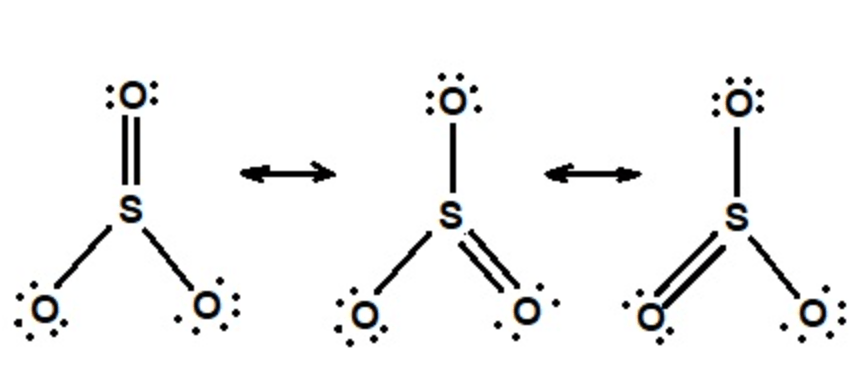
500
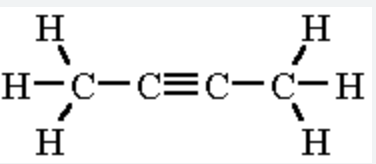
What is the hybrization of all Carbons in butyne.
The first and last Carbons have sp3 hybridization
The middle two carbons have sp hybridization
500
Explain why TeF4 is polar using a lewis structure to suport your answer.
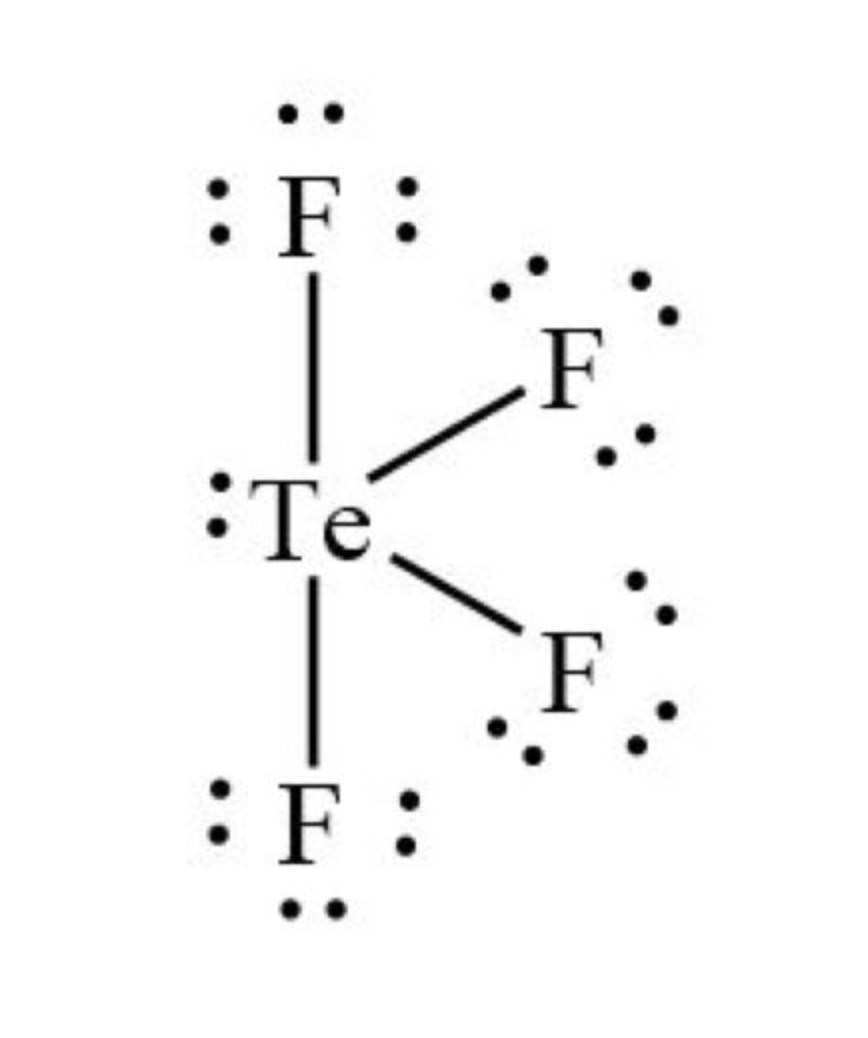
500
Why are metallic substances able to bend, but ionic are not?
Metallic substances have a sea of delocalized electrons that provide flexibility.
500
What is the name/ Formula of the following compounds?
1) KO2
2) Manganese (II) Floride
3) Hexanol
4) Sulfurous acid
5) P3O
1) Potassium oxide
2) MnF2
3) C6H13OH
4) H2SO3
5) Triphosphorus monoxide