Fundamentals
Ionic Bonding
Covalent Bonding
Identification
Miscellaneous
100
Why do elements form bonds?
To have full valence shells to be stable
100
A positively charged ion is called a/an _____.
cation
100
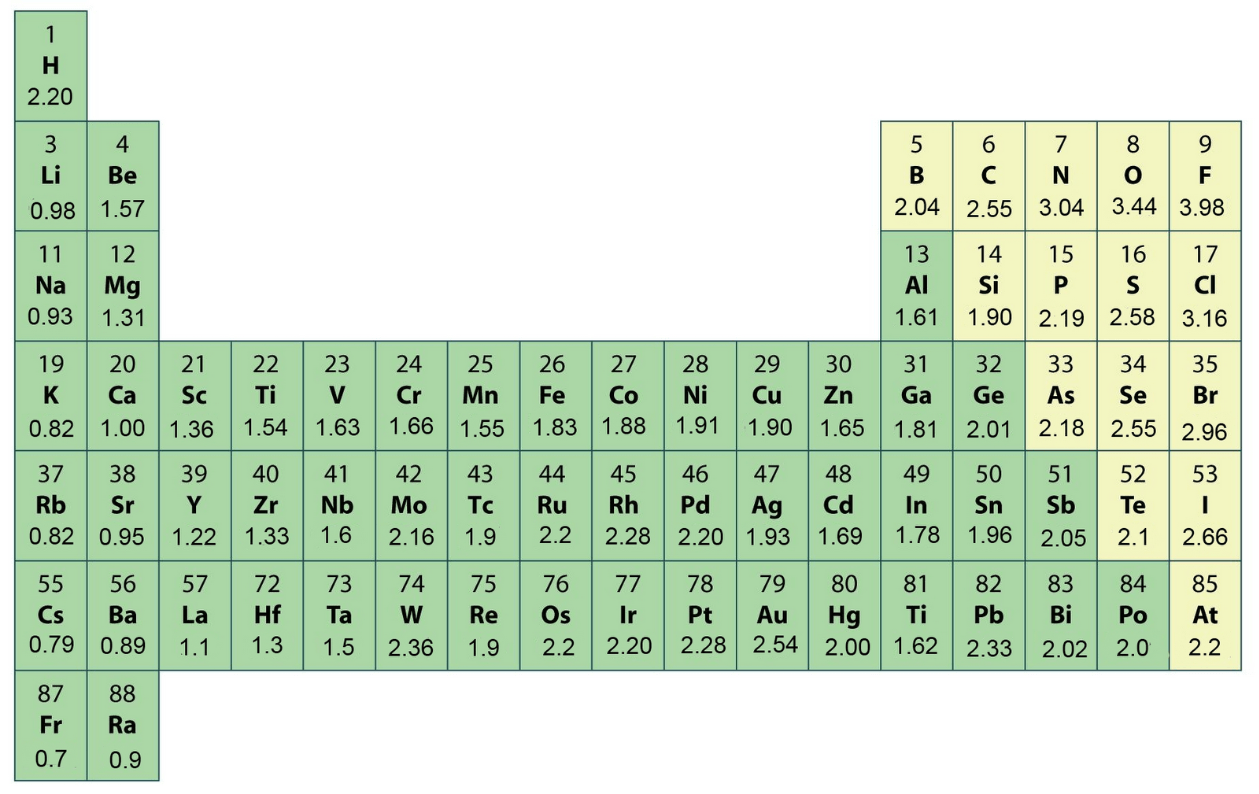
Which element is the MOST electronegative?
Fluorine
100
Does CO2 contain ionic or covalent bonds?
covalent
100
Which group does not tend to form bonds?
Noble gases
200
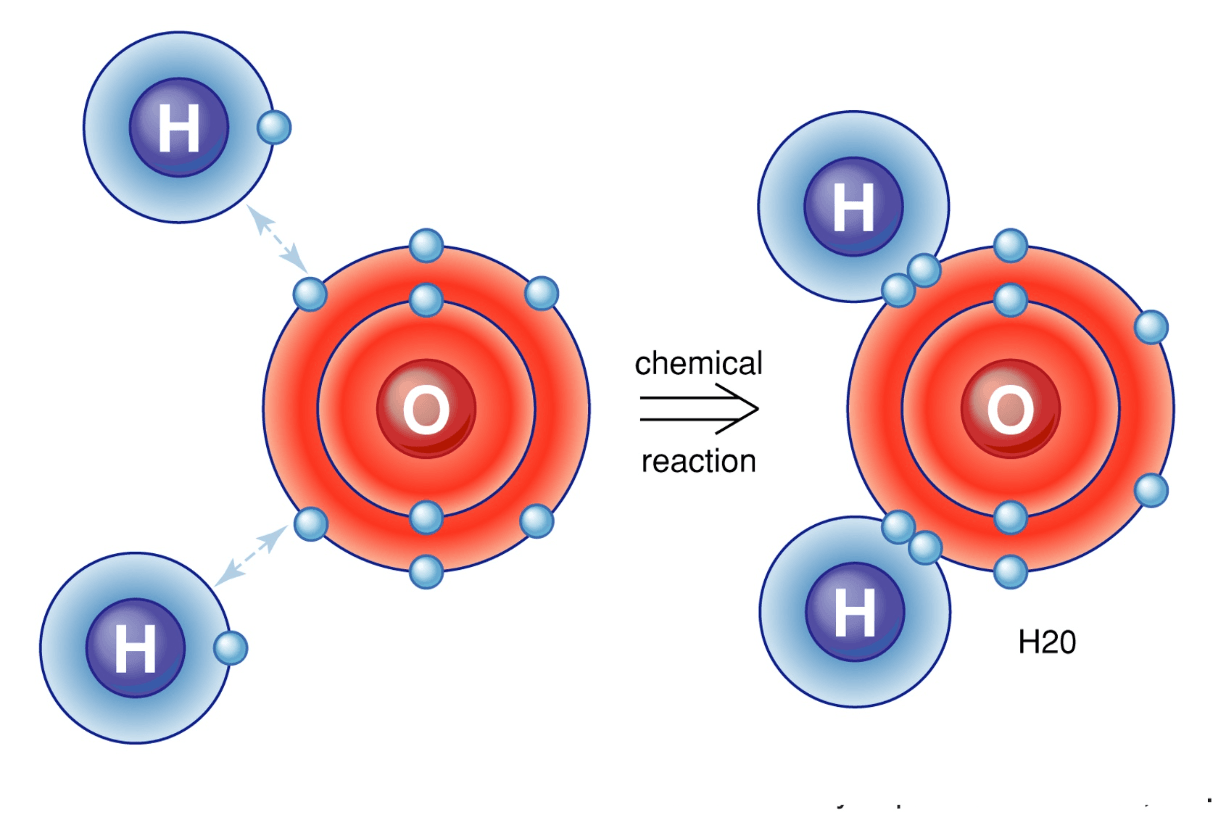
This bond is when two or more atoms share electrons.
covalent bond
200
A negatively charged ion is called a/an _____.
anion
200
True or False: All elements can have up to eight valence electrons.
False. (ex: hydrogen and helium need only 2)
200
Does HF contain covalent or ionic bonds?
covalent
200
Which type of atoms tend to give away electrons?
metals
300
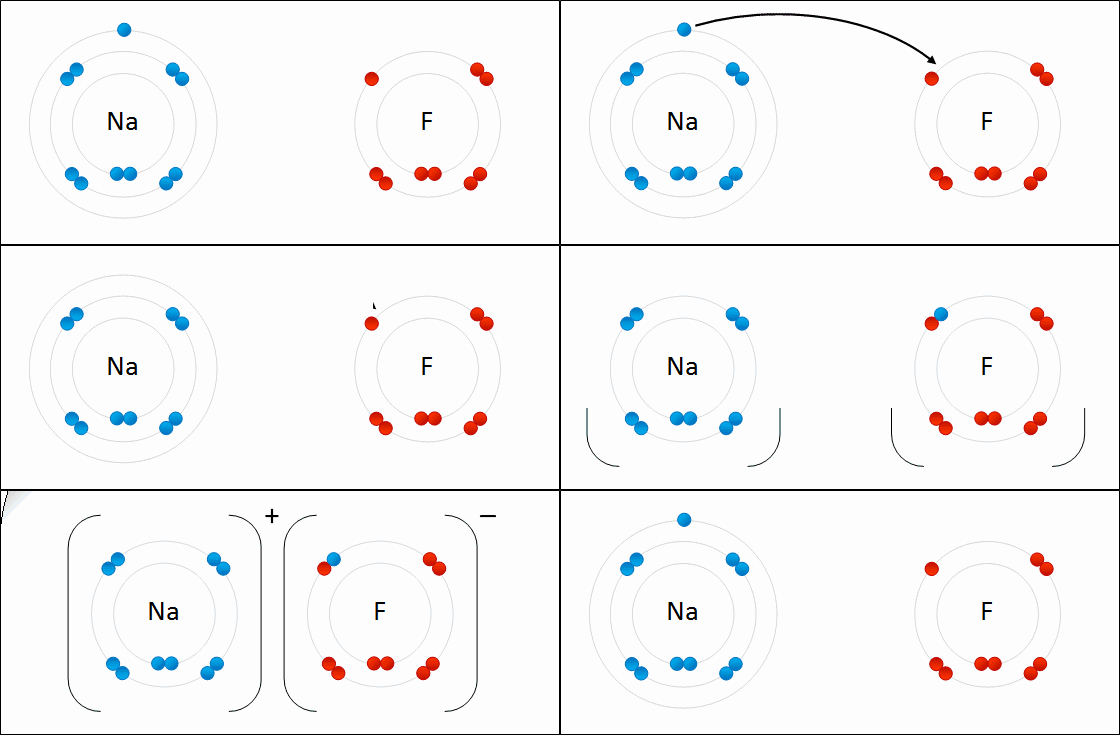
The bond formed when two or more atoms transfer electrons.
ionic bonding
300
Alkali metals will always ionize to form ions with a ____ charge.
1+
300
How many bonds will a nitrogen atom have with chlorine atoms?
3
300
Does Li2O contain ionic or covalent bonds?
ionic
300
Why don't ionic bonds form between either metal and metal or nonmetal and nonmetal?
Because metals tend to give electrons and nonmetals tend to take electrons.
400
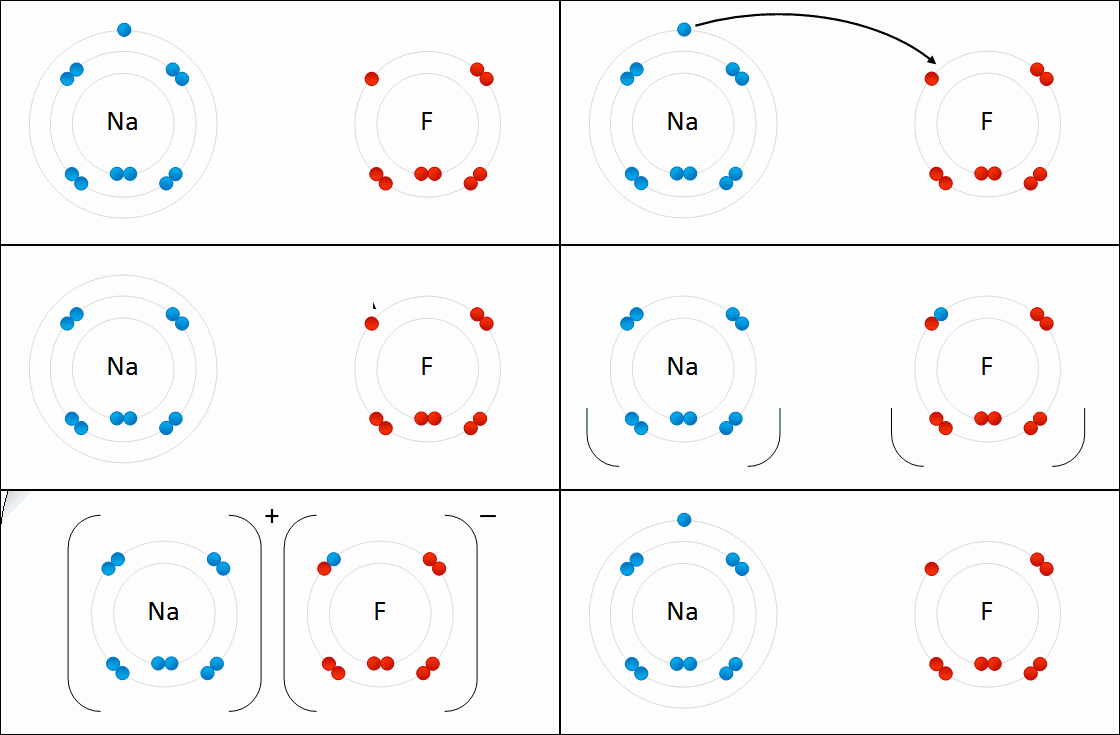
If an atom loses an electron, then that atom will become ____ charged.
positively charged
400
Halogens always ionize to form ions with a ____ charge.
-1
400
Why do nonmetals share electrons instead of transferring them?
They're close in electronegativity values, so neither can completely overpower the other.
400
What kind of covalent bond has 6 electrons.
a triple bond
400
Why do we use Roman numerals when naming certain metals?
Because they have more than 1 charge.
500
If an atom gains an electron, then that atom will become ____ charged.
negatively charged

500
Alkaline earth metals always form ions that have a ____ charge.
+2
500
How many covalent bonds can form between 2 atoms?
3
500
In the oxygen molecule (O2), how many electrons are shared?
4 electrons
500
How do you draw ionic bonds in Lewis dot structures?
Transfer the metal's valence electrons to the nonmetal's, draw brackets around each, and then put the charge for each.
600
Which electrons are responsible for the reactivities of the elements?
valence electrons
outermost electrons
electrons in outermost shell
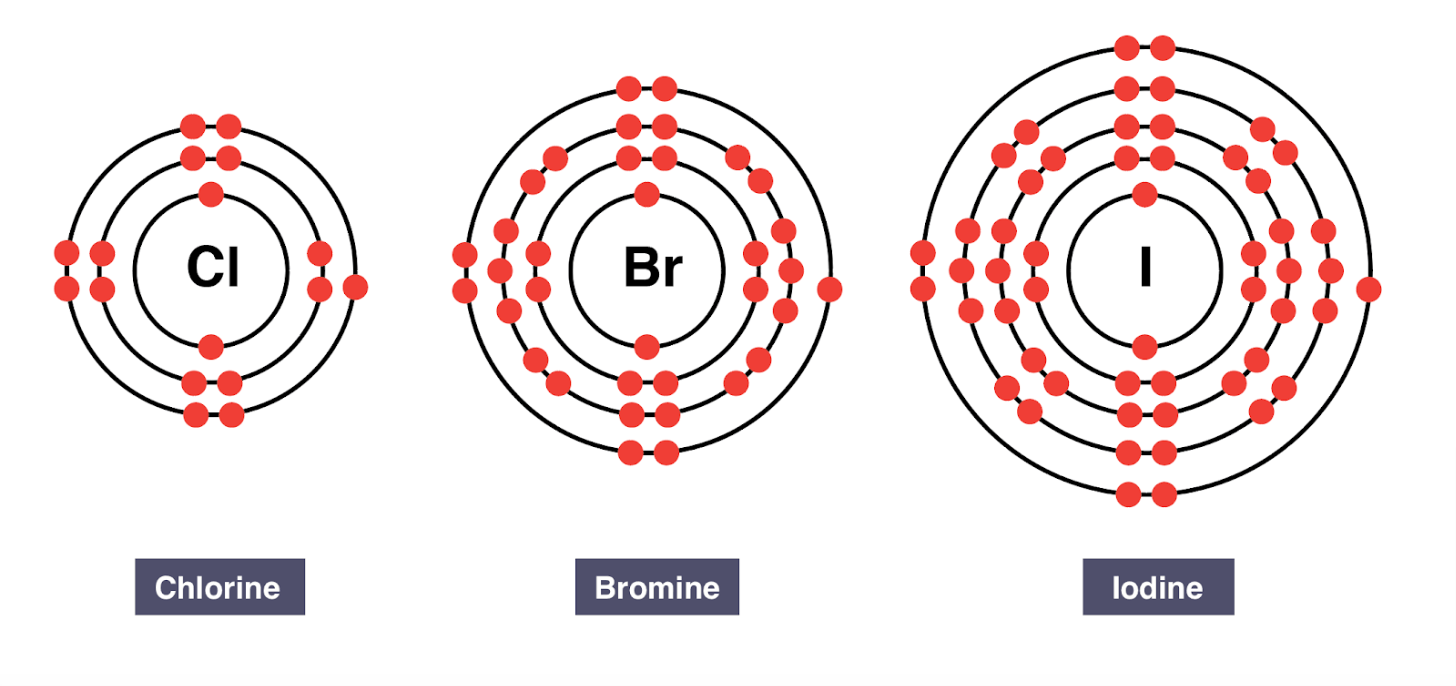
600
Why do the atoms stay together after transferring electrons?
They're oppositely charged, so they attract each other.
600
How do you tell how many bonds a nonmetal is likely to form?
It will form as many bonds as electrons it needs
600
When the C2H4 molecule is drawn, how many electrons will be shared between the two carbon atoms?
4 electrons
600
Model the formation of a covalent bond between carbon and 2 oxygen, CO2.
O=C=O