Atomic Structure
Periodic Table
Balancing Chemical Equations
General Chemistry
Chemical Symbols
100
Neutrally charged subatomic particle
Neutron
100
This person used atomic mass to organize the periodic table of elements.
Dmitri Mendeleev
100
What is balanced chemical equation?
A balanced equation has the same number of atoms of each element on each side of the equation.
100
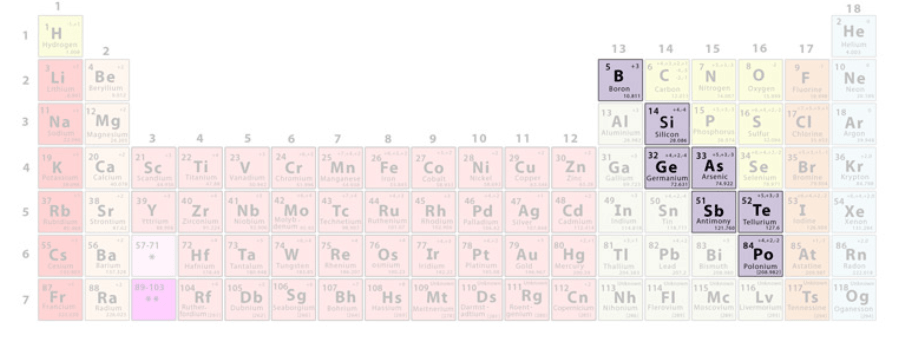
Metalloids
100
Carbon
C
200
Places where electrons are found?
Energy levels/in the cloud
200
What do elements in a group have in common
Similar properties/characteristics
200
What is the Law of Conservation of Mass?
Matter is neither created nor destroyed. It simply changes form.
200
Elements on the left side are:
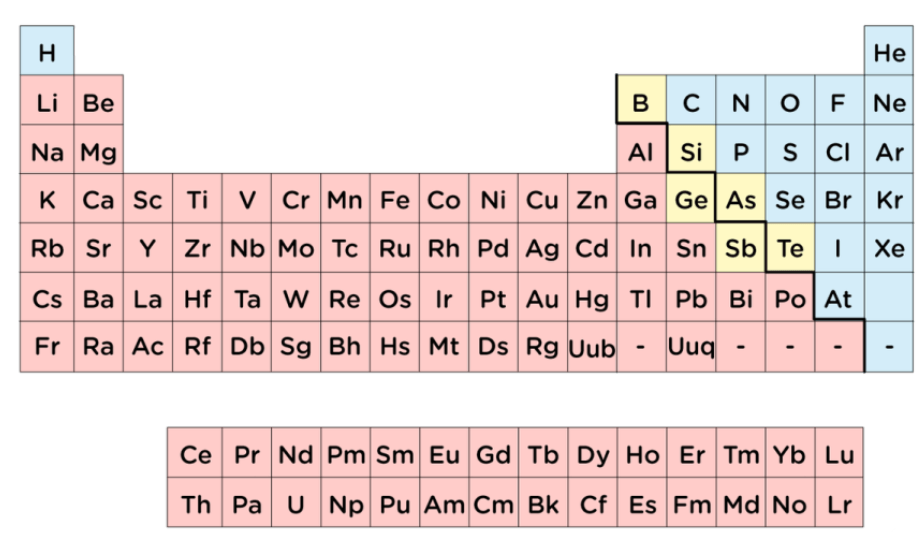
Metals
200
Nitrogen
N
300
Subatomic particles found in the nucleus
Protons and neutrons
300
The atomic number tells you
number of protons in atom/the identity of the element
300
On which side of the reaction will you find the products...
Right
300
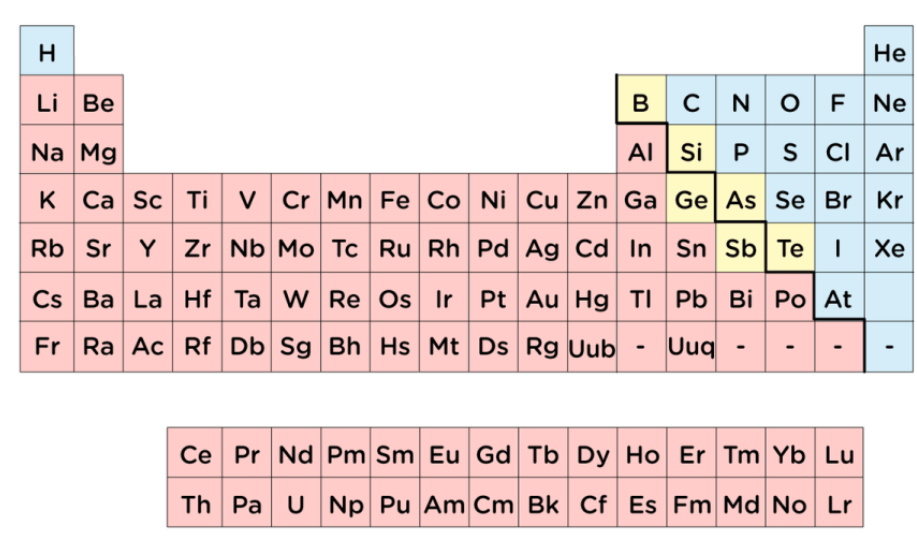
Where do you find nonmetals?
On the right side
300
Chlorine
Cl
400
Electrons stay in orbit around the nucleus because ______________.
Protons and electrons have opposite charges
400
What do we now use to organize the periodic table?
Atomic Number
400
On which side of the equation will you find the reactants
Left
400
How many protons, neutrons, and electrons are in sodium? 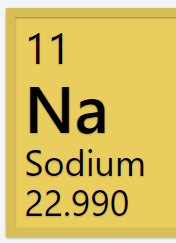
p+ = 11
n0 = 12
e- = 11
400
Sodium
Na
500
A beryllium atom has 4 protons, 5 neutrons, and 4 electrons. What is the mass number of this atom?
9
500
This is the most reactive group on the periodic table
Group 1/Alkali Metals
500
Balance: NH3 --> N2 + H2
2 NH3 --> N2 + 3 H2
500
How many electrons go in each energy level for sodium?
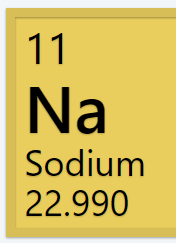
1 will hold 2 e-
2 will hold 8e-
3 will hold 1e-
500
Potassium
K